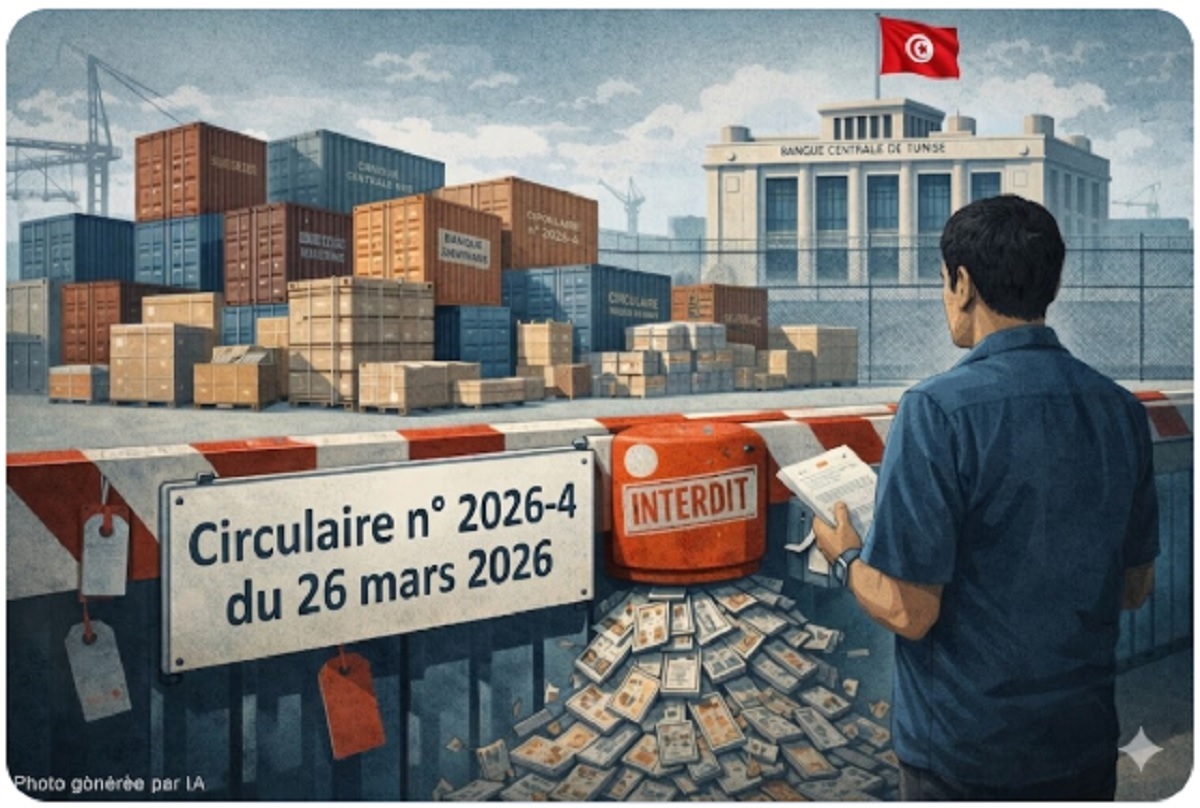
A sense of déjà vu. But this is a decision already shaking markets and Tunisian importers, both formal and informal. By issuing Circular No. 2026-4 on March 26, 2026, Governor of the Central Bank of Tunisia (BCT), Fethi Zouhaier Nouri, has reactivated a powerful monetary lever: the systematic blocking of credit for so-called “non-priority” goods.
Nouri is following in the footsteps of his former associate, the late Chedly Ayari. To his credit, the former governor had shown strong social, financial and intellectual ingenuity in handling the wave of criticism that accompanied a similar decision at the time.
For the record, his successor Marouane Abassi did not wait long before repealing that circular, a reversal heavily influenced by international lenders. Different times, different leadership, but a decision revived in spirit, this time hoping for a better reception and outcome.
In short, this move illustrates the dilemma facing Tunisia’s monetary and economic authorities amid a shortage of foreign currency: sacrifice trade fluidity and the financial health of private companies in order to preserve official reserves in the short term.
Without deep reform of the exchange system (still “waiting for Godot”), smarter and modern control of distribution channels, and a genuine import-substitution policy, the measure risks being counterproductive, potentially stifling investment and economic recovery.
The numbers showdown: 2017 vs. 2026
The 2026 scenario echoes Circular No. 2017-09 of October 27, 2017. Back then, under pressure from the Ministry of Trade, the BCT imposed similar restrictions to curb the hemorrhaging of foreign currency. However, the 2026 version is tougher. While earlier measures left loopholes in payment methods, the new circular casts a wide net: documentary credit, transfers, or simple bills of exchange, no payment method escapes the requirement of 100% self-financing.
The 2017 measure was short-lived, repealed just 14 months later by Circular No. 2018-13 of December 21, 2018. To understand the urgency of the 2026 version, one must look at foreign exchange reserves, the true barometer of economic sovereignty.
Although reserves now appear more comfortable in absolute terms (25.1 billion dinars versus 12.4 billion in 2017), the margin remains fragile. In 2017, Tunisia struggled to stay above the critical threshold of 90 days of import cover.
In 2026, despite reaching 106 days, the BCT has opted for a precautionary stance. This “buffer” is deemed insufficient in light of a persistent trade deficit and the need to secure vital imports such as energy and grain, especially amid Middle East tensions and difficulties in the eurozone.
The annex to the new circular reads like a blacklist. It offers an uncompromising view of what trade officials consider non-essential: luxury and superfluous goods ranging from cheeses and fine chocolates to perfumes. It also targets the automotive sector, especially passenger cars, along with clothing and accessories, air-conditioning equipment, pens and pencils, household appliances, and even bananas, melons, and watermelons. The list is extensive, unless fully self-financed. And due to scarcity, prices are expected to surge.
What about inflation?
This “100% self-financing” requirement forces importers to mobilize and freeze the full value of imports in dinars before customs clearance, effectively choking the operating cycle of affected businesses, some of which rely on cash flow just to pay wages.
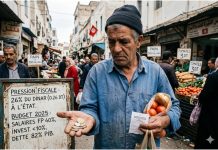
Rather than curbing inflation, the measure may actually fuel it. Importers will not absorb the cost alone; they will pass it on to consumers to offset the opportunity cost of immobilized capital. For instance, car prices are expected to rise soon. Instead of reducing imported inflation, the policy adds a domestic financial burden.
There are also ripple effects on value chains. Many restricted finished goods contain local components. If imports decline, local distributors and logistics providers will also suffer, indirectly impacting employment and VAT revenues.
Inevitable circumvention
Tunisia’s history shows that strict administrative bans often create opportunities for the informal economy, the grey or black market. The shadow economy looms large, from Moncef Bey and El Jem to Msaken and Menzel Kamel, not to mention cross-border flows. Informal “barons” are already rubbing their hands.
By restricting access to foreign currency, the BCT and especially the Ministry of Trade, which authored the list, risks pushing demand into parallel channels. This could threaten the stability of the Tunisian dinar and strengthen smuggling networks, as restricted goods—readily available in neighboring countries, flow in untaxed.
A high-stakes gamble
For the BCT, the objective is clear: curb non-essential demand for foreign currency to preserve reserves. By exempting the industrial sector under certain conditions (Article 4), it also aims to protect productive capacity.
To ensure strict enforcement, Article 3 assigns banks a policing role over product classifications, with the BCT overseeing compliance, requiring significant resources.
“The thief beats out the guard”
Large importers, however, have ways around restrictions. They may create offshore entities or use clearing mechanisms that bypass direct BCT oversight on documentary credits.
This puts the banking system to the test. Banks are now prohibited from financing such imports, effectively turning them from financial intermediaries into administrative enforcers. They must deny credit to previously reliable clients while knowing this could damage relationships without necessarily reducing country risk.
Between past and present, the question remains: will this remedy, already tried between 2017 and 2018, stabilize the economy without suffocating formal consumption? As the saying goes, one swallow does not make a spring.