The case involves a Chinese giant operating in Tunisia, a country that has welcomed foreign investment with open arms.
It has now become a public opinion issue, after a Chinese multinational was accused of using its own employees as a bargaining chip in a contractual dispute, while pretending to be “shocked” when its dismissal letter ended up circulating on social media. It is true that China does not have the same perception of social media as Tunisia.
A Chinese industrial giant facing its responsibilities in Tunisia
Jereh Oil & Gas Engineering Corporation is not a minor subcontractor. It is a subsidiary of a listed Chinese industrial group with annual revenues ranging between $1 and $5 billion and employing between 5,000 and 10,000 people worldwide. It presents itself as a leading player in high-tech oil and gas engineering, with ambitions across the Mediterranean region.
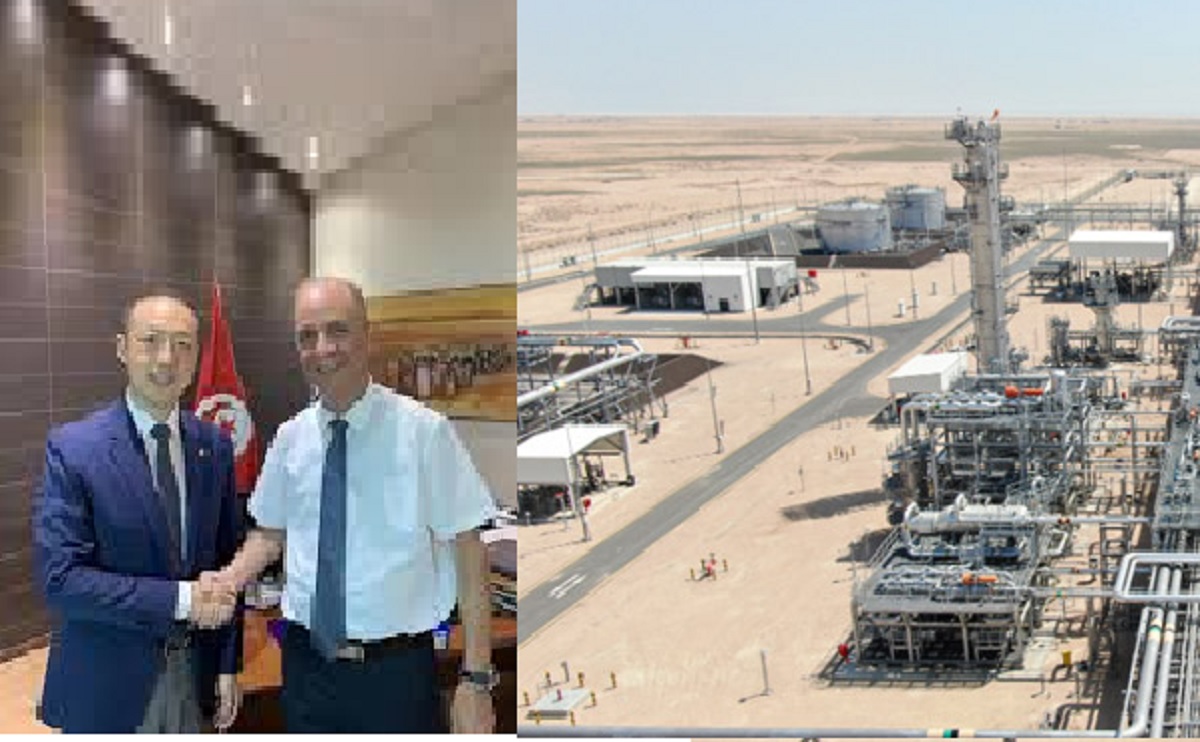
It was this company that the Tunisian Company of Petroleum Activities (ETAP) trusted in October 2019, awarding it a contract worth over $70 million (around 5 billion yuan) to build a gas processing plant in Tataouine.
This was a strategic project: ETAP’s first fully independent gas development, with a capacity of 21 million cubic feet per day, intended to produce dry gas, LPG, and condensates from associated gas in southern Tunisia.
Six years later, the partnership has ended in failure and the first to pay the price are neither Jereh nor ETAP, but Tunisian employees whose contracts were abruptly terminated on April 24, 2026.
The April 24 letter: an abrupt termination
On that day, Zhen Liu, Jereh’s legal representative, sent Tunisian employees a dismissal notice written in polite terms but with a harsh outcome. The termination took effect on May 10, 2026, just sixteen days after the letter. Final payments were promised for May 30.
The reason given was not employee misconduct or planned restructuring, but an alleged nine-month payment default by ETAP, which reportedly caused a severe cash flow crisis for the company.
Jereh thus positioned itself as the victim of a non-paying client, with its Tunisian workers becoming collateral damage.
This narrative raises several legal concerns. A sixteen-day notice period is clearly insufficient under Tunisian labour law, which requires longer periods depending on seniority.
More importantly, economic layoffs in Tunisia generally require prior approval from the Labour Inspectorate, which is not mentioned in the letter. Finally, attributing layoffs unilaterally to a third party without formal verification or approval constitutes a serious procedural irregularity.
The affected employees would be well advised to seek legal review before accepting their final settlement.
The social strategy: employees used as leverage
Jereh’s strategy goes beyond dismissal letters. Alongside individual notifications, documents and testimonies circulated on Tunisian social media platforms, echoing the Chinese company’s version of events: ETAP is allegedly a bad payer responsible for the employees’ situation.
The strategy is clear. By publicizing employee hardship, Jereh appears to be applying social and media pressure on ETAP, a public Tunisian company accountable to national opinion. It is an aggressive negotiation tactic, turning employees into symbolic hostages to pressure a client.
A company generating several billion dollars in revenue does not fall into a “severe liquidity crisis” because a single $70 million contract faces delays. The financial distress invoked is not operational reality, it is a negotiation argument.
The contractual reality: ETAP’s position
ETAP’s position reverses the narrative. The suspension of payments is not a default. It is not the result of financial distress. ETAP ended 2025 with a profit of nearly 207 million dinars on revenue exceeding 1.8 billion dinars.
The suspension results directly from Jereh’s failure to meet its contractual obligations under the agreement. ETAP acted strictly within legal and regulatory procedures.
According to available information, Jereh failed to carry out mandatory inspections and verifications by an approved control body, did not provide required certificates and did not comply with certification requirements for different project phases.
These obligations are not administrative formalities. For a gas processing plant, they are essential guarantees of safety, technical compliance and protection of the client’s interests. ETAP not only had the right to suspend payments, it had the duty to do so.
What this case reveals
The Tataouine GTP-T project highlights a recurring imbalance in Tunisia’s relations with foreign contractors: the asymmetry between the financial and media power of international firms and the perceived vulnerability of public clients.
Jereh shifted the debate to social and media ground because it is weak on contractual and technical ground. Its Tunisian employees, dismissed with minimal notice and under questionable legal conditions, are victims of this strategy, not instruments of it.
ETAP, meanwhile, acted within its rights and obligations. Paying a contractor who failed to meet safety and certification requirements would have been a management fault.
The message is clear: public contracts in Tunisia have rules and they apply.