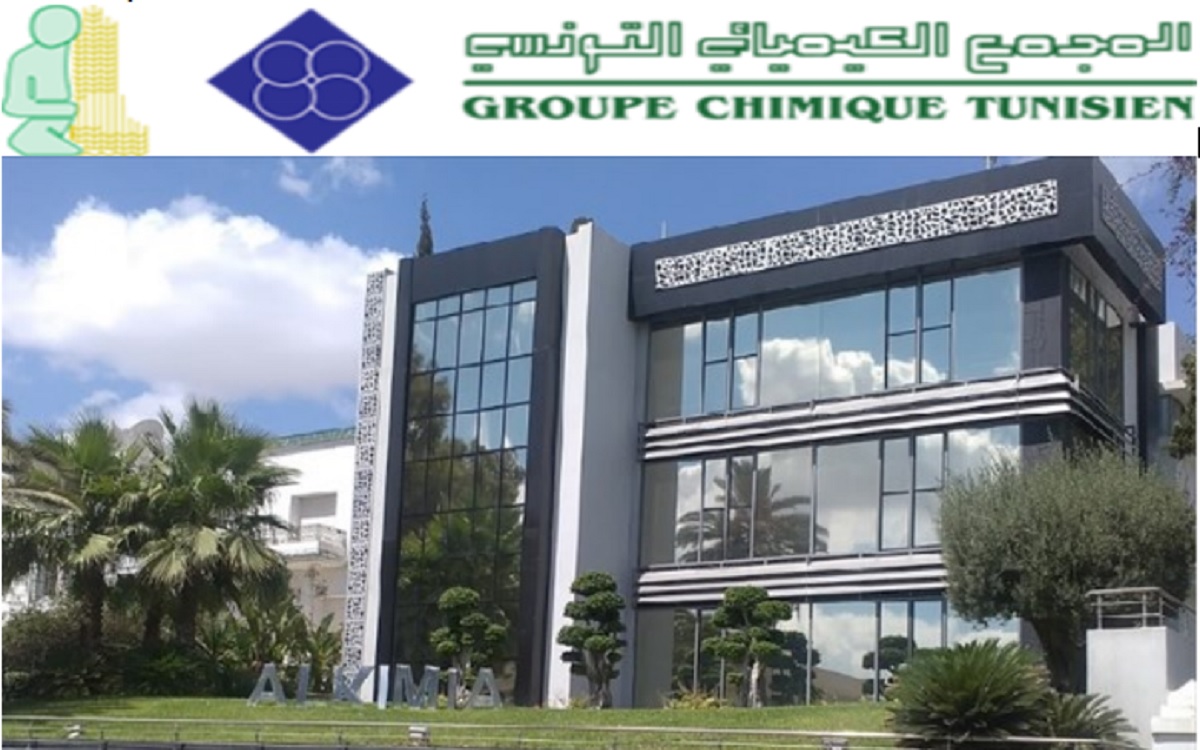
By mid-2025, the financial statements of Alkimia, a company 39.55% owned by the Tunisian Chemical Group (GCT), showed total net assets of 155,495,732 Tunisian dinars (TND) and a net loss of TND 18,759,875.
Importantly, these same financial statements revealed negative equity exceeding TND 206,558,087.
A parent company putting its subsidiary in serious difficulty. Smile, you are at the GCT
Over the past five years, Société Chimique Alkimia has recorded heavy losses, mainly due to a decline in international demand for sodium tripolyphosphate and the loss of major clients following multiple declarations of force majeure caused by forced shutdowns of its three production units in 2016, 2017, 2018, and 2019.
These shutdowns were due to a lack of supply of phosphoric acid, the main raw material—delivered by its sole supplier, the Tunisian Chemical Group.
To this day, the company continues to face major difficulties in securing sufficient quantities of phosphoric acid from the Tunisian Chemical Group, which, according to its strategy, prioritizes exports.
This has placed local companies, those that add value to this raw material by manufacturing other finished products for export, in a difficult position.
The situation worsened further following the forced shutdown, since October 2021, of the new soluble fertilizer (crystallized MAP) production unit, due to the Tunisian Chemical Group’s failure to supply the necessary ammonia, despite repeated commitments to do so.
It should be recalled that this new unit, which cost 35 million dinars, was commissioned on June 1, 2021, and that the quality of the crystallized MAP produced achieved great success on the international market. The interim financial statements as of June 30, 2025 show a net loss of TND 18,759,874.944.
What about a strange infanticide?
The recorded losses are explained in particular by prolonged shutdowns due to the lack of phosphoric acid and by the excessively high prices of phosphoric acid and ammonia charged by the Tunisian Chemical Group.
Although the current situation may present significant uncertainty regarding the company’s ability to continue as a going concern, the financial statements as of June 30, 2025 were prepared on the basis of the going-concern accounting principle, taking into account mainly the following elements:
The company prepared a highly promising rescue plan, approved by its Board of Directors on July 21, 2021 and reaffirmed on October 14, 2021.
However, in our view, this plan remains dependent on the willingness of the GCT not to kill its own golden goose, its own subsidiary, whose only fault is having private-sector representatives on its board of directors.
A social plan on the horizon of infanticide
In theory, and as Alkimia has repeatedly stated since the resurgence of its difficulties, this plan is based on four actions.
The first would be to ensure the production of 35,000 tons of technical and food-grade STPP by adapting and refurbishing Unit U-1000 in accordance with the required hygiene and health standards.
Next comes the implementation of a project to produce 80,000 tons of NPK through the conversion of Unit U-1500, with a budget of 12 million dinars.
In addition, and as Alkimia openly acknowledges, the implementation of a Social Restructuring Plan.
Finally, the production of 50,000 tons of another fertilizer, ammonium sulfate, through the conversion of Unit U-600, with a budget of 20 million dinars.
The implementation of the first stage of this plan began with the decision of the company’s Extraordinary General Assembly, held on December 29, 2023, to increase the capital by TND 20,000,000.
This will enable the company to launch the project to produce 80,000 tons of NPK through the conversion of Unit U-1500.