In an increasingly unstable global geopolitical context, the recent escalation of tensions between Iran, the United States and Israel, marked by military strikes, retaliatory operations and risks of disruptions to oil trade through the Strait of Hormuz, has raised concerns for open economies that depend heavily on international trade.
The crisis, whose outcome and duration remain uncertain and which has already caused fluctuations in global energy markets and concerns over regional stability, serves as a reminder that external shocks can have profound effects even on economies far removed from the military epicenter.
Lessons from recent history
Tunisia itself experienced a similar situation in the early 1990s. The Gulf War and the regional conflict of 1990–1991 caused a significant external shock to the Tunisian economy, affecting tourism, exports and financial flows, and requiring a rapid and rigorous macroeconomic response.
This historical experience can help shed light on how to manage such crises, illustrating how an open economy vulnerable to external shocks can preserve macroeconomic stability through swift, disciplined and coherent public policy responses.
The regional crisis triggered in August 1990 by Iraq’s invasion of Kuwait and the war that followed until early 1991, represented a brutal external shock for the economies of the Mediterranean and Middle East.
For Tunisia, a country strongly integrated into tourism, trade and financial flows, the episode, although concentrated over a few months, had economic repercussions throughout 1990 and 1991, interrupting a phase of macroeconomic recovery that had been underway since the mid-1980s.
At the beginning of the 1980s, Tunisia had experienced major internal and external imbalances. The deterioration of public finances and the size of the current account deficit led the authorities, from 1986 onward, to implement a major structural adjustment program. Supported by the Seventh Development Plan and the Structural Adjustment Program (SAP) with the International Monetary Fund (IMF), these reforms led to a rapid restoration of external balances.
The current account deficit, which averaged 8.5% of GDP between 1981 and 1986, was reduced to 1% by 1987. This recovery reflected fiscal consolidation, better control of domestic demand and a gradual strengthening of competitiveness.
On the eve of the crisis, the Tunisian economy was experiencing a period of sustained recovery. In 1990, investment growth was particularly strong, reflecting renewed confidence and a dynamic expansion of the economy. However, signs of overheating began to appear by the end of the year: domestic demand was becoming excessive and exerting increasing pressure on external accounts. Thus, even before hostilities began, the economy was already showing a certain vulnerability in its balance of payments.
The sound reflexes of Tunisia at the time
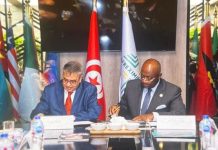
At that time, Tunisia maintained structured and close relations with the IMF. Following a successful standby arrangement, Tunisia concluded an Extended Fund Facility agreement in 1988, becoming the first country to use this facility after its reactivation.
However, the authorities adopted a cautious approach, treating the instrument more as a precautionary credit line rather than an immediate source of financing. They even requested a voluntary reduction in access in order to limit the effective use of available resources—an indication of the relatively solid macroeconomic situation and the credibility of the reforms undertaken.
Until early 1991, no funds had been drawn. It was only with the Gulf crisis—when tourism, exports and remittances were hit by an external shock—that Tunisia mobilized the funds. The agreement was later extended and adjusted, illustrating flexible and responsible management adapted to circumstances.
This flexibility proved particularly useful in dealing with the economic consequences of the regional conflict: a collapse in tourism revenues, a contraction in exports to the Middle East and a decline in remittances from expatriate workers.
For 1991, real GDP growth—initially forecast at 4.5%—was revised down to zero due to the broader economic slowdown linked to the war.
The shock also weighed heavily on public finances. Despite an estimated loss of revenue equivalent to 1.7% of GDP, the authorities managed to limit the consolidated budget deficit to 3.4% of GDP in 1991, compared with 4.0% in 1990, reflecting a significant adjustment effort during a period of crisis.
The balance of payments also deteriorated sharply. The net loss of foreign currency revenues was estimated at around 5% of GDP. The current account deficit reached 5.6% of GDP, compared with an initial target of 3.1%.
At the same time, the external position weakened significantly. Gross international reserves were projected at only 1.5 months of imports by the end of 1991, a critical level that severely limited room for maneuver.
A Rapid policy response
The authorities responded quickly and in a structured manner. A supplementary finance law adopted in March 1991 introduced a set of measures equivalent to 1.8% of GDP.
This package included increases in indirect taxes on alcohol, tobacco and petroleum products, a surtax on personal and corporate income, as well as reductions in capital expenditure and the public wage bill. The objective was to offset the loss of revenue and preserve fiscal sustainability without undermining macroeconomic stability.
On the monetary front, the Central Bank of Tunisia adopted a restrictive stance, limiting money supply growth to 5.5% in 1991 in order to contain inflation, estimated at 7% and reduce pressure on the balance of payments.
In terms of exchange rate policy, the authorities maintained a managed floating system, aiming to preserve the real value of the dinar at its end-1990 level to support export competitiveness.
At the same time, despite external tensions, Tunisia continued trade liberalization, increasing the share of imports free from quantitative restrictions to 80% in 1991, reaffirming its commitment to economic openness.
After the end of hostilities, Tunisia obtained a 12-month extension of its IMF agreement, which was extended until July 1992. Medium-term prospects remained relatively favorable, with non-energy exports expected to rise by 18% in 1992.
The country also secured additional concessional financing from the World Bank and the African Development Bank to compensate for the decline in funding from Gulf countries.
A Lesson in crisis management
The 1990–1991 episode illustrates the country’s ability to react quickly and with discipline in the face of a major external shock. The authorities acted without delay, combining fiscal adjustment, monetary tightening and close coordination with the IMF and international lenders.
This rigor and coherence helped preserve macroeconomic stability despite the collapse in foreign currency revenues and the strong pressure on reserves.
What About Today?
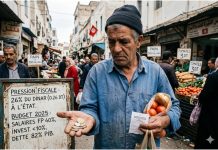
Unlike that period, the current situation is unfortunately characterized by frozen relations with the IMF, weakened support from bilateral donors and extremely limited access to international financial markets.
This is compounded by a reluctance to undertake deep structural reforms, even though Tunisia has no fiscal space, faces unsustainable public debt and is experiencing pressure on its foreign exchange reserves.
Controlling public spending—particularly the public wage bill, support for loss-making state-owned enterprises and the gradual reduction of energy subsidies—remains a critical challenge, one that currently appears to lack the necessary political courage.
In a context of renewed regional tensions that could trigger shocks similar to those of the early 1990s, the key question is now whether today’s authorities will be able to react with the same speed, discipline and credibility that characterized Tunisia’s economic management during the 1990–1991 crisis.