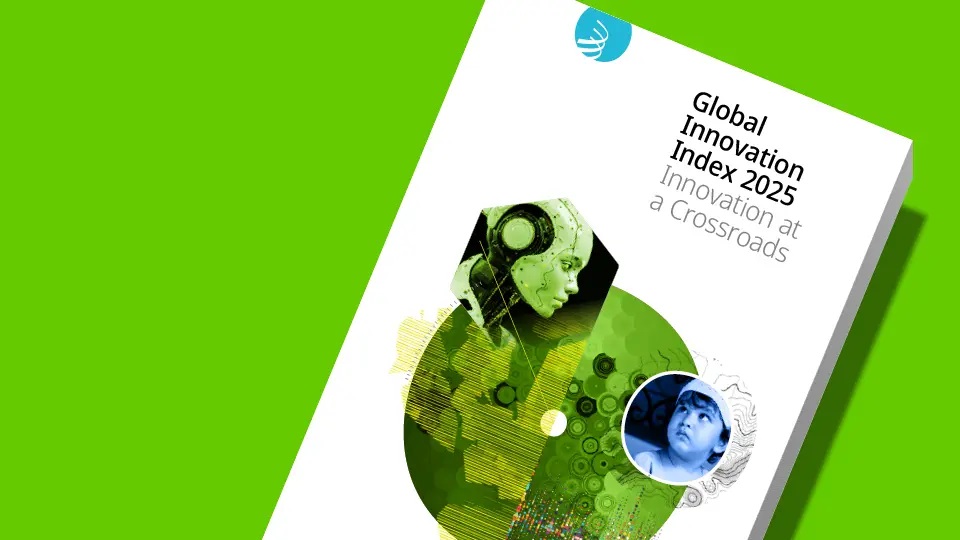
Tunisia has moved up five places to rank 76th globally in the 2025 Global Innovation Index (GII), published by the World Intellectual Property Organization (WIPO). With an overall score of 27 points, the country now stands as the fifth-most innovative economy in Africa.
The annual index evaluates the innovation capacity of 139 economies, measuring performance across the entire value chain, from resources invested to tangible results, based on dozens of indicators, including R&D spending, education levels, scientific output, patent filings, and technology diffusion.
Africa’s Top 5 Innovators
Leading the African ranking is Mauritius at 53rd worldwide (32.5 points), followed by Morocco (31.1 points), which achieved its highest-ever historical ranking thanks to advances in infrastructure, industry, and emerging innovation ecosystems. South Africa (30.1 points) and Seychelles (27.2 points) complete the region’s top five, with Tunisia closing the group.
Further down the regional ranking are Egypt (24.7), Botswana (24.6), Senegal (23.8), Namibia (23.5) and Cape Verde (22.6). Algeria ranks significantly lower at 115th globally with 18.9 points, held back by weak performances in several innovation pillars, particularly investment and research.
Tunisia’s strengths and weaknesses
According to the report, “Tunisia continues to rely on the strength of its human capital and the emergence of its innovation ecosystems, particularly in higher education and science.”
The country’s highest scores are in the “Business, diversification and market size” pillar (68.3 points), followed by information and communication technologies (66.1 points) and education (63.6 points), confirming structural strengths in training and economic integration.
However, Tunisia’s scores remain low in R&D (7.0 points), investment (3.9 points), and general infrastructure (4.9 points), highlighting persistent challenges.
Global leaders
Switzerland tops the global ranking for innovation with 66.0 points, driven by a strong research ecosystem, high R&D investment density, and close interaction between universities, companies, and technology centers. It is followed by Sweden (62.6), the United States (61.7), South Korea (60.0), and Singapore (59.9).
In the Arab world, the United Arab Emirates ranks first regionally at 30th globally with 44.2 points, reflecting massive investments in technology, digital infrastructure, and economic diversification, according to the report.