In its campaign against immigration, which it suspects is sometimes illegal or clandestine, the current U.S. administration, under the leadership of Donald Trump, has introduced a broad arsenal of measures, many of them controversial.
The visa bond requirement is particularly controversial because it appears disconnected from any coherent rationale or from the values traditionally associated with international openness.
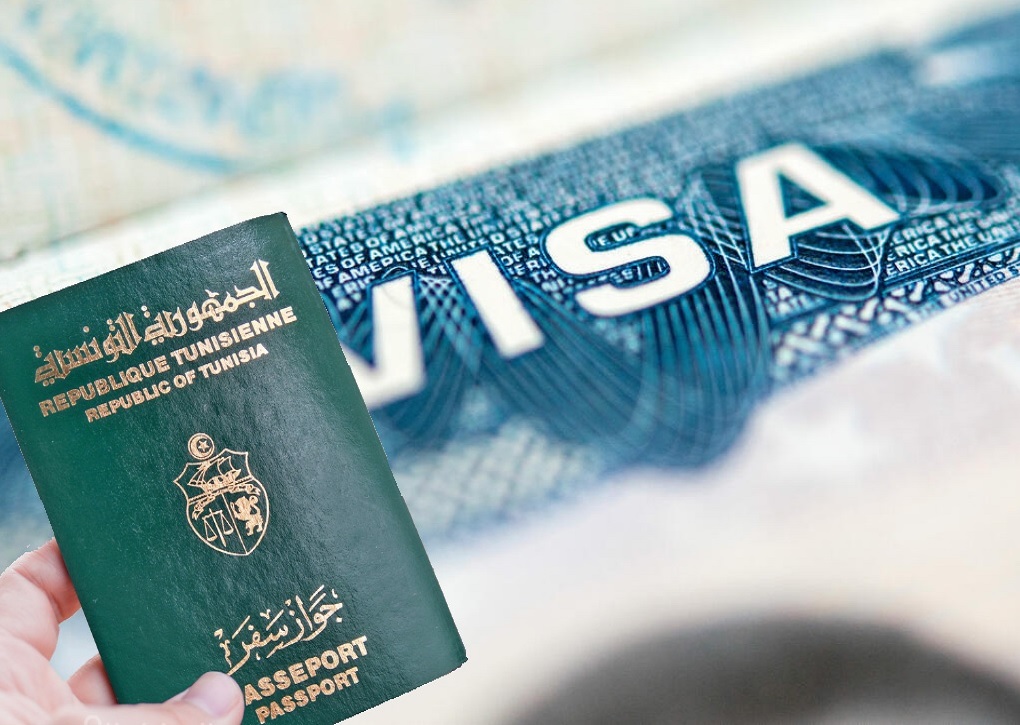
The United States has added Tunisia and several other countries to a list under which many visitors must now pay up to $15,000 before obtaining a short-stay U.S. visa, raising concerns across the global tourism and business travel sectors.
The Tunisian case has attracted particular attention in North Africa, where observers believe this decision undermines efforts to strengthen tourism and commercial ties with the United States after the pandemic.
Online discussions among visa applicants in Tunis report that bond requirements have even been imposed on frequent travelers who previously complied fully with visa rules, suggesting that consular officers have broad discretionary power in deciding whether to require this guarantee, according to The Traveler website.
How does the $15,000 bond work in practice?
Under this program, the bond applies to B-1 and B-2 non-immigrant visas, which cover a wide range of short stays, including business meetings, conferences, tourism, medical treatment, and family visits.
According to immigration law firms, consular officers may require a bond when they perceive a high risk that the applicant could overstay their authorized stay or when the applicant comes from a country with overstay rates above certain thresholds.
The bond is generally paid through approved financial channels after the visa receives initial approval but before it is issued. If the traveler complies with all visa conditions and leaves the country on time, the amount is refunded.
However, if the traveler overstays or violates admission conditions, the bond may be fully confiscated, serving both as a deterrent and a financial penalty.
For individual travelers, the sums involved are considerable. Analysts point out that $5,000 to $15,000 can represent several years of income in some participating countries.
Even for middle-class professionals, freezing such funds before a short trip may require taking high-interest loans, using up savings, or abandoning travel plans entirely.
Business travel organizers and professional associations worry that small and medium-sized enterprises in affected countries may now struggle to send staff to trade shows, investor meetings, or training programs in the United States. In industries where face-to-face interaction is essential, the bond requirement adds extra financial pressure and more uncertainty to already complex visa procedures.
Tourism and the World Cup: a kind of “paywall”
This expansion comes at a critical time for inbound U.S. tourism. Industry studies cited by The Traveler show that visitor numbers from certain regions had only recently begun recovering after the pandemic and earlier travel restrictions. These new bond requirements arrive just as destinations and airlines hoped to benefit from major events, particularly the FIFA World Cup being hosted in North America.
Articles published by travel and sports media indicate that teams from five countries on the bond list, including Tunisia, have qualified for the tournament. Although recent announcements mention a temporary suspension of bonds for confirmed World Cup ticket holders from certain countries, the underlying policy remains in effect for other visitors, families, and supporters without official tickets.
Tourism economists warn that such a financial barrier tied to the event itself could change travel behavior. Potential visitors who feel unable to attend matches in person may instead watch from home or travel to other international fan zones and host cities outside the United States.
Travel agencies in Africa, the Caribbean and parts of Asia report growing confusion among clients about the need to budget thousands of extra dollars just to secure a U.S. visa.
Perception matters as much as the legal details. Commentators in international media describe the bond system as a “paywall” reflecting distrust toward entire nationalities. Even though the bonds are technically refundable, the requirement reinforces the image of financially fortified U.S. borders, potentially harming marketing campaigns portraying the country as an open and welcoming destination for tourists and business travelers.
A “prohibitive” policy
The effects of expanding the bond regime are unlikely to be equal for everyone. Wealthy travelers and large companies in affected countries may absorb the additional cost, viewing the bond as a temporary deposit or an unavoidable expense of doing business with the United States. For students’ families, small traders, and people traveling for medical treatment, however, the policy may prove prohibitive.
Migration specialists warn of possible unintended consequences. By discouraging lawful short-term visits from certain regions, the bond system could weaken personal relationships, cultural exchanges, and diaspora connections that often support long-term trade and investment ties. Some analysts suggest that competing destinations are closely monitoring the situation and may adapt their visa policies to attract travelers discouraged by U.S. requirements.
For now, the list of participating countries and detailed conditions published by the U.S. Department of State are regularly updated through official channels.
Travel experts advise potential visitors from affected countries to monitor updates closely, budget for the possibility of a bond even if it is not initially mentioned and seek professional guidance on documentation that could help reduce the risk of being assigned the maximum $15,000 bond.