The Afreximbank project in Tunisia is poorly named and misunderstood. It is neither a mall nor a shopping center. It is a business infrastructure, still at the project stage. An analysis of its nature, purpose and the comparison with the African Development Bank (AfDB).
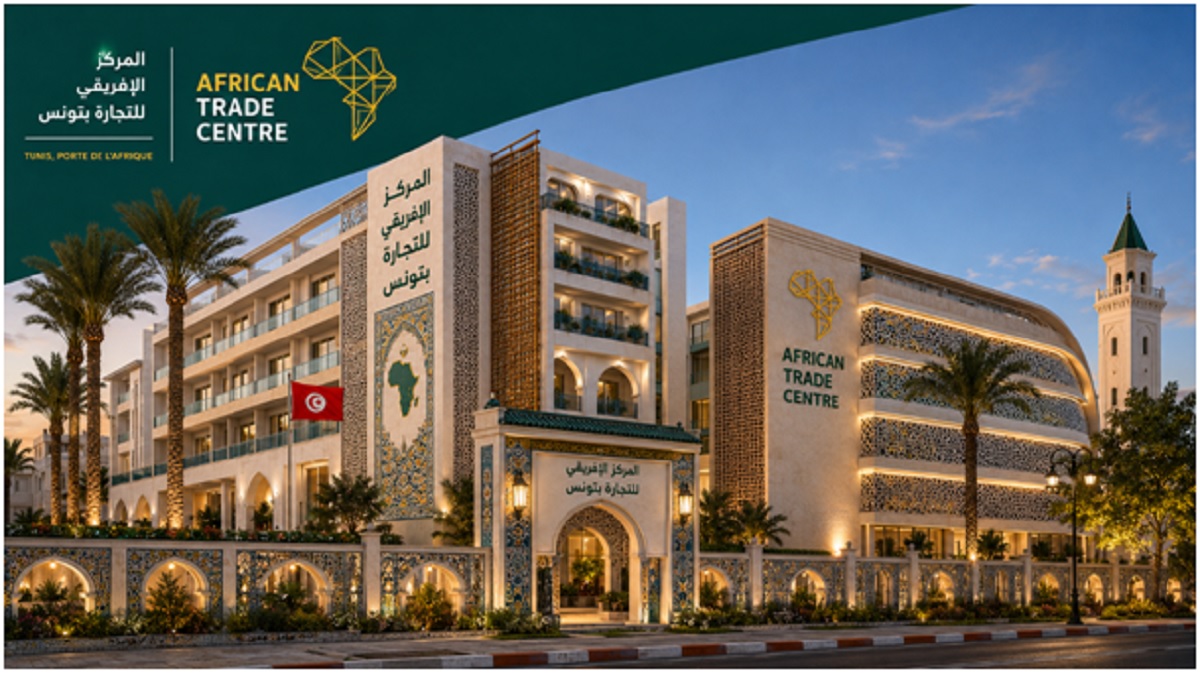
The word is misleading. When people hear about an Afreximbank “trade center” in Tunis, many imagine a mall, storefronts and retail brands. That is not what it is. The official term is African Trade Center. The word “trade” refers to international trade and transactions between countries, not retail sales.
It is a business infrastructure, not a shopping destination. This distinction changes the entire understanding of the project.
What an African Trade Centre really is
The model is not abstract. The first center in the network was inaugurated in Abuja, Nigeria, in April 2025. Its purpose and structure are therefore already known.
It is a high-end office complex. In Abuja, the facility consists of two nine-storey towers. It houses Grade A offices, an exhibition center, a conference center, an SME and technology incubator, a digital trade platform, the Digital Trade Gateway and a trade information hub.
The Cairo center, whose foundation stone was laid in December 2025, is even more ambitious: nearly 156,000 square meters of built space, a hotel, a library, a 750-seat conference center and the future global headquarters of the bank.
The purpose is clear. Afreximbank President George Elombi explained in Cairo that the center aims to address the lack of trade and investment information between African businesses, which he described as an obstacle that has hindered intra-African trade for nearly seven decades.
It is a meeting point connecting buyers, sellers, suppliers, chambers of commerce and financial institutions. It provides access to the bank’s services, including PAPSS, the Pan-African Payment and Settlement System, which enables cross-border transactions in local currencies without relying on the dollar or euro.
What would it be used for, and by whom?
According to Tunisia’s Ministry of Trade, the project has two objectives: strengthening access for Tunisian products and services to African markets and providing financial and technical support to Tunisian companies trading with the continent.
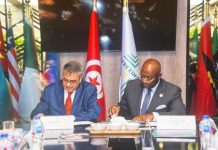
Minister Samir Abid received a delegation from the bank. The project is linked to the implementation of the African Continental Free Trade Area (AfCFTA).
Its target audience is specific: Tunisian companies seeking to expand into Africa, SMEs looking for financing and market information, start-ups through the incubator, and institutions and chambers of commerce that could rent offices there.
It would serve the trade and finance ecosystem, not consumers, and not casual visitors.
The Tunis center is part of a network of nine cities: Abuja, Harare, Kampala, Cairo, Abidjan, Yaoundé, Kigali, Tunis and Bridgetown in Barbados.
Tunis is neither an isolated choice nor a special favour. It is one component of a continental network.
Where does the project actually stand?
This is the point that should not be overstated. The Tunis center has not yet been built. There is no construction site, no officially allocated land and no public timeline.
The comparison is telling. Abuja has been inaugurated and has even obtained LEED Platinum environmental certification. Harare was expected to open in 2025. Kampala has been under construction since late 2024. Cairo laid its foundation stone at the end of 2025, under a $250 million contract.
Tunis, meanwhile, remains at the stage of ministerial discussions and declared intentions. The project is real, but still at an early stage. It should be described as a project in development, not as an accomplished fact.
The AfDB question and a misunderstanding to clear up
Many observers draw a parallel. Tunisia hosted a major pan-African institution, the African Development Bank, which later left. Could Afreximbank become its replacement?
The comparison must be handled carefully. The AfDB headquarters was relocated to Tunis from September 2003 to September 2014. The move, made necessary by instability in Côte d’Ivoire, the bank’s host country since 1966, took the form of a temporary relocation agency.
The bank remained in Tunisia for eleven years. Once stability returned to Côte d’Ivoire, it moved back to Abidjan, as required by its statutes. Its departure was not a rejection of Tunisia; it was the end of an enforced relocation.
The episode left a lasting impression. For eleven years, the AfDB supported an entire ecosystem: around 1,000 employees, their families, hotels and service providers. Its departure was widely felt as a loss.
Afreximbank is not, strictly speaking, its replacement. The AfDB is a broad-based development bank, while Afreximbank specialises in trade finance. Above all, the nature of their presence is different. The AfDB moved its entire headquarters to Tunis temporarily and out of necessity.
Afreximbank is not relocating its headquarters. It is opening a regional office, planned for 2026 and developing a trade center. This is a chosen presence, not a forced exile.
The parallel nevertheless has meaning. After the AfDB’s departure in 2014, another major pan-African institution is choosing, a decade later, to establish a presence in Tunisia.
For a country that had lost its status as a regional financial hub, the signal matters. But the AfDB brought eleven years of concrete activity and thousands of jobs. The Tunis trade center remains only a project for now.
What the center reveals beneath the surface
One conclusion can nevertheless be drawn from the facts. Afreximbank is not coming to Tunisia by chance, nor because of its commercial performance, which remains modest on a continental scale.
It is establishing itself there because its relationship with the country is already deepening elsewhere: financing for the state budget, announced projects in phosphates, ports, Tunis-Carthage airport, electricity interconnection with Libya and Algeria and the upcoming regional office.
The trade center is not the starting point of this relationship. It is its real estate showcase, a way of making visible, in stone and glass, an anchor that is first and foremost that of a creditor.