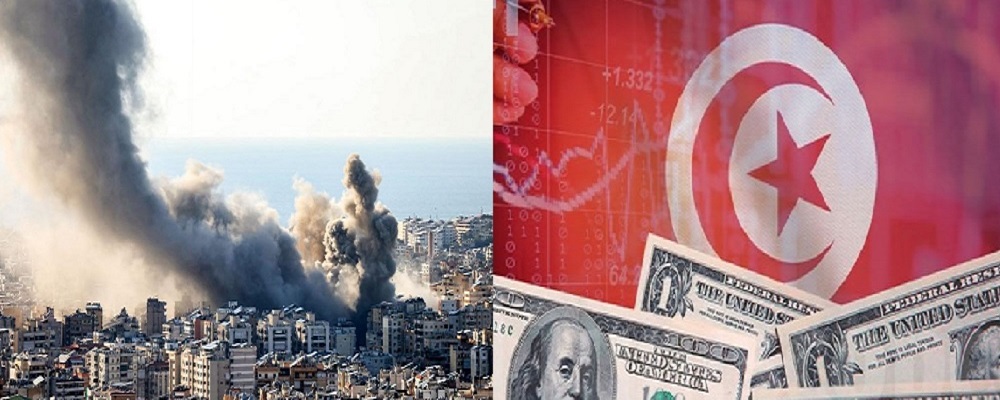
The Arab Institute of Business Leaders (IACE) has warned of risks facing the Tunisian economy due to the war in the Middle East, calling on the authorities to implement short- and medium-term mitigation measures to strengthen national resilience against these repercussions.
In its report titled “War in the Middle East: Challenges and Impacts on the Tunisian Economy,” published on March 19, the IACE stressed that this crisis could affect several dimensions of the economy, notably public finances, the balance of payments, inflation and growth, in a context where Tunisia remains heavily dependent on energy imports.
In an international environment marked by high uncertainty, Tunisia ranks among the economies most exposed to external shocks, particularly due to its reliance on energy imports. The report recalls that domestic production covers only about 35% of needs and that any sustained rise in hydrocarbon prices or disruption in supply flows directly impacts macroeconomic balances.
An additional cost of 164 million dinars for every $1 increase per barrel
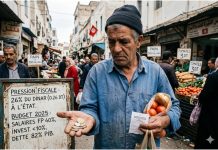
According to the IACE, the first channel of impact concerns public finances. The state budget remains particularly sensitive to energy price fluctuations, with energy subsidies already representing nearly 3.3% of GDP.
Under these conditions, each $1 increase in the price of a barrel of oil could generate an estimated additional cost of 164 million dinars (MD). This risk is even more significant as the 2026 Finance Law was based on an oil price of around $63 per barrel, a level that could be exceeded if tensions persist.
The organization also noted that pressure on public finances could be exacerbated by rising logistics and international transport costs, as well as tighter financing conditions on external markets. In this context, the state, already facing high financing needs, could see its fiscal space further reduced.
Public enterprises, particularly in the energy and transport sectors, also appear vulnerable. Rising fuel and international transport costs risk increasing their operating expenses and worsening financial imbalances.
Companies such as the Tunisian Company of Electricity and Gas (STEG) and the Tunisian Refining Industries Company (STIR), already dependent on public subsidies, could face increased cash flow pressures, with potential repercussions on state commitments.
Higher import costs
Externally, the balance of payments is another point of fragility. According to the institute, nearly 98% of Tunisia’s foreign trade passes through maritime transport, meaning any disruption in logistics chains or increase in freight costs translates into higher import prices.
Combined with rising energy prices, this could further increase the energy bill and widen the trade deficit. This trend would put additional pressure on foreign exchange reserves in a context of weak external financing mobilization.
However, the IACE noted some mitigating factors, including the relative stability of remittances from Tunisians residing in Gulf countries and the maintenance of tourism bookings, which could limit the short-term impact.
The institute also highlighted inflationary risks. Higher import prices and industrial inputs, combined with inflation expectations, could push consumer prices upward. The use of monetary financing to cover budget needs could further amplify these pressures.
In terms of growth, the organization estimates that the effects could materialize through a slowdown in external demand, particularly from the eurozone, Tunisia’s main economic partner. Sectors such as textiles, clothing, and mechanical and electrical industries appear particularly exposed.
Tourism could also be affected by geopolitical uncertainty, as could air transport, which may experience disruptions linked to the regional situation. In addition, strategic sectors such as agriculture and the chemical industry could face difficulties in sourcing essential inputs.
What needs to be done
To strengthen the resilience of the Tunisian economy against external shocks, the IACE recommends a set of strategic measures structured across different time horizons. In the short term, it calls for immediate actions to mitigate the direct impact of the war in the Middle East.
The institute emphasizes building and managing strategic stocks of food products and hydrocarbons to cushion disruptions in global supply chains. Targeted support for small farmers is also deemed essential to maintain local production and ensure national supply.
At the same time, the IACE recommends launching an energy-saving program in the public sector to control energy consumption through concrete operational measures. Encouraging remote work in certain sectors is also suggested to reduce energy and transport costs.
The institute also stresses the importance of closely monitoring several key indicators, including Brent oil prices, maritime transport and insurance costs, inflation trends in advanced economies and monetary policy decisions by major central banks, which can influence financial flows and exchange rates.
In the medium term, food security should be strengthened, particularly through the development of cereal value chains to move toward self-sufficiency in durum wheat, supported by targeted investments to improve yields and modernize agricultural techniques.
The IACE also calls for accelerating the energy transition by increasing investments in renewable energy to reduce dependence on energy imports and improve energy efficiency. In this regard, establishing an independent regulatory authority and adopting a renewable energy code are considered essential to ensure transparency, visibility, and sector attractiveness.
Finally, the institute stresses the need to accelerate the adoption of reforms and the implementation of “ready-to-launch” structural projects to support economic sectors and stimulate national activity.
Among these reforms, it highlights the revision of the foreign exchange code and the investment law to improve the business climate and promote economic recovery.
According to the organization, combining these short- and medium-term measures is a key lever to strengthen Tunisia’s resilience to external shocks, ensuring better coordination between fiscal and monetary policies and adapting the national economic strategy to changes in the international context.