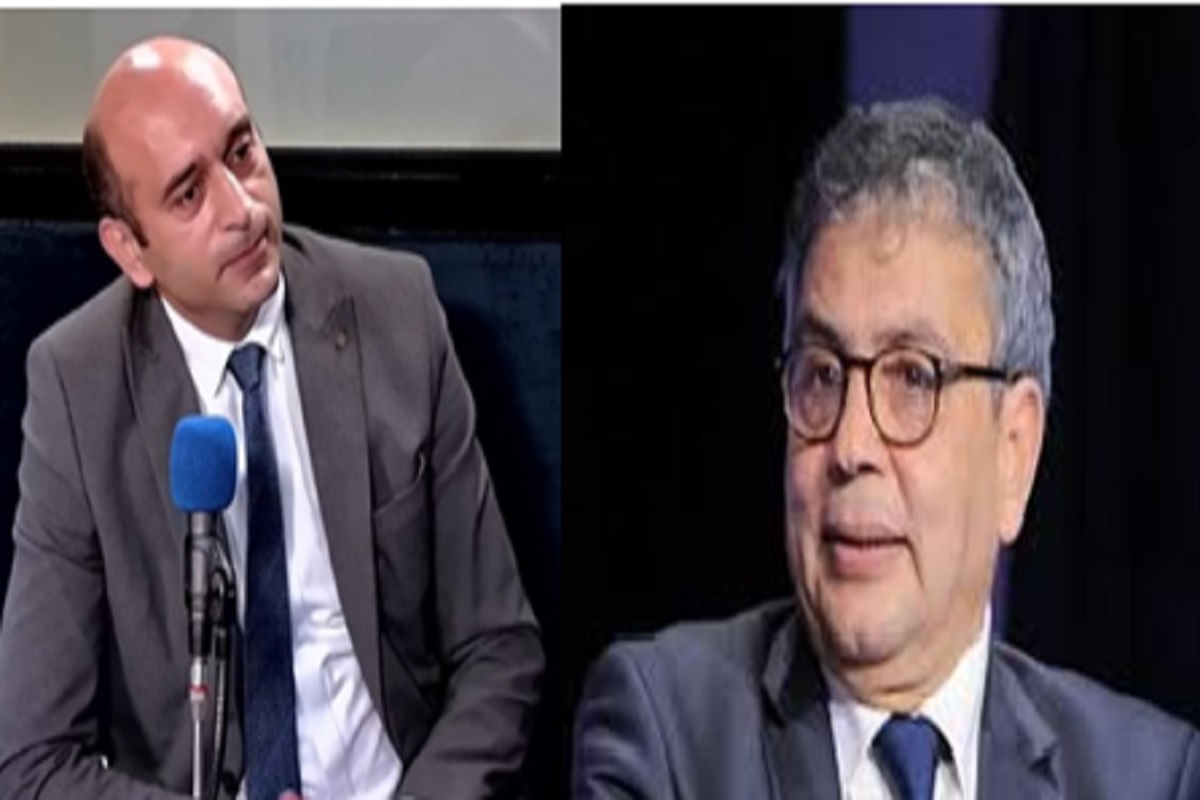
“Maybe he doesn’t know the address; for the record, the Assembly of People’s Representatives sits in Le Bardo.” It was with this touch of irony, bordering on provocation, that Dhafer Sghiri, Vice-President of the Finance Committee, criticized in a radio appearance what he described as the absence of the Governor of the Central Bank of Tunisia (BCT), Fethi Zouhaier Nouri, from parliamentary hearings.
Between some representatives of the Bardo assembly and the issuing institution, is the relationship running on alternating current?
Beyond the verbal exchange, this dispute highlights a deep misunderstanding of monetary sovereignty mechanisms and a worrying drift toward institutional populism. It also appears to reflect a simple confusion of roles.
The public has changed, but not the BCT’s communication
If the parliamentary stance increasingly borders on populism, it nonetheless reflects a deeper issue: the Central Bank’s lack of communication and explanation.
In a democracy still in transition, the silence of the Central Bank, though grounded in strict monetary orthodoxy, is often perceived by public opinion as opacity or even indifference.
The era when governors relied on cryptic decisions is over. Today, a central bank’s credibility depends not only on foreign reserves, but also on its ability to explain how its decisions affect citizens’ daily lives. By limiting communication to technical reports or committee-level exchanges, the BCT leaves room for political interpretation and exploitation.
This is not about turning the Governor into a political speaker, but about engaging in strategic communication. Otherwise, the Bank’s independence, hard-won, risks being seen as detached from citizens’ concerns. Accountability should not be a forced exercise during tense hearings but a proactive governance practice.
Not a stroll, but a necessity
The criticism voiced by the MP, suggesting the Governor prioritizes Washington (IMF and World Bank Spring Meetings) over parliamentary sessions in Tunis, reflects more of an assumption than a structural analysis.
This ignores the fact that the BCT acts as Tunisia’s financial signature abroad. It also overlooks Law No. 2016-35 of April 25, 2016, governing the Central Bank, which frames its international engagements, including biannual meetings.
In a context of liquidity pressure and negotiations with international lenders, the Governor’s presence abroad is not optional, it is strategic necessity. Criticizing this mobility equates to treating parliamentary representation as administrative confinement, at the expense of Tunisia’s global financial positioning.
Independence is not insubordination
At the core of this tension lies a recurring political discomfort with the BCT’s independence, often seen as an obstacle to government action, particularly regarding direct financing of the Treasury.
Yet central bank autonomy is not a rejection of oversight; it is a safeguard against monetary instability.
Law No. 2016-35 is clear: while Article 80 allows the Governor to be heard by Parliament, hearings must focus on monetary policy and economic conditions. This framework prevents Parliament from becoming a permanent tribunal over technical decisions.
The regulator cannot be required to justify every technical choice or draft regulation under preparation. Doing so would reduce economic governance to political spectacle and ignore how central banks function.
Accountability and the long rhythm of economics
Accountability is a democratic principle, but it follows structured rules.
Article 80 also requires an annual report to both the President of the Republic and the Speaker of Parliament. These mechanisms are designed as formal, scheduled accountability, not ad hoc political pressure.
Moreover, central banking relies on strict communication discipline, known as “forward guidance.” Premature statements on sensitive issues such as exchange rates or foreign reserves could destabilize markets and distort economic expectations.
Raising the level of debate to protect institutions
It should be noted that dialogue is not broken. Reliable sources indicate that senior BCT officials continue technical exchanges with parliamentary committees. The perceived confrontation therefore appears more as political communication than institutional deadlock.
In short, accountability should not be used as a pretext to undermine the Central Bank’s independence. Monetary policy requires long-term thinking, shielded from immediate political pressures and slogans.
Parliament would strengthen its credibility by elevating the debate toward structural economic issues rather than engaging in short-term populist rhetoric that ultimately weakens the state’s institutional framework.