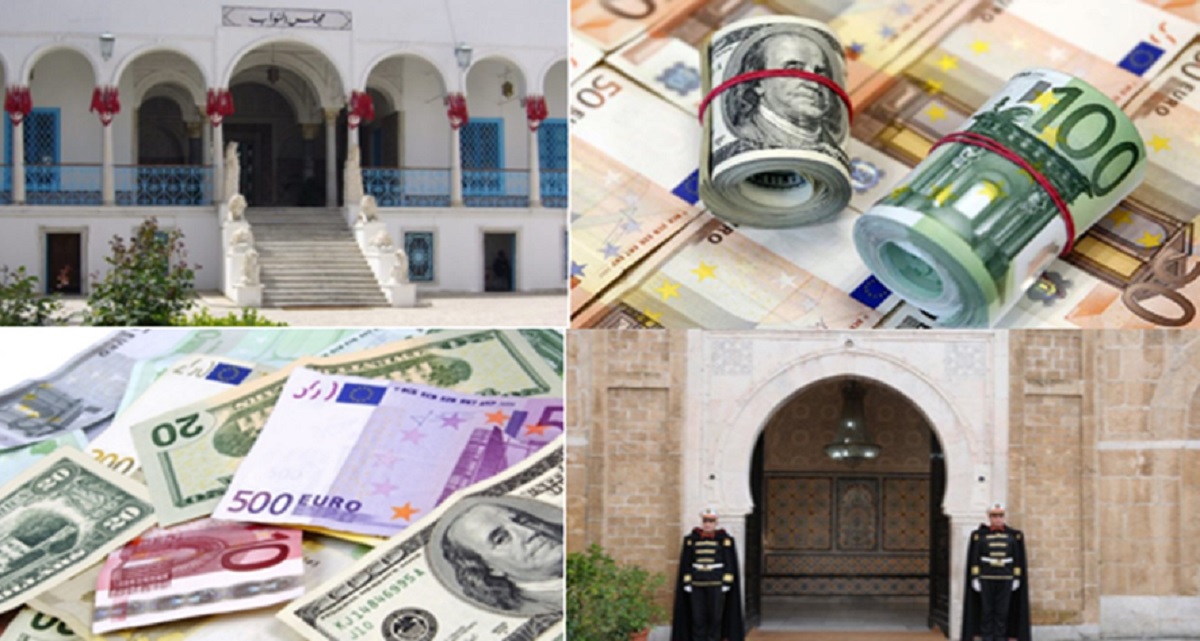
Tunisia is preparing a major structural reform of its foreign exchange framework, as the Parliamentary Finance and Budget Committee has completed its review of a draft new Foreign Exchange Code submitted by the Ministry of Finance.
The text would repeal and replace the 1976 law and its implementing decrees, aiming to modernize the country’s financial relations with the rest of the world.
After decades of partial amendments, the draft introduces a comprehensive reform including a broader definition of foreign exchange operations, recognition of crypto-assets, the creation of private exchange offices, a new “licensed exchange operator” status for companies, and stricter rules on declaration and repatriation of foreign-held assets.
Modernizing the legal framework for the digital economy
The bill introduces new legal concepts such as “crypto-assets,” defined as digital representations of value or rights that can be transferred or exchanged electronically, as well as digital payment instruments and international e-commerce and payment platforms.
It also clearly distinguishes between current operations (trade, services, income from capital and labor) and capital/financial operations (investments, portfolio flows, real estate purchases, loans), in an effort to reduce legal uncertainty for economic operators.
Redefining tax and exchange residency
The text revises the definition of tax and exchange residency. A resident includes any Tunisian permanently established in the country, as well as foreigners living in Tunisia for at least 183 days over the previous 365 days and having their main activity there.
Tunisians living abroad for more than 183 days and whose main activity is outside Tunisia are considered non-residents, while public officials posted abroad retain resident status regardless of duration.
Greater freedom for current transactions and investments
The draft establishes full freedom of payment for current transactions, to be further defined by decree. It also allows free transfer of foreign currency investments made by non-residents, including repatriation of proceeds from sale or liquidation.
Foreign currency loans taken by Tunisian companies and subscriptions to state or corporate foreign-currency debt by non-residents are also liberalized, subject to possible limits by the Central Bank.
Controlled expansion of Tunisian investments abroad
A key provision allows Tunisian companies to invest abroad more freely, while still subject to regulatory limits defined by decree. The aim is to balance international expansion with protection of national foreign exchange reserves.
Private exchange offices introduced
For the first time, Tunisia would authorize private exchange offices, licensed by the Central Bank. These firms, owned by Tunisian individuals, would be allowed to buy and sell foreign currency for cash transactions but would be prohibited from making international transfers.
A secondary agent system would also allow hotels and retailers to exchange foreign currency from travelers through authorized intermediaries.
New “licensed exchange operator” status
Large companies, listed firms, and eligible startups could obtain a special status allowing them to conduct certain foreign exchange operations more freely, under financial auditing supervision.
Stronger declaration and repatriation rules
Residents would be required to declare foreign-held assets and crypto-assets above a certain threshold. They must also repatriate foreign currency earnings from exports, services, investments, and digital assets.
Some exemptions apply for foreign nationals and returning Tunisians regarding assets accumulated before residency.
Tougher penalties and enforcement
The draft introduces a stricter sanctions regime, including fines and prison sentences of up to three years for serious violations such as undeclared assets, failure to repatriate funds, or illegal currency trading. Repeat offenses would lead to doubled penalties.
A compliance mechanism allows offenders to regularize their situation before judgment.
Stronger role for the Central Bank
The Central Bank of Tunisia would gain expanded oversight powers over all licensed financial intermediaries, exchange offices, and operators, including on-site inspections and access to digital systems.
Gradual implementation
The new code would take effect three months after publication. Existing informal currency operators would have a three-year transition period to comply. Several implementing decrees are still expected, particularly on thresholds, investment rules, and licensing conditions.
A major financial turning point
This reform represents a significant shift in Tunisia’s financial governance, aiming to modernize the system, curb the parallel economy, encourage foreign investment, and improve foreign currency inflows. Parliamentary debate is expected to continue in the coming weeks ahead of a final vote before the end of the legislative year.