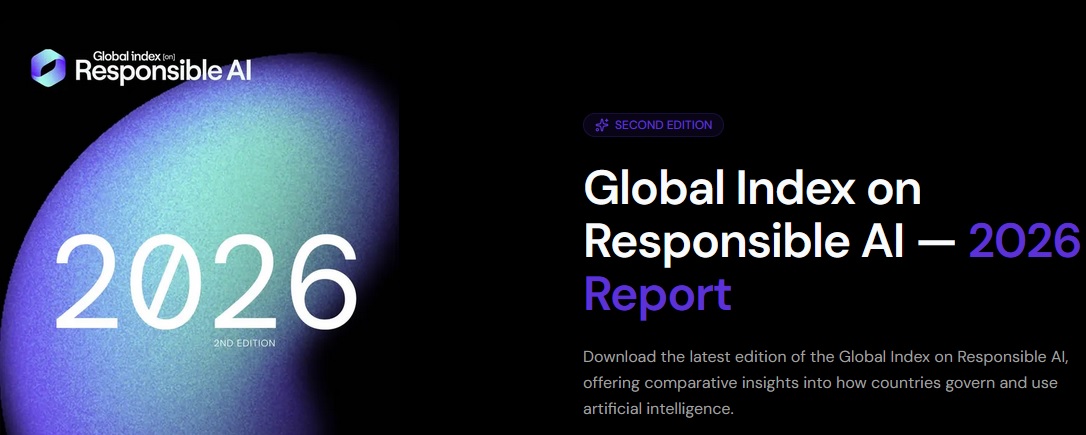
Tunisia ranked 110th out of 135 countries in the 2026 Global Index on Responsible AI (GIRAI), highlighting the country’s limited progress in establishing a governance framework for the ethical and responsible use of artificial intelligence.
Published by the Global Center on AI Governance (GCAIG), a South Africa-based research center, the index assesses countries’ readiness to develop and deploy AI responsibly.
Rather than measuring technological prowess through investment levels, AI talent or the size of the tech sector, the GIRAI evaluates how well countries govern AI based on principles such as ethics, human rights, transparency and accountability.
The 2026 edition covers 135 countries and territories, with data collected between November 1, 2023, and September 30, 2025.
Tunisia scored 16.37 out of 100, placing 23rd in Africa.
The country’s strongest performance came in the “Enabling Conditions” pillar, where it scored 49.22 points. This category measures the foundations needed for responsible AI, including digital infrastructure, institutional capacity, the broader digital ecosystem and the resources available to support AI adoption. While the score suggests Tunisia has established some of the necessary building blocks, the report indicates these have yet to translate into robust responsible AI practices.
Tunisia also scored 23.52 points in “Trust and Safety,” reflecting relatively weak safeguards related to AI system reliability, user protection, risk management and data security.
However, the country recorded particularly low scores across several key governance areas. It received zero points in “AI Policy, Ethics and Sustainability,” alongside 9.61 points for “Labor and Skills,” 13.46 points for “AI in Public Service,” 19.22 points for “Inclusion and Diversity,” and 16.04 points for “Civil Society Engagement.”
Nigeria leads Africa
Nigeria emerged as Africa’s highest-ranked country, placing 38th globally with a score of 45.93 points. The country was recognized for its progress in creating an enabling environment for responsible AI, as well as improvements in governance and institutional capacity.
Egypt ranked second in Africa at 48th globally, followed by Kenya (50th), Ghana (56th), Benin (59th), Morocco (63rd), Côte d’Ivoire (64th), Rwanda (66th), Ethiopia (73rd) and Senegal (74th), completing the continent’s top 10.
In North Africa, Egypt retained the regional lead, ahead of Morocco. Libya ranked 78th globally, outperforming Tunisia despite years of political instability, notably posting 31.99 points in the AI Policy category. Algeria ranked 123rd, also lagging behind in several dimensions of responsible AI governance and scoring zero in Civil Society Engagement.
Europe dominates the global rankings
Globally, European countries dominated the Responsible AI Index.
Norway topped the ranking with 75.26 points, thanks to its strong institutional framework, advanced public policies and a regulatory environment that supports the ethical and secure deployment of artificial intelligence.
It was followed by Italy, Ireland, France and the Netherlands, while Germany, the United Kingdom, Slovenia, Latvia and Estonia rounded out an all-European top 10.
According to the report, Europe’s dominance reflects its leadership in AI regulation, data protection, digital governance and the adoption of national AI strategies. Common regulatory frameworks such as the European Union’s AI Act, combined with sustained investment in digital skills and AI research, have further strengthened the region’s position.
At the other end of the ranking, countries facing severe economic, institutional or security challenges occupied the bottom positions. South Sudan ranked last with 4.04 points, followed by Afghanistan (6.02) and Chad (6.51).