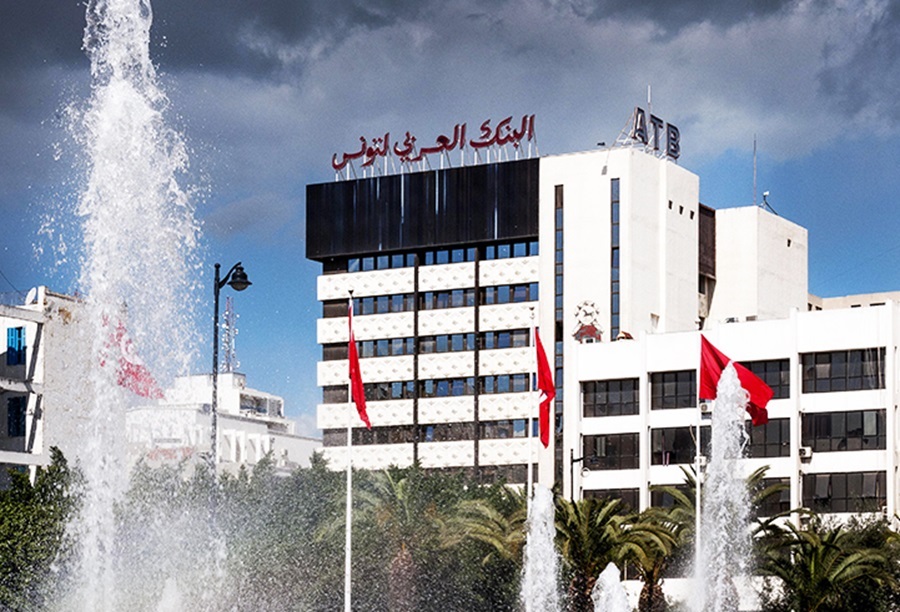
Arab Tunisian Bank (ATB) has reported a net banking income (NBI) of 180 million dinars (MD) for the first half of 2026, up 5% from 171.3 MD in the same period of 2025.
For the second quarter alone (April–June 2026), NBI stood at 76.1 MD, confirming sustained commercial momentum despite an overall decline in net outstanding loans.
The bank’s interim results, released this week, underscore the effectiveness of its strategic rebalancing and cost‑control measures in a challenging interest‑rate environment.
Drastic operating expense management
The standout driver of the half‑year performance was a sharp reduction in operating expenses. Total banking operating costs fell by 22.6% to 175 MD at end‑June 2026, compared with 226.2 MD a year earlier.
This compression was primarily attributable to a significant drop in interest expenses—from 219 MD to 167.4 MD (a reduction of 51.7 MD). The bank benefited from a restructuring of its liabilities and improved control over financial intermediation costs.
Securities portfolio delivers strong contribution
While interest income overall contracted to 249.5 MD (against 302.5 MD in H1 2025), the bank’s trading and investment securities portfolio provided a vital buffer. Income from this portfolio jumped 20.8% to 66 MD at June 30, 2026, up from 54.6 MD a year earlier, lending decisive support to the net banking income.
Deposit trends reflect strategic Shift
On the funding side, ATB reported contrasting but qualitatively favorable movements. Savings deposits rose 5.5% (+102 MD) to 1,934 MD, while demand deposits grew 1.9% (+43.1 MD) to 2,265 MD. Total customer deposits stood at 6,613 MD at end‑June 2026, a slight retreat from 6,761 MD a year earlier—a development the bank attributes to a deliberate reduction in high‑cost resources.
Prudent credit orientation
Net loans (after provisions and deferred interest) amounted to 4,856 MD at June 30, 2026, down from 5,314 MD in the prior‑year period. This contraction reflects tighter lending standards and a more rigorous approach to portfolio cleansing and risk management.
Meanwhile, operating expenses (excluding interest) rose 7.9% to 139 MD, driven mainly by higher staff costs (87.3 MD versus 79.8 MD), while general operating expenses edged lower to 39.3 MD.
Outlook
ATB’s H1 2026 results illustrate a bank in transition: maintaining revenue growth through asset‑liability optimization and non‑interest income, while deliberately slowing credit expansion to strengthen its risk profile.
The substantial reduction in funding costs and the outperformance of its securities book suggest that management’s strategic arbitrages are beginning to pay off, even as the bank navigates a subdued lending environment.