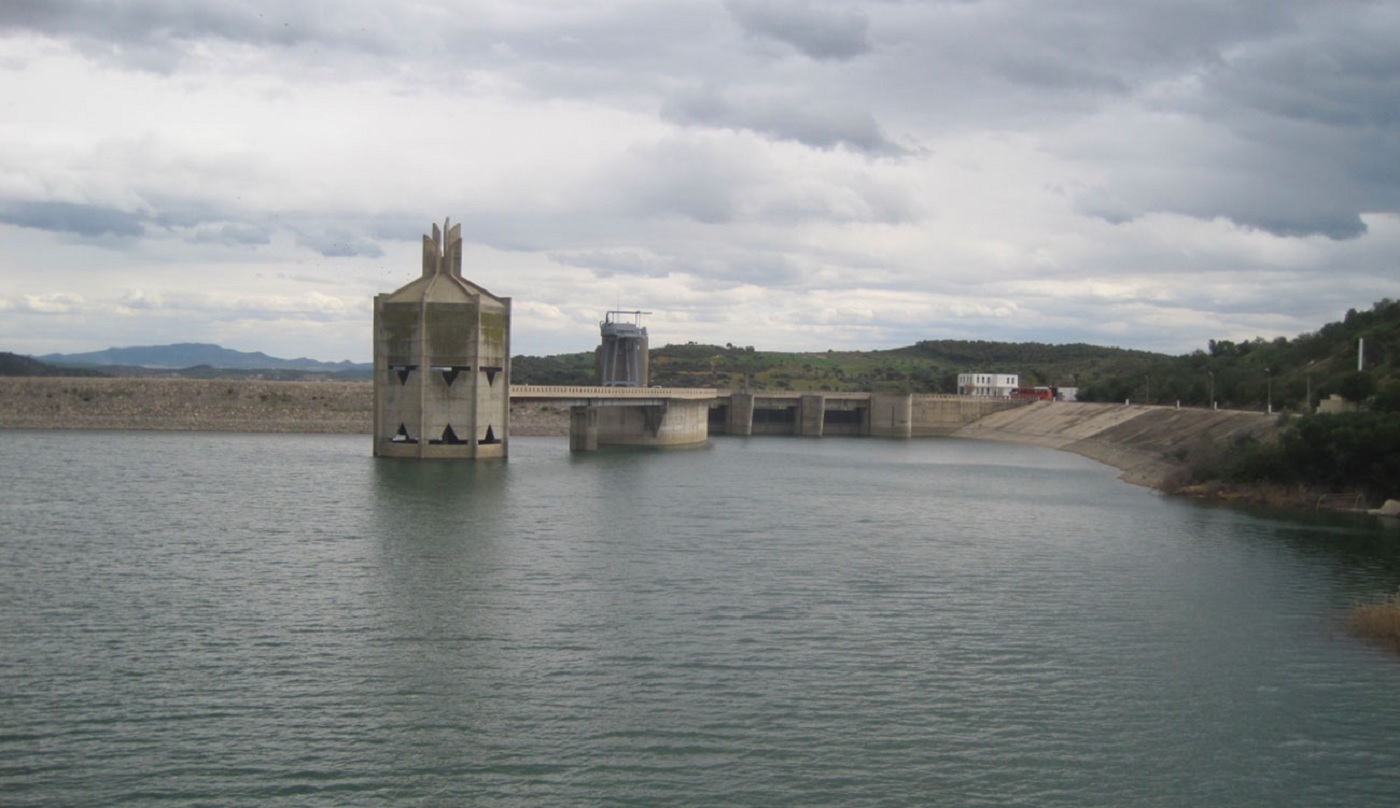
Water reserves in Tunisian dams reached 35.6% as of July 18, according to statistics on the “state of the dams” published by the National Observatory of Agriculture (ONAGRI).
The volume stored in these dams increased by 29.5% compared to the same period last year, reaching 842.825 million cubic meters (Mm³).
Compared to the average of the past three years, an increase of 57.779 Mm³ was recorded as of July 18. In percentage terms, this is a 7.3% rise, from an average of 785.045 Mm³ to 842.825 Mm³ on the same date this year.
The filling rate of the northern dams stood at 41.8%, with water reserves of 774.712 Mm³, an increase of 27.12% compared to the same period in 2024 (609.428 Mm³).
As for the central and Cap-Bon dams, their filling rates were 11.6% (52.344 Mm³) and 25.5% (15.769 Mm³), respectively.
The distribution of water stocks across dams showed that the highest filling rates were recorded at the Mellegue Dam (59% with 30.253 Mm³), El Barrak Dam (53% with 152.554 Mm³), and Sejnane Dam (44% with 57.808 Mm³).
Cumulative inflows from September 1, 2024, to July 17, 2025, amounted to 969.846 Mm³, compared to an average of 1,770.212 Mm³ during the same period, marking a decrease of 800.366 Mm³.
On July 18, 2025, total inflows to the dams were around 0.440 Mm³, shared out among northern dams: 0.418 Mm³, central dams: 0.012 Mm³ and Cap-Bon dams: 0.007 Mm³.
Total water usage and releases from the dams on July 18 reached 2.328 Mm³, spread out among northern dams: 2.054 Mm³, central dams: 0.057 Mm³ and Cap-Bon dams: 0.067 Mm³.
As of July 18, the total water supply to Lake Ichkeul during the current season amounted to 1.493 Mm³, compared to 0.264 Mm³ at the same time last season.
Climate challenges coupled with water scarcity
Over the past three decades, Tunisia has recorded a temperature increase of about 0.4°C. For instance, the average temperature between May and September 2022 was about 27.9°C, dropping to 27.1°C in the summer of 2023.
The agricultural sector is particularly affected by climate change, as it consumes around 80% of the country’s water resources. This situation poses a major challenge in the context of water scarcity.
Tunisia is experiencing water stress, with only 420 cubic meters of water per person per year, a very alarming situation.
With dam levels continuously falling and increasing water stress, this vital resource is becoming scarcer by the day. While citizens’ careless or irresponsible behaviors are often blamed, rightly or wrongly, the authorities also share part of the responsibility.
The government considers that one of the top priorities going forward is to “rationalize water consumption and reduce demand across all sectors, in addition to utilizing non-traditional water resources,” including seawater desalination and the reuse of treated wastewater.