In North Africa, electricity tariffs remain generally more moderate than in parts of West Africa, though notable differences persist.
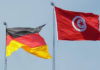
Tunisia ranks second in the region, with an average tariff of approximately $0.067/kWh. The cost remains relatively moderate thanks to a balanced energy mix combining natural gas, oil, and hydropower, though limited subsidies and production costs keep prices at this level.
Morocco stands out as the most costly nation in North Africa in 2025, with an average price of about $0.119/kWh, driven by heavy dependence on imported energy and expensive thermal power plants despite gradual progress in renewables.
Algeria follows at roughly $0.040/kWh, while Egypt offers the cheapest electricity in North Africa at approximately $0.024/kWh.
Across the broader continent, electricity prices vary dramatically, shaped by differing energy policies, generation mixes, access to local resources, and infrastructure capacity.
According to the latest data compiled by several specialized observatories, average residential tariffs span a wide spectrum. In some countries, the average cost per kilowatt-hour (kWh) exceeds $0.30, while in others it remains remarkably low, sometimes below $0.010.
These disparities stem from structural factors such as reliance on costly hydrocarbon imports, a predominance of thermal power plants, the level of public subsidies, or conversely, a lack of effective regulation.
Top five African countries with the highest electricity costs
As of 2025, Cape Verde remains the most expensive country for electricity in Africa. Heavily dependent on imported fossil fuels for power generation, its average kWh price stands at approximately $0.328, one of the highest on the continent.
Senegal follows closely with a tariff of around $0.227/kWh, trailed by Kenya, which, despite significant renewable energy development, still records a high price of roughly $0.220/kWh.
Mali comes next at $0.218/kWh, a consequence of heavy reliance on fuel imports and aging power plants. Finally, Burkina Faso, with a tariff of about $0.206/kWh, rounds out the list of five African nations with the steepest electricity prices.
Across West Africa, these high tariff levels reflect common challenges: limited access to cheap local energy resources, generation mixes dominated by fuel-importing thermal plants, and elevated investment and transmission costs.
African countries with the lowest electricity tariffs in 2025
At the opposite end of the spectrum, several sub-Saharan African nations boast highly competitive tariffs, well below the continental average.
Ethiopia leads with the lowest price in the region in 2025 at around $0.006/kWh. This competitiveness is explained by a largely hydropower-based energy mix, enabling low-cost electricity generation and reducing dependence on fuel imports.
It is followed by Sudan with a tariff of about $0.010/kWh, and Angola at $0.015/kWh, where the use of local resources such as hydropower and oil helps keep consumer prices low.
Zambia, with an average price of $0.023/kWh, completes the ranking. Once again, hydropower generation and limited reliance on imported fossil fuels account for these advantageous tariffs.