Over the first four months of 2026, Tunisia exported goods worth 22,694 million dinars and imported 30,223 million dinars, resulting in a trade deficit of 7,529 million dinars, compared with 7,293 million dinars during the same period in 2025, an increase of 236 million dinars. One customs category alone is largely responsible for this deterioration.
Goods are classified into 97 chapters under the Harmonized System (HS), an international customs standard. Each chapter represents a product category, allowing a detailed analysis of trade flows beyond overall aggregates to identify which sectors are driving improvements or worsening the trade balance.
Structure of the deficit
Chapter 27, covering coal, crude oil and petroleum products, remains by far the largest contributor to the deficit at 4,369 million dinars, or 58% of the total.
This reflects Tunisia’s structural dependence on energy imports. It is followed by Chapter 84 (machinery and boilers) with a deficit of 1,456 million dinars and Chapter 10 (grains) at 1,344 million dinars, linked to imports of wheat and barley under tight food supply conditions.
Vehicles: main factor behind the deterioration
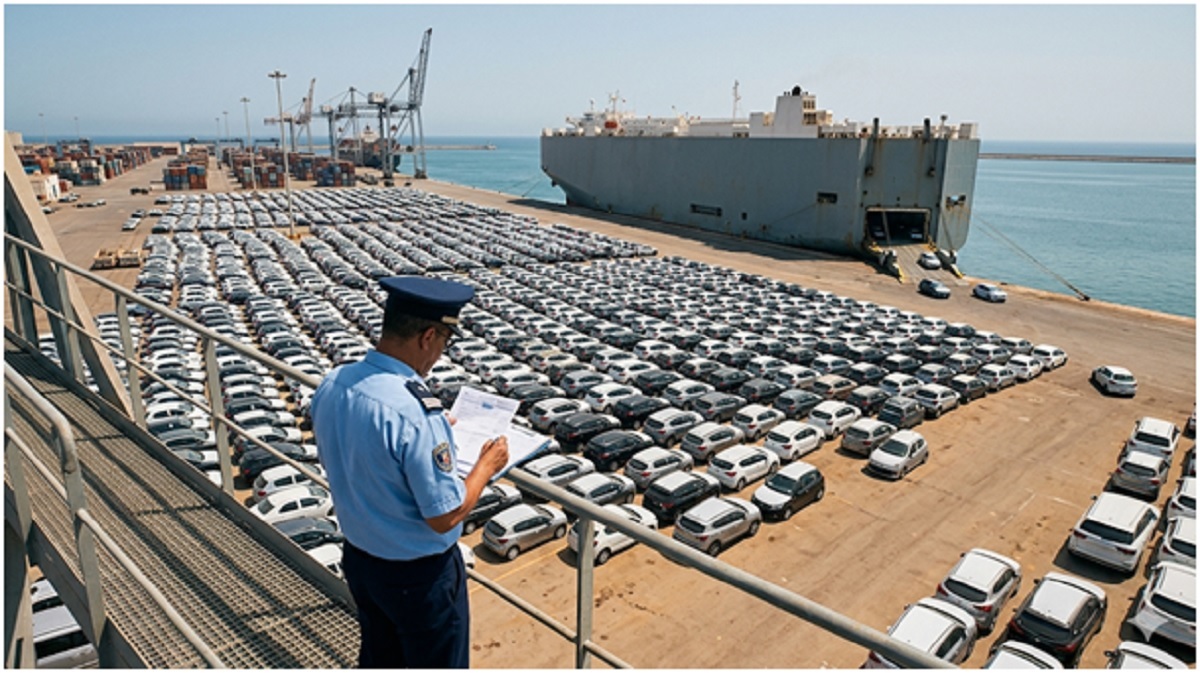
Chapter 87, which includes motor vehicles, tractors, bicycles, and related parts and accessories, recorded imports of 2,434 million dinars in the first four months of 2026, compared with 2,089 million dinars a year earlier, an increase of 345 million dinars (+16.5%). Exports from this category, mainly automotive components supplied to European industry, amounted to only 825 million dinars. The resulting deficit stands at 1,609 million dinars.
The worsening of this sector alone accounts for 249 million dinars, nearly matching the total deterioration of the national trade deficit (236 million dinars). Without the increase in vehicle imports, Tunisia’s overall trade balance would have slightly improved over the period.
The coverage rate, the share of imports offset by exports, continues to decline sharply, falling from 48.7% in early 2024 to 33.9% in the same period of 2026.
April 2026: a warning signal
Monthly data shows a worrying acceleration. Between January and March 2026, vehicle imports averaged 576 million dinars per month. In April alone, they surged to 707 million dinars, 22.8% above the average.
Year-on-year, April 2026 was up 139 million dinars (+24.5%) compared with April 2025, resulting in a monthly deficit of 494 million dinars for this single category.
This spike is not accidental. It preceded the implementation of a Central Bank of Tunisia circular requiring a 100% advance deposit for vehicle imports. Importers appear to have rushed to finalize orders before the measure took effect, suggesting a clear anticipation effect that may be followed by a sharp slowdown in subsequent months.
Structural issues beyond short-term measures
The effectiveness of the new regulation will only be measurable in the second half of 2026. The current figures mainly reflect pre-policy behavior and a rush to import ahead of restrictions.
The deeper issue remains structural: Tunisia does not produce vehicles at scale. It consumes and imports them almost entirely. Without industrial transformation in this sector, regulatory measures alone are unlikely to sustainably correct the imbalance in Chapter 87.