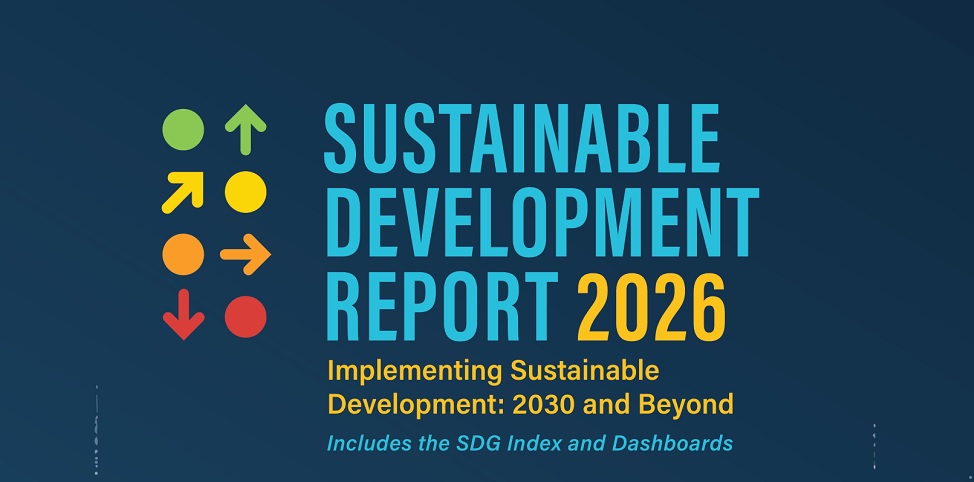
Tunisia has secured the third spot in Africa and ranks 72nd globally out of 169 countries in the 2026 Sustainable Development Report, published by the UN-affiliated Sustainable Development Solutions Network (SDSN).
With a composite score of 71.3 out of 100 on the SDG Index, Tunisia finds itself in a promising, though incomplete, position on the road to achieving the 17 UN goals set for 2030.
A score of 71.3 indicates that Tunisia has successfully accomplished a significant portion of its sustainable development targets but has yet to fully cross the finish line.
According to the report, the country’s results reflect a relatively advanced level of access to basic social services, particularly in health and education.
However, persistent hurdles continue to drag down its overall performance, most notably stark territorial inequalities, mounting pressure on natural resources and lingering challenges in fostering sustainable economic growth.
The Maghreb leads the continent
Zooming out to the Middle East and North Africa (MENA) region, Morocco takes the crown as the highest-ranked country. It holds the 68th position globally with a marginal score of 71.7, edging out its neighbors thanks to quicker advancements in infrastructure, social policy reforms and the energy transition.
Algeria follows closely at 70th worldwide with a score of 71.3, sitting just two spots ahead of Tunisia.
Further down the continental list, Egypt lands in 86th place with a score of 69, while other African nations trail behind, including Cape Verde (95th), Mauritius (97th), Namibia (100th), Kenya (106th), South Africa (109th), São Tomé and Príncipe (111th), and Botswana (112th).
Generally speaking, African countries remain bogged down by structural deficits in realizing the SDGs. The observed scores across the continent continue to mirror deep-seated struggles with poverty, social inequality, inadequate basic service access, and vulnerability to climate shocks.
Nevertheless, the Maghreb bloc, Morocco, Tunisia, and Algeria, distinguishes itself with comparatively stronger metrics, even as significant gaps persist in their growth models and the overarching shift toward fully sustainable development.
Finland tops the global charts
On the world stage, Finland reigns supreme, securing the top spot with an impressive score of 87.4. The Nordic heavyweight solidifies its reputation as a global benchmark for SDG implementation, driven by robust public policies in education, social welfare, energy transition, and environmental governance.
It is flanked by a European-dominated top ten, which includes Sweden, Denmark, Norway, Germany, alongside Australia, France, the United Kingdom, Iceland and the Czech Republic.
At the other end of the spectrum, the lowest-ranked countries are overwhelmingly located in Sub-Saharan Africa and states plagued by structural fragility.
South Sudan, the Central African Republic, Chad, and Somalia anchor the bottom of the table. Their poor rankings stem from a confluence of crippling factors: persistent political instability, active armed conflicts, extreme poverty, dilapidated infrastructure, and alarmingly limited access to essentials such as healthcare, education, and electricity.