Tunisia remains in a state of water insecurity, with only 420 cubic meters of water available per person per year, an alarming situation. With the continuous decline in dam levels and increasing water stress, this vital resource is becoming scarcer by the day. While citizens’ careless and irresponsible behavior is often blamed,rightly or wrongly, the authorities also bear part of the responsibility.
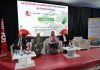
To address this challenge, a new development project called “TEC-EAU” has been launched by the Ministry of Agriculture, Water Resources and Fisheries in collaboration with the United Nations Food and Agriculture Organization (FAO). The project aims to boost water supply in Tunisia through the use of innovative technologies.
According to a FAO statement, this initiative comes at a time of increasing water scarcity and pressure, and seeks to evaluate the feasibility of four technological solutions. These include methods to optimize water mobilization and reduce evaporation in water reservoirs, including both small and large dams.
Specifically, the project will test the application of monomolecular films on dam surfaces and provide for the installation of floating photovoltaic panels on reservoirs, the exploration of cloud seeding opportunities and the enhancement of groundwater recharge using subsurface dam techniques, adapted to the Tunisian context.
These actions aim not only to strengthen water availability but also to support renewable energy production, while taking into account local specificities such as available resources, climate, and technical capacity.
Hamadi Habaieb, Secretary of State to the Minister of Agriculture, highlighted the importance of institutional partnerships and the science-research nexus as key drivers of Tunisia’s transition toward sustainable and resilient water resource management.
For his part, Mohamed Amrani, FAO Representative in Tunisia, reaffirmed the organization’s commitment to support innovative initiatives for all stakeholders, particularly farmers, through pilot research projects that could serve as models for other countries.
Major challenges ahead
It’s no secret that Tunisia faces significant water management challenges due to its arid and semi-arid climate, combined with rapid population and economic growth.
According to FAO reports, Tunisia is one of the world’s most water-scarce countries, with per capita water availability falling below 400 cubic meters per year, far beneath the 1,000 m³/year water stress threshold.
In addition, the country grapples with water quality issues, including high levels of pollution in both surface and groundwater. Natural water sources are often overexploited and depleted, leading to declining water quantity and quality.
The government has introduced various policies and programs to improve water management—such as building dams and seawater desalination plants, adopting more efficient irrigation techniques, and promoting sustainable water management practices.
However, much more remains to be done to ensure efficient and sustainable water use in Tunisia.