India’s Jindal Group, a powerhouse in steel, iron, and energy, has announced plans to invest and expand its operations in Tunisia, with a strategic focus on high-value activities in heavy industries and infrastructure.
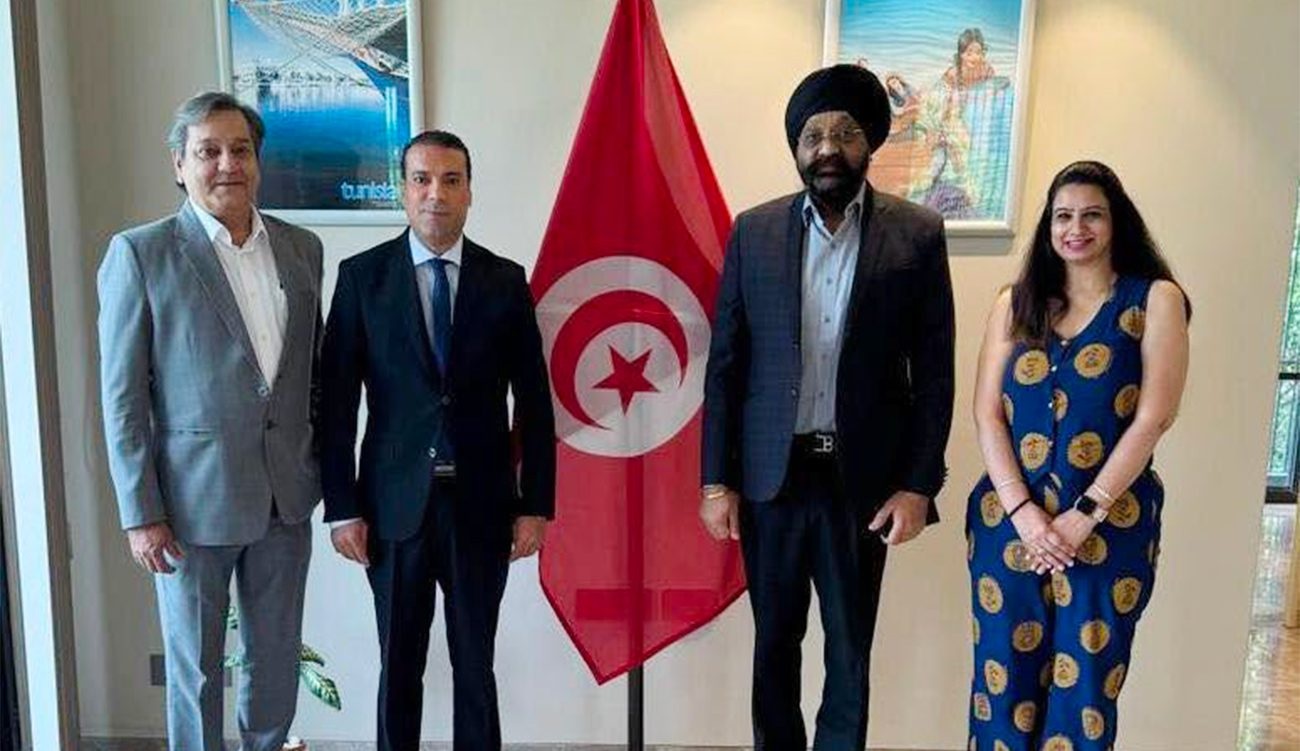
The announcement came during a meeting between representatives of the conglomerate and Tunisia’s embassy in India.
According to a statement from the Tunisian diplomatic mission, Hamadi Louati, the interim chargé d’affaires, received a Jindal Group delegation including Harvinder Singh, Chairman of the Group, and Kirit Sobti, Investment Advisor for the African continent.
The Indian delegation expressed strong interest in launching investment projects in Tunisia and reaffirmed its commitment to strengthening its footprint in the Tunisian market.
The group also indicated its intention to carry out a visit to Tunisia at the earliest opportunity to explore cooperation prospects and identify concrete partnership opportunities.
As a next step, Jindal plans to dispatch an exploratory mission to assess the country’s potential and convert identified opportunities into effective investment projects.
A fully integrated industrial conglomerate
Founded in 1952 by O.P. Jindal, the Jindal Group has established itself as one of India’s leading private conglomerates in steel, energy, mining, and infrastructure. Structured around several subsidiaries, including Jindal Steel and Jindal Power, the group has steadily expanded to become a fully integrated player covering the entire industrial value chain, from raw ore to finished steel and energy production.
Today, the group operates across multiple regions, including India and other strategic markets in Asia, the Middle East, and Africa. On the African continent, Jindal has already developed operations in countries such as South Africa, Mozambique, Botswana, and Namibia, primarily in mining and energy.
The group’s business model is built on vertical integration, controlling every stage of production, from raw material extraction to finished goods and infrastructure.
This means Jindal is active upstream in natural resource extraction (including minerals and coal, the foundation of its industrial activities), before transforming these raw materials into steel and steel products, which remain the historic core of its business.