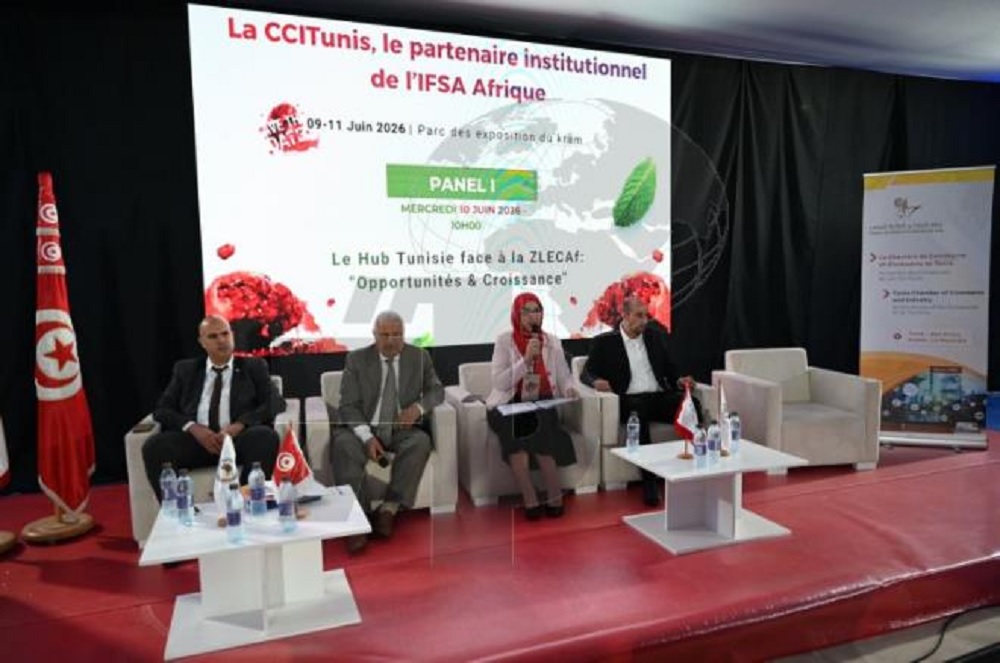
“The African Continental Free Trade Area (AfCFTA) is not merely a tariff agreement; it represents a fundamental transformation of Tunisia’s competitive advantage. This transformation requires coordinated mobilization by public authorities, support institutions, and the private sector,” said Fakhri Bouzayen, Deputy Director of Economic and Trade Cooperation at Tunisia’s Ministry of Trade and Export Development.
“Diversifying export markets is no longer an option given the vulnerability of Tunisia’s traditional markets. Today, 66% of Tunisian exports depend on the European market, a mature market that is highly exposed to regional economic fluctuations,” he stated during the first edition of the AfCFTA Forum, held on Wednesday.
The official also noted that, despite the relatively small share of national exports directed to African countries, around 4.5% of total exports, Tunisia boasts the continent’s greatest diversity in terms of exported products, the number of destination countries reached (42 countries), and the highest economic complexity index.
He called for building on these strengths to expand Tunisian exports across African markets.
Beyond its commercial dimension, Bouzayen emphasized that deeper integration into African value chains represents the agreement’s primary driver of economic transformation.
He also strongly advocated for enhancing the visibility of Tunisia’s services sector across Africa, stressing that the liberalization of services creates opportunities that extend beyond the export of goods.
According to Bouzayen, 25 African countries are close to reaching a decisive milestone in the implementation of the AfCFTA by finalizing the domestic adoption of their tariff concessions, compared with 11 countries currently and 8 in 2022. This step is essential for the practical application of tariff reductions across the continent.
However, the implementation of the continental agreement continues to face several challenges, including limited distribution networks, insufficient physical representation in African markets, weak direct maritime connectivity, high transportation costs, inadequate air freight capacity, restricted access to export financing, uncovered commercial risks, limited awareness of tariff concessions and rules of origin, customs complexities, and differing technical requirements.
The first edition of the AfCFTA Forum was organized on the sidelines of the International Food Show Africa (IFSA Africa) 2026, taking place from June 9 to 11, 2026, at the Kram Exhibition Park in Tunis.