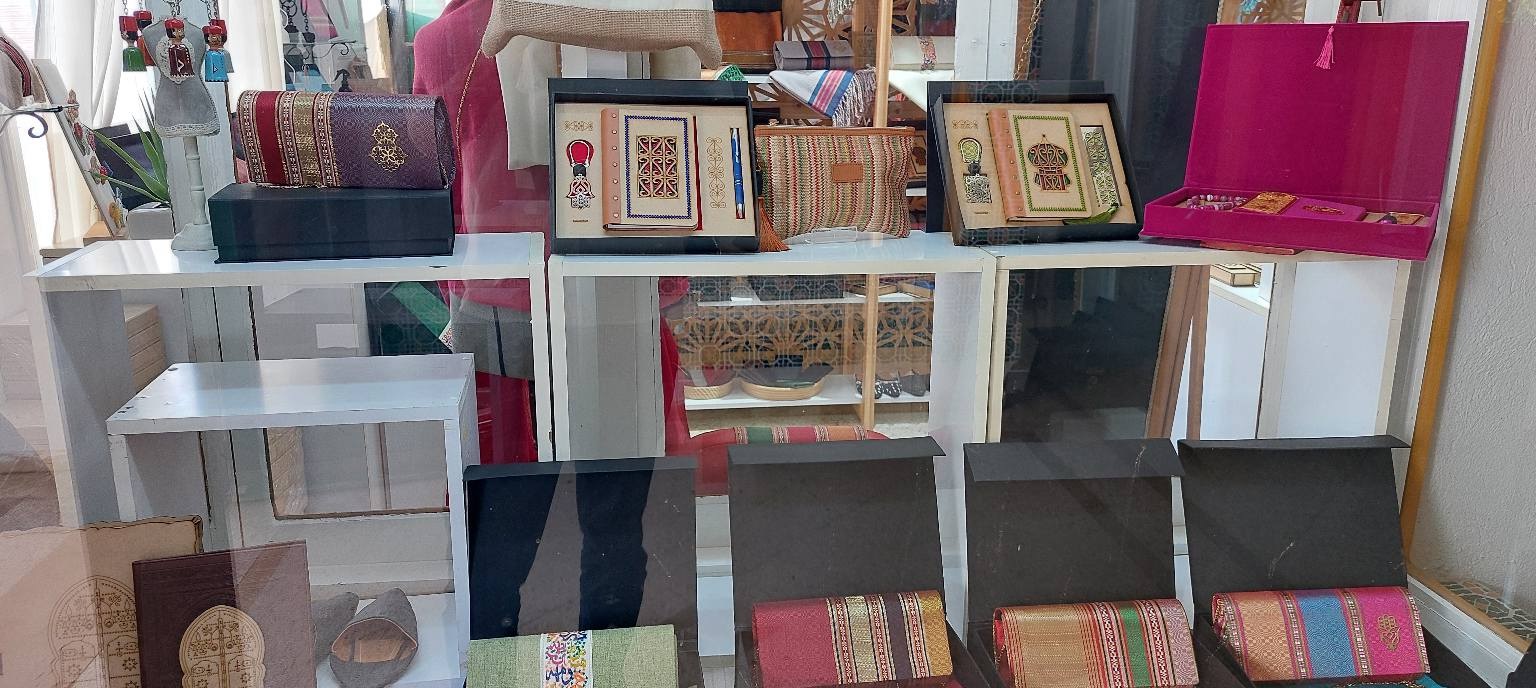
Nineteen prizes were awarded Friday in Tunis by the National Handicrafts Office (ONA) to artisans who took part in the national competitions of the handicrafts sector, organized during the 41st edition of the National Innovation Fair for Handicrafts, held from May 23 to June 1, 2025.
The prizes went to winners in competitions that highlighted innovation in the handicrafts sector, in addition to young entrepreneurs and winners of the Hand-stitched Leather Embroidery Olympiad.
Twelve prizes were awarded to the winners of the innovation competition, with amounts ranging between 1,000 and 4,000 dinars.
These laureates competed in fields such as textiles, souvenirs and gift items, circular economy products and student projects.
In the young entrepreneurs’ competition, the national first prize for the best project, worth 3,000 dinars, went to candidate Farouk Ouahy from Gabès.
At 37 years old, the winner is an engineer and owner of a company created in 2021, specializing in wooden items (jewelry, accessories, decorative objects) made from a mix of wood and silver, resin, and leather.
Two other prizes were also awarded: 1,000 dinars for a haute couture project and 500 dinars for a hand embroidery specialty project.
As for the Olympiad competition for hand-stitched leather embroidery, three winners received the top three prizes, ranging from 1,000 to 3,000 dinars.
150 million dinars in export revenues
At the award ceremony, Minister of Tourism Sofiene Tekaya stressed the importance of the tourism and handicrafts sectors in the national economy, noting that handicraft export revenues reached around 150 million dinars last year.
He also highlighted efforts to promote the sector, particularly through participation in international fairs and the organization of events in inland regions, adding that his department is working to further support this approach.
For her part, Leïla Mselati, Director General of the National Handicrafts Office, emphasized the importance of this event in valuing artisans’ efforts and promoting a positive image of Tunisian handicrafts both locally and internationally.
She noted that this year’s edition introduced a competition focused on the circular economy, given its importance for the environment, as well as a student contest to instill a culture of handicrafts and innovation among young people.
An artisan upgrading program
It is worth recalling that an agreement has recently been signed between the Carpet and Weaving Innovation Center and the Ministries of Employment and Vocational Training, and Tourism, to establish an upgrading program for artisans.
This program aims to provide vocational training for young people in handicraft workshops, particularly in tapestry.
In addition to training, the program provides beneficiaries (aged 15 to 50) with incentive grants of 150 dinars per month. Workshop owners will also receive a supervisory bonus of 100 dinars per trainee, for six months.
Moreover, the program requires a 60% integration rate, meaning that handicraft companies and artisans participating in the program must employ 60% of the trained beneficiaries.
This mechanism is expected to encourage more workers to enter the trade and to boost carpet production in the near future.