The Banking and Financial Council (CBF) has announced the publication of a Guide to the Decarbonization of Financial Institutions’ Portfolios, accompanied by a note on the challenges of financed emissions and transition plans, as well as a list of economic activities eligible under Tunisia’s climate taxonomy.
Designed to provide the banking and financial sector with a methodological framework tailored to the national context, the guide primarily pursues three objectives: supporting financial institutions in reducing their financed carbon emissions, providing tools and recommendations to better understand and act on decarbonization, and offering specific guidance to adapt global approaches to the Tunisian context, the CBF stated.
At a time when international requirements for sustainable finance are tightening and aligning financial flows with the goals of the Paris Agreement is becoming essential, the CBF, the United Nations Development Program, and the Ministry of the Environment are jointly publishing this guide to support the banking and financial sector in its transition toward a low-carbon economy.
Decarbonization refers to the process of reducing greenhouse gas (GHG) emission, particularly carbon dioxide (CO₂)—resulting from human activities. In the financial sector, it mainly involves aligning investment and financing portfolios with global climate objectives, such as those defined by the Paris Agreement.
This alignment is crucial, as financial institutions play a central role in directing capital flows toward low-carbon economic activities.
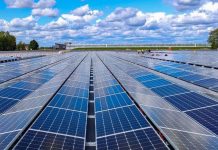
Tunisian financial institutions have a major opportunity to accelerate the country’s energy transition. Strategic investments in renewable energy, particularly wind and solar, could reduce energy dependence, strengthen economic resilience, and align Tunisia with the objectives of the Paris Agreement.