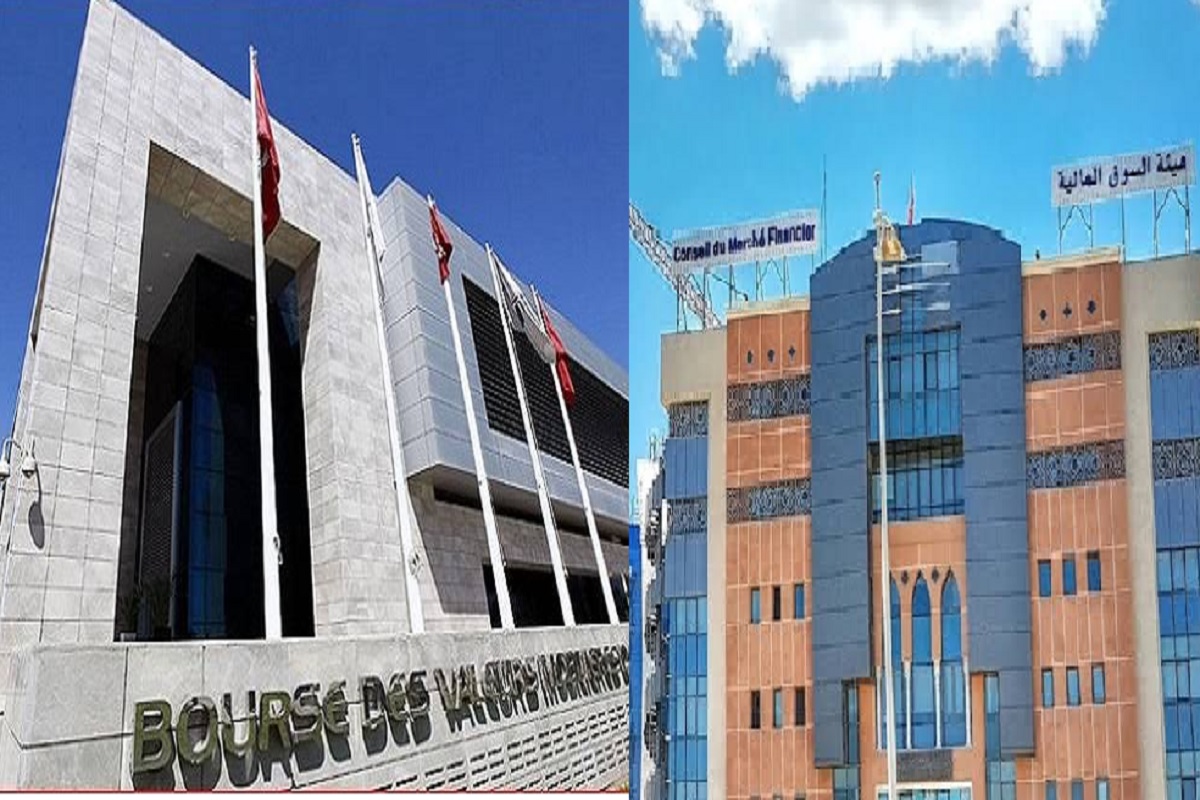
On July 8, 2026, the Tunis Stock Exchange (TSE) published its summary of listed companies’ 2025 financial results. Of the 75 listed companies, 65 published their financial statements, reporting a combined net profit of TND 3.179 billion, up from TND 2.967 billion in 2024, a 7.2% increase. Thirty-five companies improved their results.
The figures are encouraging, but incomplete. They cover only 87% of listed companies.
The remaining 10 companies failed to publish their financial statements. Some have not done so for years. Behind each is an identifiable controlling shareholder, whose identity and ownership stake are listed in the TSE’s issuer profiles.
What the law says
The obligation to disclose financial statements is established under Law No. 94-117 of November 14, 1994 reorganizing Tunisia’s financial market, and further detailed in the TSE’s General Regulations and the Capital Market Council’s (CMF) regulations governing public offerings.
Companies raising capital from the public must publish their annual financial statements, together with the auditors’ report, within four months of the end of the financial year.
For companies with a financial year ending on December 31, 2025, the deadline was late April 2026. Half-year financial statements must be published within three months after the end of the first half of the year.
Failure to comply may trigger graduated sanctions. The CMF may order companies to publish their accounts, impose daily penalties and financial fines. The TSE may suspend trading and, ultimately, delist companies.
In practice, however, trading suspensions are common, delistings are rare and financial penalties are seldom visible. This gap between the legal framework and its actual enforcement explains how some companies remain listed despite not publishing financial statements for as long as six years.
The ten companies in default and who controls them
The following ownership data comes from the Tunis Stock Exchange’s issuer profiles.
Aetech
Zoubeir Chaieb owns 67.77%; the public holds 32.23%. STB SICAR sits on the board.
The latest available (2024) accounts show negative equity of TND -8.16 million, revenue falling from TND 6.23 million to TND 4.59 million, and a net loss of TND 710,000. Equity has deteriorated continuously since 2022.
Alkimia
Tunisian Chemical Group (GCT): 39.55%
IMER: 22.39%
La Carte Vie (Doghri Group) : 12.4%
Société Hôtelière El Kantaoui Marhaba International (Driss Group) : 7.57%
STEC: 7.47%
The largest shareholder is the state-owned GCT.
Its 2024 accounts showed negative equity of TND -190.06 million, against share capital of TND 39.47 million, and a net loss of TND 44.4 million, after a TND 39.31 million loss in 2023. A TND 20 million capital increase in January 2024 failed to reverse the trend.
Sanimed
AB Corporation (Lotfi Abdennadher Group): 50.31%
ATD SICAR: 13.64%
Sotemail: 11.71%
2024 revenue declined from TND 58.16 million in 2022 to TND 32.7 million, while net losses reached TND 11.88 million.
Somocer
Agrimed: 17.36%
AB Corporation: 11.12%
Lotfi Abdennadher: 5.39%
Public float: 66.13%
Its 2024 accounts marked a sharp deterioration, with shareholders’ equity falling from +TND 33.57 million to -TND 15.31 million, revenue dropping from TND 129.86 million to TND 88.93 million, and a net loss of TND 48.58 million.
Sotemail
Somocer: 63.23%
ATD SICAR: 26.96%
Attijari SICAR: 5.48%
Public float: 4.33%
Despite maintaining positive equity of TND 36.34 million at the end of 2024, the company posted a net loss of TND 14.52 million, while revenue declined from TND 56.51 million to TND 37.44 million.
With only 4% free float, the article questions whether remaining listed still serves any purpose when financial disclosure has largely ceased.
Siphat
Central Pharmacy of Tunisia: 67.77%
STEC: 12.21%
The company is majority state-owned, with representatives of the Prime Minister’s Office and several ministries sitting on its board.
Its latest published accounts date back to 2019, showing negative equity of TND -21.45 million and a net loss of TND 14.52 million. Even its issuer profile has not been updated for five years.
STIP
Africa Holding: 70.87%
Mehdi Dridi: 14.62%
The company is tightly family controlled.
Its 2024 accounts showed shareholders’ equity shrinking from TND 15.14 million to TND 6.07 million, alongside a net loss of TND 7.93 million on revenue of TND 140.16 million.
Tawasol Group Holding
The Chabchoub family controls 84.48% through several family members and Esseyaha.
Unlike most of the other companies, its 2024 financial statements remained relatively healthy, with positive equity of TND 20.7 million and net profit of TND 1.15 million. The publication delay therefore cannot be explained by poor financial performance.
Tunisair
Tunisian State: 74.42%
Air France: 5.58%
The board includes representatives from the Finance and Transport ministries, the Prime Minister’s Office, the Central Bank, OACA, CNRPS and ONTT.
The latest figures on its issuer profile date from 2022, showing negative equity of TND -1.746 billion and a net loss of TND 220.8 million. The airline did publish its 2023 individual and consolidated accounts in 2026 but remains late on its 2024 and 2025 financial statements.
UADH
Loukil Investment Group: 72.23%
Its issuer profile is the most outdated, still showing board mandates that expired in 2020 and financial indicators ending in 2017, when the company reported TND 650,000 in profit and distributed a dividend of TND 0.150 per share.
Although UADH remains listed and continues issuing corporate announcements, including one following its June 5, 2026 AGM and another regarding the sale of Mazda distributor Economic Auto, its financial reporting has effectively been frozen for eight years.
What the silence costs the market
The TSE noted that Tunindex20 companies accounted for 82% of total 2025 profits, or TND 2.593 billion, up 7.1% year-on-year.
Dividend distributions also improved for the third consecutive year, with 51 companies paying dividends in 2026 for the 2025 financial year, compared with 49 a year earlier. Total dividends reached TND 1.727 billion, up from TND 1.588 billion, including amounts proposed to shareholders’ meetings not yet held.
However, these figures reflect only the companies that published results. They exclude the ten non-reporting companies, eight of which posted net losses in their last available financial statements. As a result, the reported 7.2% profit growth is calculated from a self-selected sample that naturally paints a more favorable picture.
A review of the ten companies reveals a common pattern. In nine out of ten cases, a single controlling shareholder or family group owns, or nearly owns a majority stake. In the tenth case (Somocer), effective control is exercised by an organized minority block.
The failure to publish financial statements is therefore not the result of fragmented ownership unable to coordinate. In every case, there is a clearly identifiable decision-maker with the authority to approve and publish the accounts—but who has failed to do so.
Two of those controlling shareholders are the Tunisian state itself: through the Central Pharmacy in Siphat and directly in Tunisair. In both companies, board members include representatives of the Prime Minister’s Office and several ministries. In other words, the same public authority that imposes disclosure requirements sits on the boards of companies that fail to comply.
As the article concludes, a minority shareholder in Siphat has had no legal basis to value the company’s shares since 2019, while investors in Sotemail, where the free float is just 4.33%, lack reliable information about the company’s financial position.
Periodic financial disclosure is not merely an administrative obligation; it is the fundamental counterpart to raising capital from the public. When disclosure stops, the article argues, the stock market listing itself becomes a fiction.
The author states that a request for clarification has been sent to the Capital Market Council (CMF) regarding the status of enforcement proceedings against the ten issuers and the failure to update several issuer profiles, including those of Siphat and UADH. The CMF’s response, the article says, will be published.