Inflation in Tunisia is receding, so to speak, in “homeopathic doses.” In September, it slightly dropped to 5%, compared with 5.2% the previous month, according to the National Institute of Statistics (INS) in a note published Sunday on the “Consumer Price Index – September 2025.”
This decline is mainly due to the slowdown in price increases across several sectors, the INS noted.
Food products thus recorded an evolution of 5.7% in September 2025, against 5.9% in August.
Prices for leisure and culture decreased more clearly, passing from 5.4% to 4.6%. Services of restaurants, cafés, and hotels also slowed, with an increase of 10.1% against 10.6% the previous month, while transport services progressed by 3.1% only, after 3.6% in August.
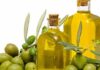
Prices of food oils regress by 1/4
On an annual basis, prices of food products increased by 5.7%. This is principally due to the price increase of fresh vegetables (+21.1%), lamb meat (+20.2%), fresh fish (+10.3%), and fresh fruit (+9.9%).
In contrast, prices of food oils decreased by 24.3%.
Over one year, prices of manufactured products increased by 4.9%, due to the price increase of clothing and footwear products by 9% and products for routine household maintenance by 4.9%.
In the services sector, prices increased by 4.5% over one year, given the price increase of restaurant, café, and hotel services, of 10.1%.
In September 2025, the underlying inflation rate (excluding food products and energy) decreased to establish itself at 5.2% after 5.4% the previous month.
Free and regulated prices
Regarding the prices of free products (not regulated), they experienced an increase of 6% over one year.
The prices of regulated products, for their part, increased by 1.6%.
Free food products experienced an increase of 6.5%, against 0.2% for regulated price food products.
According to the INS, the “Manufactured products” group and the “Services” group are the sectors having brought the strongest contribution to the overall inflation, namely 1.9% and 1.5% respectively.
By regime, the “Non-food free” group and the “Food free” group are the groups having brought the strongest contribution to the inflation, namely 3% and 1.6% respectively.
Increase in consumer prices by 0.06%
The consumer price index recorded an increase of 0.6%, during the month of September 2025, compared to the month of August 2025.
This increase is principally attributed to the price increase of food products by 1.3% and the prices of the education services group by 3.7%.
Over one month, prices of food products increased by 1.3%, due to the price increase of poultry (+5.6%), eggs (+4.2%), fresh vegetables (+2.6%), and beef (+1.4%).
In contrast, the price of lamb meat recorded a slight decrease of 0.1%.
As for education products and services, their prices experienced an increase of 3.7%.
This increase is mainly explained by the price increase of private secondary education services (+5%), pre-elementary and primary education services (+4.7%), tutoring courses (+3.2%), and school supplies (+3%).
Prices of the “leisure and culture” group increased by 0.7%. This is mainly explained by the price increase of newspapers, magazines, and cultural books by 1.3%.