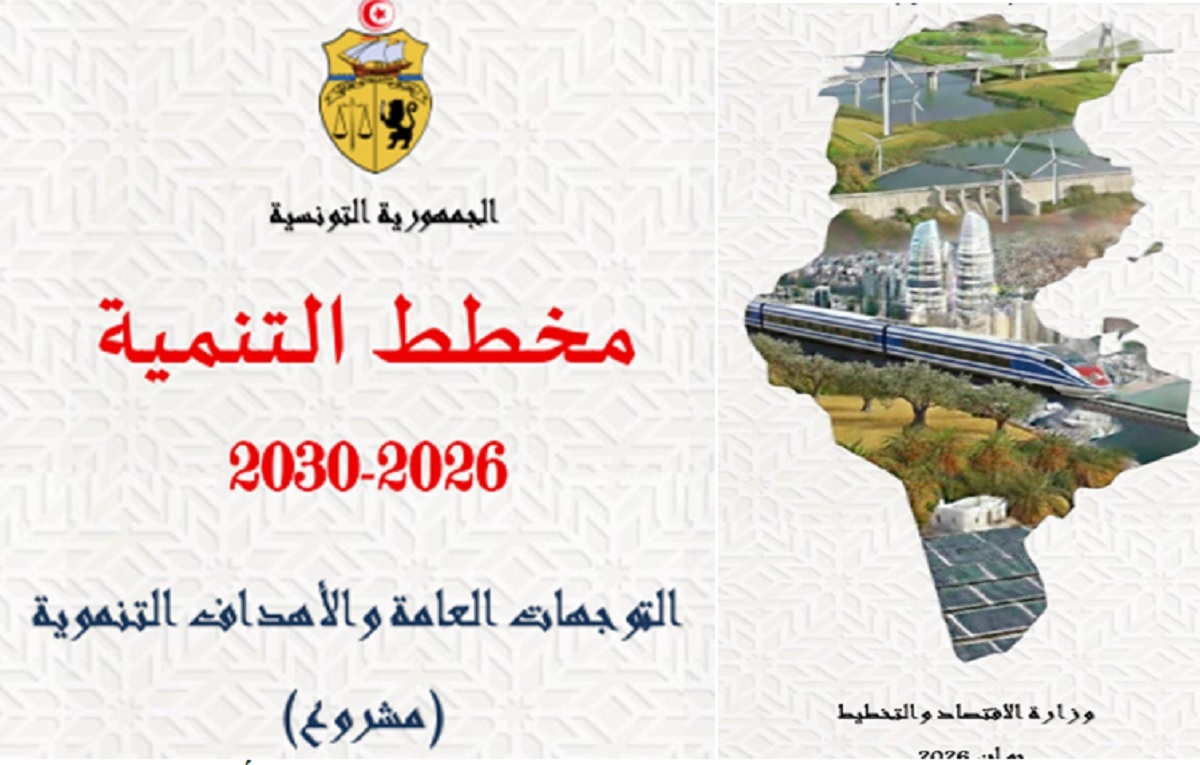
The Ministry of Economy and Planning has just published the draft 2026–2030 Development Plan.
Spanning more than 300 pages, the policy document outlines the country’s economic and financial roadmap for the next five years around one central idea: shifting from a traditional economy to a knowledge- and innovation-based economy.
Upgrading industry, making digital transformation a strategic priority, unlocking private investment, and reducing regional disparities form the backbone of the plan. The document offers a critical assessment of the past five years and places implementation at the core of its ambitions. Here is an overview of the new directions.
– The 2026–2030 Plan focuses on knowledge, investment and inland regions
The draft Development Plan 2026–2030 presents itself first and foremost as a method rather than simply a catalogue of measures. The document claims to break away from excessive centralization in favor of a so-called bottom-up planning approach rooted in regional realities and based on proposals from elected councils.
Citizens are placed at the center of the process, with the stated ambition of turning every part of the country into an attractive investment hub and a generator of wealth.
Behind this philosophy, four main pillars structure the plan, three of which carry a strong economic and financial dimension.
– Modernizing the economic fabric
This is the core of the strategy. The initial diagnosis does not hide the weaknesses. Industry accounts for around 15% of GDP, nearly 90% of goods exports, and employs about 20% of the workforce, but its momentum slowed between 2021 and 2025.
The industrial sector includes 4,604 companies with more than ten employees, employing nearly 522,000 people, including 2,066 fully exporting firms. Textiles, clothing, and leather dominate with 31.7% of the industrial fabric, followed by agribusiness at 21.5% and mechanical and electrical industries at 19.7%.
The chosen direction is to establish a modern industrial model based on the knowledge economy and clean technologies, while moving up global value chains.
Concretely, the plan announces stronger support for small and medium-sized enterprises, upgrading and restructuring productive firms, technical assistance, and the promotion of high value-added activities.
Diversifying export markets and making better use of existing trade agreements are also part of this strategy, within a framework of controlled openness.
– Digitalization and artificial intelligence as cross-cutting drivers
The second major shift is the elevation of digital transformation into a strategic development choice rather than merely a technical project. The diagnosis acknowledges that the transition remains limited and fragmented across the economy, with few companies engaged in genuine digital projects and persistent structural gaps in access to financing and skills. Still, progress is recognized.
The startup sector has expanded, with 1,080 companies labelled under the Startup Act by mid-2025. Mobile internet subscriptions rose from around 9 million in 2021 to 10.74 million by mid-2025, an increase of nearly 20%.
Digital financial inclusion is also advancing, driven by the wider use of electronic dinar services and Tunisian Post payment systems.
The stated objective is to integrate artificial intelligence as a driver for Tunisia’s integration into international value chains, generalize the digitalization of administrative services and finally connect research and development to real economic use.
The plan notes that Tunisia ranks 50th globally on the innovation index and 79th on the knowledge index, positions it aims to strengthen.
– Unlocking private investment and addressing territorial disparities
The third front is perhaps the most direct. Private investment, described as the key engine of wealth creation, averaged only 9.2% of GDP between 2021 and 2025, a level considered far below the country’s needs, with its share continuing to decline.
The identified causes include difficulties in accessing financing and the complexity of administrative procedures. Even more striking is the massive territorial imbalance, with coastal regions attracting more than 75% of investments at the expense of inland area.
To address this, the announced priorities include reforming the business climate, promoting SMEs, creating an intelligent investment support system combining incentives, subsidies, and governance, and diversifying sources of foreign investment. Agriculture, renewable energy, and digital sectors, so far underfunded, are targeted as new growth engines.
– Securing strategic supplies
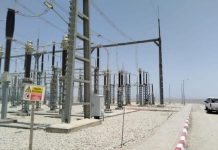
Finally, the plan links food, water, and energy security together. Agriculture accounts for around 10% of GDP and 13% of exports, but repeated droughts have weakened strategic sectors. On energy, the diagnosis is worrying, with declining domestic oil and gas production and growing dependence on Algerian gas.
The response involves agricultural modernization, more efficient water management, and a stronger push toward renewable energy.
More of a strategic framework than a fully costed budget, the plan demonstrates a degree of coherence. Its main challenge, as it openly acknowledges, will be execution.