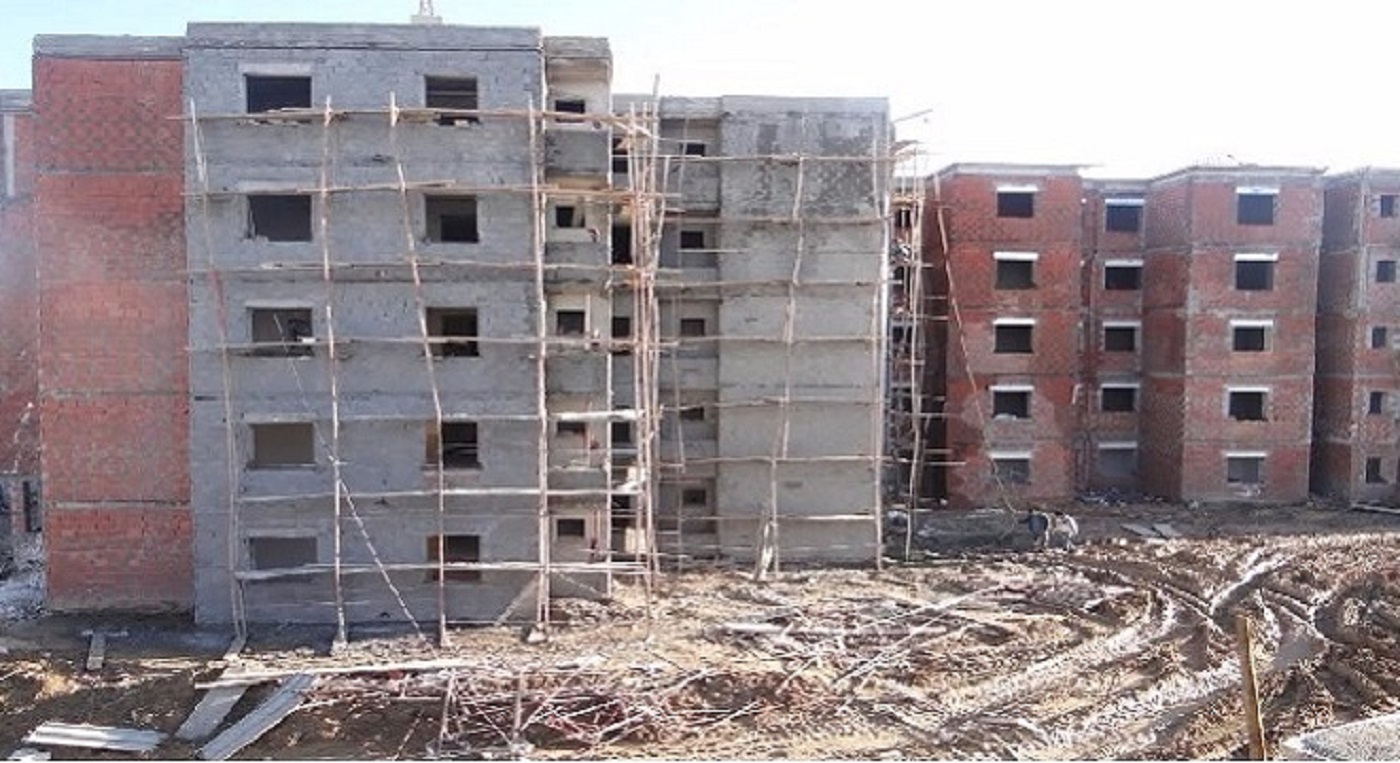
The number of housing units in Tunisia has quadrupled, jumping from 1,021,800 units to more than 4 million between 1975 and 2024.
Of this total, 80.7% of homes are occupied and 19.3% unoccupied, according to a note titled “Housing Flash” published by the National Institute of Statistics (INS).
Between 2014 and 2024, the housing stock increased by 975,700 units, compared with 3,289,900 recorded in 2014.
This represents an average net increase of 97,600 units per year. The 2024 census counted 3,095,900 homes in urban areas (72.6%) compared with 1,169,800 in rural areas (27.4%).
According to the INS, the situation was the opposite in 1975, when there were 557,300 rural homes versus 464,500 urban ones.
Since 1984, the number of urban homes has exceeded rural ones, and the gap has continued to widen ever since.
Nabeul leads, followed by Sfax
During the intercensal period 2014–2024, Nabeul governorate recorded the highest increase, with 85,100 new units, closely followed by Sfax with 80,900. Significant rises were also observed in Sousse (78,600 homes) and Tunis (61,700).
By contrast, the smallest increases were in Tozeur (7,500 homes), Kef (11,900), and Siliana (13,300).
Housing types
Nationally, the most common type of housing is the semi-detached house or duplex floor, accounting for nearly half of all dwellings (49.1%). Villas or duplex houses follow with 26.1%.
Traditional dwellings such as houch, dar arbi, and borj still make up 15.9% of the housing stock. Apartments remain a minority (8.4%), while rudimentary dwellings are very rare (0.5%).
Occupancy status
The INS reports that 3,440,207 homes were occupied at the time of the census. Occupied homes account for 80.7% of the total, 82.4% in urban areas and 75.9% in rural areas.
Two other important categories are secondary homes or those at the disposal of households living abroad (383,100 units), and vacant homes (424,900 units). These represent 9% and 10% of all housing, respectively.
Almost all homes connected to electricity
National data shows that one-room homes represent only 2.8% of the total, compared with 7.3% for homes with five rooms or more. Three-room homes are the most common (46.6%), followed by four-room homes (25%) and two-room homes (18.3%).
Since 1975, the housing structure has changed considerably. One-room homes, which represented 40.9% nearly 50 years ago, now account for only 2.8% in 2024.
Conversely, three-room and four-room homes have steadily increased, reflecting a clear improvement in Tunisians’ living conditions.
Housing size and construction materials
Between 2014 and 2024, the share of medium-sized homes (50–199 m²) increased, while smaller units (<50 m²) declined. Large homes (>200 m²) also dropped slightly compared with 2014.
As for building materials, the census reveals an almost total dominance of stone, brick, slab, and concrete. In fact, 99.8% of homes are built with these materials, both in urban and rural areas.
Basic utilities
Virtually all homes in Tunisia are connected to the electricity grid, 97.7% nationally, with 97.9% in urban areas and 97% in rural areas. In other words, the country is nearly fully electrified.
Regarding access to drinking water, SONEDE supplies 96.3% of urban homes, but only 61.4% of rural ones. Nationally, 87.3% of homes are connected to the water network.
As for sanitation, ONAS serves 82% of urban homes but only 8% of rural ones, resulting in overall coverage of 62.9%.
Solar energy still marginal
Finally, the use of solar energy remains limited. Only 3% of homes use it, with a slightly higher rate in urban areas (3.5%) than in rural ones (1.4%).