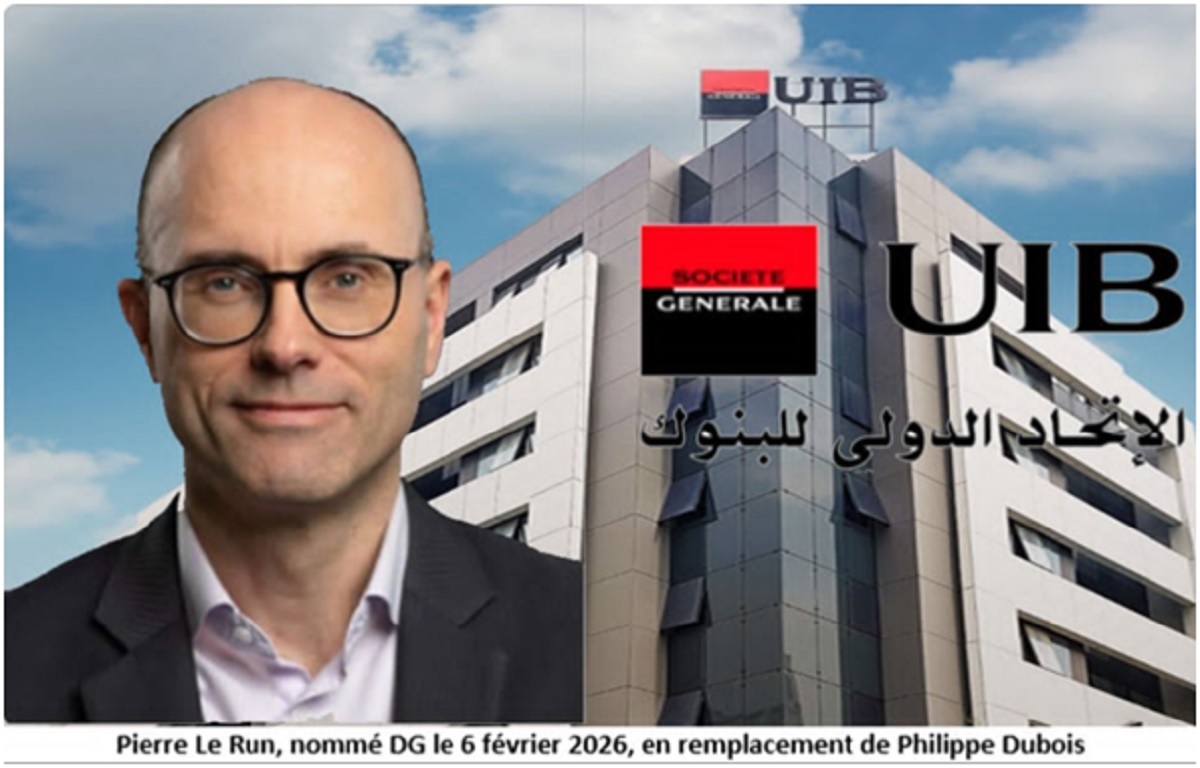
Union Internationale de Banques (UIB) reported a net profit of 100.8 million dinars, up 17.6%. Behind this historic performance, an analysis of the financial statements as of December 31, 2025, reveals a solid bank facing persistent headwinds: margin compression, record taxation, and still-imperfect asset quality.
UIB crossed the symbolic threshold of 100 million dinars in net income for the first time. The board of directors approved this milestone on March 17, 2026, before submitting it to the ordinary general meeting on April 30.
The 17.6% increase compared to the previous year is real, but its sources warrant closer examination.
This performance is driven more by a normalization of the cost of risk than by a structural improvement in commercial activity. Net provisions fell by 34.3%, from 71.2 to 48.7 million dinars.
This means the bank set aside less money for potentially non-performing loans, which automatically boosts profit. However, this does not necessarily indicate a significant improvement in loan quality.
Net banking income declines: the key warning sign
The main red flag this year is the drop in net banking income (NBI), the benchmark indicator of banking performance. At 525.5 million dinars, it fell by 2% compared to the previous year, something not seen in several years. There are two main reasons.
Loan margins shrank due to competition and interest rate trends. The spread between the average lending rate and the average deposit rate narrowed by 87 basis points in one year, reaching 2.87%.
In a banking system where interest margin accounts for the bulk of revenue, this decline is a long-term concern.
Another factor is Law 41-2024, which required the bank to reimburse 27 million dinars in accrued interest to 26,932 customers. This unusual event alone represents nearly a quarter of the increase in net profit. Without it, pressure on NBI would have been even greater.
On the positive side, revenue diversification is improving. Fees reached 165.4 million dinars, up 2.6%, now accounting for 31.5% of NBI. Non-interest income represents 47% of NBI, highlighting the growing importance of services and payments.
Operational efficiency deteriorates
The cost-to-income ratio, which measures expenses relative to NBI, rose from 50.3% to 54%. This means expenses increased by 5% while NBI declined by 2%. The wage bill, at 206.6 million dinars, now represents 39.3% of NBI, up from 36.9% the previous year. Cost control will be crucial going forward.
The bank is also facing exceptionally high tax pressure. Corporate tax, the permanent social solidarity contribution, the exceptional CSS, and the cyclical tax introduced by the 2026 Finance Law bring the effective tax rate to 40.65% of pre-tax income.
Total tax charges amount to 93.3 million dinars, or 92.5% of net profit, illustrating the heavy burden imposed on sector profitability.
Asset quality: real improvement, continued vigilance
The ratio of non-performing loans fell to 9.09% of total commitments, down from 10.12% the previous year. However, this level remains well above international standards, which recommend a threshold below 5%. Assets classified in categories B2, B3, and B4 still represent 710.5 million dinars in on-balance-sheet exposure.
The overall coverage ratio declined from 93.6% to 89.1%, due to the use of provisions on transferred and written-off loans. Around 78 million dinars in classified loans remain uncovered, posing a risk to monitor.
A solid balance sheet structure
On solvency, UIB shows reassuring indicators. Equity rose by 7.1% to 1.078 billion dinars, representing 12.4% of total assets. Financial leverage, at 8.07 times equity, is well under control. Accumulated reserves, totaling 799.9 million dinars (4.6 times share capital), reflect a consistent policy of building prudential buffers.
Liquidity remains sound. The loans-to-deposits ratio stands at 90.2% (net), indicating that lending is largely funded by customer deposits. Demand deposits increased by 12.1% to 2.1 billion dinars, showing a loyal customer base and diversified low-cost funding.
Non-negligible contingent risks
Auditors flagged three key concerns. First, the Competition Council fined UIB 9 million dinars for anti-competitive practices related to COVID-era accrued interest. No provision has been made, as the appeal suspends enforcement. If upheld, the impact would represent 8.9% of 2025 net profit.
Second, a social dispute with the CNSS covering 2019–2021 remains partially at risk. The provision of 4.6 million dinars does not fully cover the 7.4 million dinar claim, and a judicial expert review is ongoing.
Finally, auditors reported suspected criminal activity to the public prosecutor on March 11, 2026, following the discovery of manipulations involving customer savings accounts estimated at 557,000 dinars.
Strengthen without delay
UIB enters 2026 with a solid capital base but constrained commercial growth prospects. Priority should be given to restoring interest spreads, in a context of gradually stabilizing central bank rates, and to strict control of the cost-to-income ratio.
The implicit goal is to maintain net profit above 100 million dinars, but this time driven by core business growth rather than a reduction in the cost of risk. The publication of half-year results will be the first test of this trajectory.