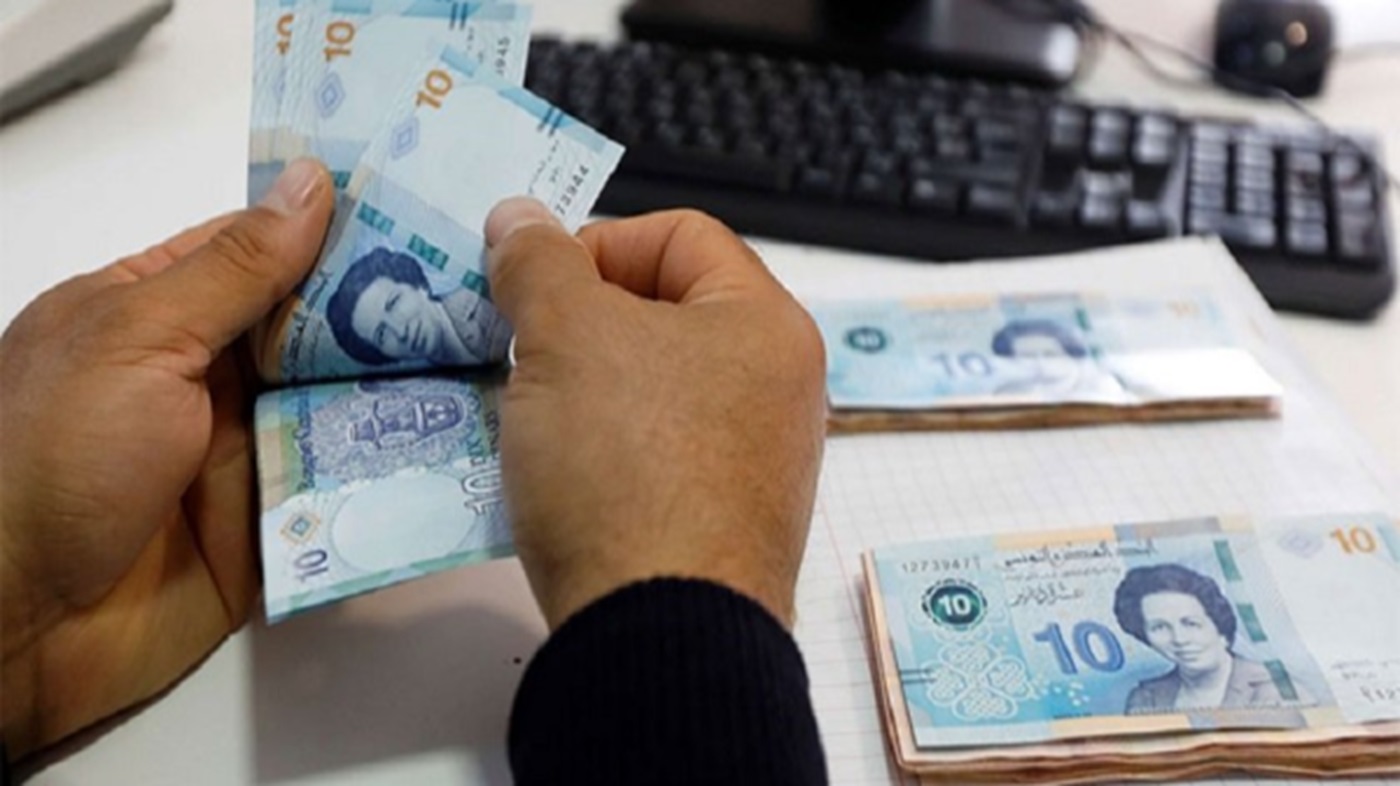
The year 2025 appears “uncertain” and gloomy for Tunisian banks, facing a tense cyclical context, an expected decline in interest rates that could weigh on their interest margins, tighter fiscal policies imposed by authorities, as well as increased prudential requirements reflected notably by the new check law, estimates stockbroker Tunisie Valeurs.
In a note titled “Financial and Stock Market Review of the First Half of 2025 and Investment Strategy for the Second Half* published recently, Tunisie Valeurs emphasized that international rating agencies covering Tunisian banks already anticipate a contraction in the sector’s 2025 profit pool, despite an improvement in institutions’ risk profiles, driven by Tunisia’s recent sovereign rating upgrade.
According to the stockbroker, the first-quarter figures of listed banks illustrate the slowdown in the banking sector’s growth.
These figures report a limited increase of 2.1% year-on-year in the aggregate Net Banking Income (NBI) of the listed banking sector, against operating expenses that expanded by 6.6%, implying a mechanical deterioration in the sector’s productivity.
At the same time, deposit collection activity maintains its positive momentum (+9.3% year-on-year for the aggregate outstanding deposits of the listed banking sector), contrasting with the sluggishness of credit activity (a timid increase of +1.6% year-on-year in the aggregate outstanding loans of the listed banking sector).
Beware of Credit Risk
In an increasingly complex economic environment, Tunisie Valeurs stresses that banks should deploy heightened vigilance against credit risk and intensify their recovery efforts across three dimensions: commercial recovery, dynamic recovery, and litigation recovery.
The stockbroker advocated for proactive and prudent management of credit portfolios so that banks can reduce their net cost of risk and cope with mounting fiscal pressure.
In this context, a new norm seems to be emerging for the Tunisian banking sector: that of a structural growth slowdown. Consequently, selecting the strongest banking stocks becomes essential.
Tunisie Valeurs thus recommends underweighting the banking sector in investment portfolios.
Reflecting on 2024 results, the stockbroker considers that they were generally of good quality for the listed banking sector, particularly regarding profit growth, balance sheet strength, and dividend policy.
However, it adds, the overall assessment is less satisfactory concerning portfolio quality and productivity.
According to a note from the Tunis Stock Exchange tracking the overall performance of listed companies as of December 31, 2024, the 12 listed banks achieved an overall result of 1,683 million dinars, up 8.4% compared to 2023.