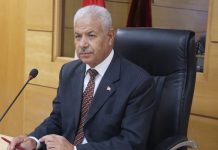
Encouraging banking competition, cleaning up the sector, strengthening regulation, increasing transparency, and promoting innovation and fairness: these are the key recommendations made by Professor Brahim Guizani, faculty member at the Tunis Business School (TBS), to improve the contribution of Tunisia’s banking sector to the national economy.
In an analytical note titled “A More Competitive Banking Sector for a More Inclusive Economy”, published on ”ecoTous”, Guizani points out that “for over a decade, the Tunisian economy has struggled to regain strong growth, despite the banking sector showing surprisingly robust health.”
He highlights a fundamental contradiction between the continuous growth of bank profits and the weak growth of Tunisia’s GDP.
According to him, this gap reflects a model that prioritizes bank profitability over their role in financing the real economy.
The note underscores a persistent exclusion of the most dynamic segments of the Tunisian economy: young entrepreneurs, startups, and small and medium-sized enterprises (SMEs).
While banks are accumulating wealth, they are “not reinvesting enough through loans, thereby hindering investment and job creation, both crucial for economic recovery.”
To address this imbalance, Guizani advocates for fostering competition by opening the market to new players such as cooperative and community banks, reducing entry barriers, lowering non-performing loans, managing conflicts of interest and enforcing stricter governance rules.
On transparency, he urges banks to publicly disclose interest rates and fees, enabling genuine comparison between institutions.
To promote innovation and equity, he recommends liberalizing certain rates (such as savings) and encouraging bank mergers to improve stability and broaden service offerings.
Guizani also calls for giving customers a stronger voice, suggesting the creation of an independent observatory or association to advocate for bank clients’ rights, ultimately aiming to restore public trust and place customers at the heart of the banking system.
In conclusion, Tunisia’s banking sector is urged to rethink its model to better align with the needs of an economy striving for renewed vitality.
Launched in 2025, ecoTous is an online platform aimed at economic literacy and democratizing economic knowledge.
It is part of the Savoirs Éco program, funded by the European Union and implemented by Expertise France, in partnership with the Arab Institute of Business Managers (IACE) and the Arab Institute for Human Rights (IADH), according to the platform.