In our September 23, 2025 edition, we discussed one of the rare public companies that achieves a turnover in billions of dinars and generates profits. Indeed, SNDP (National Oil Distribution Company) sells one of the most essential goods, fuel, and controls almost three-quarters of the market.
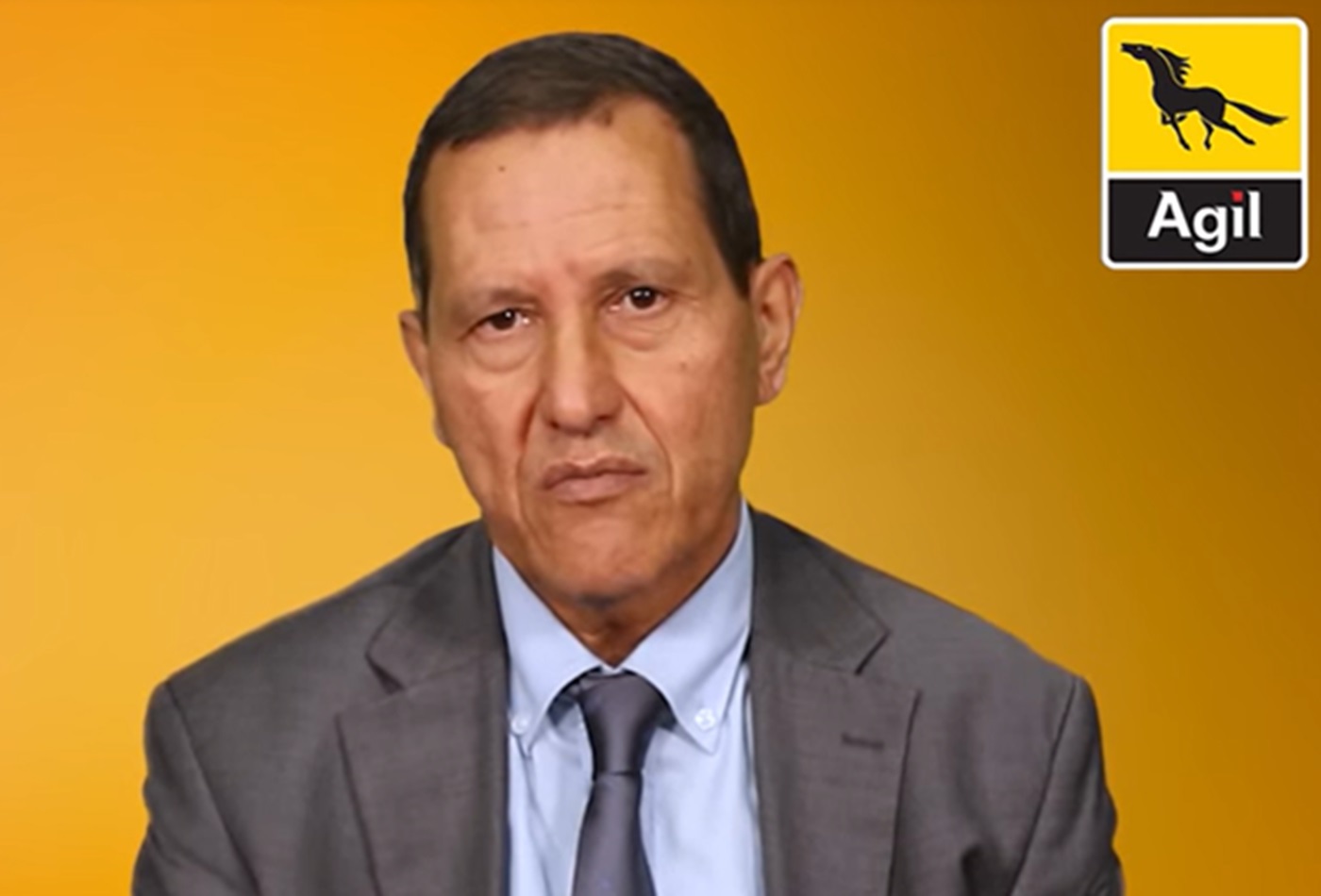
But Khaled Bettine’s long interview contained much more than that and touched on more important topics.
The largest fuel distributor, for example, has a debt of more than 600 million dinars with Tunisia’s only oil refiner, STIR. But thanks to a system in which the Tunisian state, the largest shareholder in Agil Energy SA, has still not collected retained earnings or undistributed dividends, SNDP balances its accounts without paying anything.
As for profits, SNDP has already distributed dividends for 2021, 2022, and 2023 and is expected to do so for 2024.
But the leading fuel distributor could do even better if it were not for the crisis shaking the entire economy. “Only a high growth rate can get us out of this vicious circle. If wealth accumulates for several years and the energy situation improves, as it has recently, given that the international price per barrel is relatively decreasing,” says Bettine.
He recalls that “the 2025 budget projected a barrel at $77. It is currently below $70, which significantly reduces the subsidy burden for the Tunisian state. And if this is combined with strong, sustained economic growth that reduces the trade deficit, then we can say Tunisia will emerge from the crisis.”
No price hikes or fuel shortages this year
Asked about the possibility of a fuel price increase in 2025, he said: “Since it is already September and international prices are still falling, I do not think there will be an increase this year. Nothing of the sort was budgeted for 2025. Maybe next year, but nothing is certain yet.”
He was then asked about a possible price decrease, as promised by previous governments, under the mechanism linking local prices to international prices. “This tool was in fact abandoned because it is impossible to apply in a situation of public finance imbalance.
We do not yet have the financial means to properly supply the country with petroleum and build a strategic reserve. Moreover, it is worth recalling that fuel prices have been frozen since November 2022, ‘in accordance with the social policy of the President of the Republic.’
The freeze is a political decision. I remind you that in 2023, local prices did not change despite the barrel being at about $80 or more before falling again.” According to him, “it is better not to increase or decrease our prices until we see how the international situation evolves for this commodity, which is very vulnerable to geopolitical conditions.”
Bettine, a former senior official at ETAP (Tunisian Petroleum Activities Company), explains as an expert that the last two wars, Ukraine and Iran, had no impact on oil prices “because there was a larger supply on the oil market combined with global economic stagnation.”
Five operators hold a security stock to avoid fuel shortages
Asked whether Tunisia has a strategic energy stock to protect it from sudden international price hikes that could force unexpected purchases for a financially strained economy, the SNDP CEO announced: “Tunisia has a security stock of finished products, which the five fuel distribution operators are required to maintain, covering about 45 days of local consumption.”
He added: “Tunisia has international suppliers with solid contracts who trust us and STIR, as we are solvent even if we sometimes pay late.”
A skilled communicator, Bettine concluded this part by assuring: “Today, our country enjoys unprecedented political and social stability for more than two years now, with no shortages or scarcity of products.”
The SNDP CEO admitted that fuel consumption is increasing, “but we control it through imports,” ensuring that “the sales of the five operators provide the liquidity needed for imports, albeit in a fragile balance, in close cooperation with STIR to ensure security for all economic sectors.”
Shale oil and gas in Borj El Khadhra in large quantities, but…
He was then asked a question that is on the minds of many Tunisians: why does Tunisia, though a small oil producer, export part of its oil and still import large quantities? “We produce crude oil, part of which is sold to STIR and the rest exported.
We import crude oil, trying to take advantage of price fluctuations. Combined with ETAP’s production, STIR’s oil is refined for domestic needs.”
But this does not cover local consumption. The deficit is filled by imports, and the future may bring good news for Tunisia.
“Tunisia is not an oil-producing country. Our production has even decreased in recent years, and investors are not rushing in. However, there are signs of another type of fuel — shale oil and gas — in southern Tunisia, particularly in Borj El Khadhra, and in quite large quantities, according to some foreign expert reports.
This will require massive investment, starting with drilling pilot wells to assess the available reserves. All of this has not yet been done,” said the SNDP CEO.
SNDP is profitable and invests. But in what?
Investments include new fuel stations, not all privately operated. There are 227 distribution stations, especially along highways, managed by SAGES (Agil Management and Services Company), a 99% SNDP subsidiary with an annual turnover of 180 million dinars and a net profit of 1 million dinars.
It operates 20 stations, including those at major road intersections. SNDP also invests in station equipment, maintenance of kerosene depots at airports, bottled gas production, and importing base oils.
Everything is ready for a warm winter, with more cylinders produced or imported
Asked whether SNDP is ready for the winter and the surge in bottled gas consumption for heating, Bettine calmly assured that they are ready and are even doubling bottled gas production with two new lines in Bizerte and Gabès, supplementing the two production lines in Radès, and replacing the third line destroyed by a fire in 2024.
SNDP has a storage capacity of 8,000 tons in Radès and another 12,000 in Gabès, in addition to Bizerte. The two other private operators are also required to maintain a security reserve.
“Everything is ready for a warm winter, with import contracts signed — particularly with Algeria — for an annual average equivalent to 20,000 tons of bottled gas.”
Electric vehicle charging will be a service with prices varying by region
The gradual decarbonization of transport also requires SNDP investment. Already, 8 of the 227 fuel stations have been equipped with electric vehicle charging stations, and a tender for 30 to 35 more is expected in early 2026. For now, charging is free at Agil stations.
“The price of EV charging has not yet been set due to a legal vacuum regulating this new sector. Discussions are ongoing with STEG and the Directorate General of Hydrocarbons at the Ministry of Industry, Mines, and Energy.
The trend is to treat EV charging as a flat-rate service, with prices possibly differing from one station to another and from one brand to another, rather than by kilowatt.
To remain competitive, SNDP stations will be equipped with solar energy — and possibly green hydrogen — which will represent the bulk of investment for the 2026–2030 five-year plan,” concluded Bettine, CEO of an SNDP that is changing!