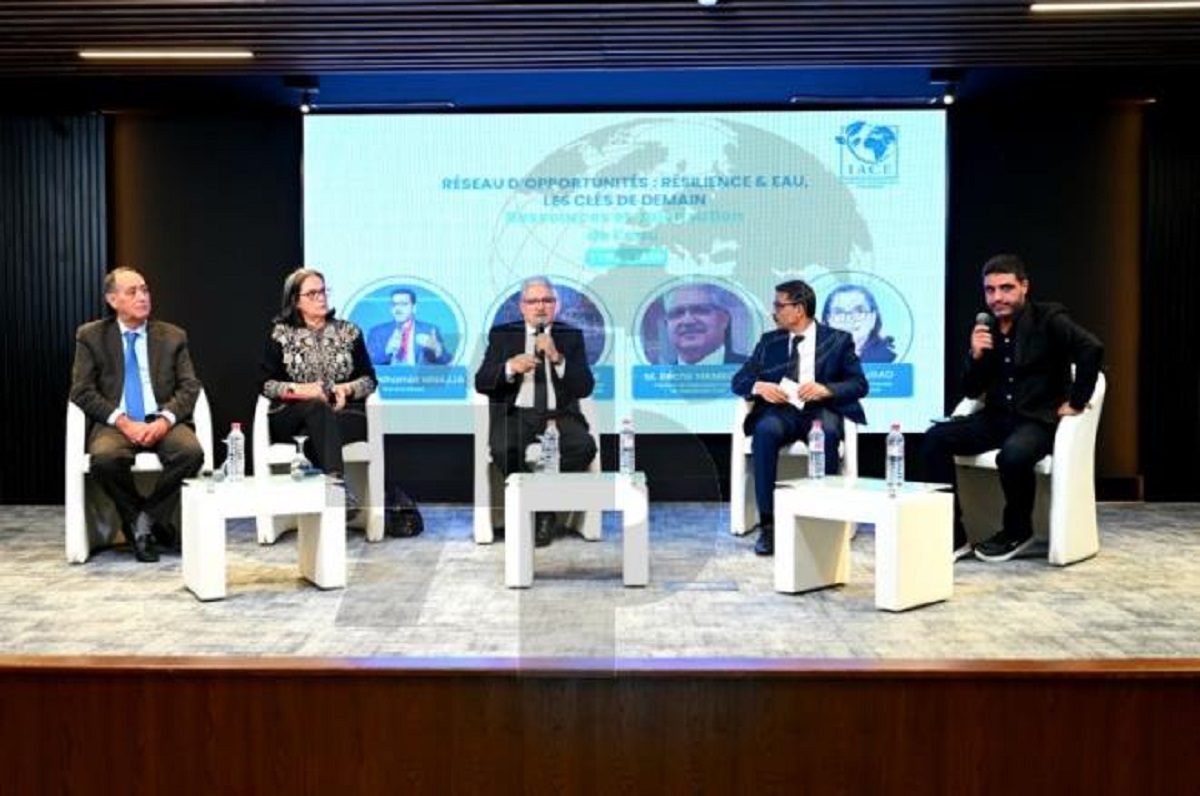
An extensive program to renew and modernize the networks of the National Water Exploitation and Distribution Company (SONEDE) covering the period 2026–2030 is currently being developed, Abdelhamid Mnaja, CEO of the company, announced on Monday in Tunis.
“The aging of the system requires urgent intervention, which necessitates significant funding to renew the infrastructure and improve its efficiency,” he stressed during a conference organized by the IACE on the theme “Network of Opportunities: Resilience & Water, the Keys to Tomorrow.”
“Indeed, 14,000 kilometers of pipelines are over fifty years old, and more than half of the network is over thirty years old, while the current networks span nearly 59,000 kilometers,” he noted.
According to the CEO, the renewal program includes a project to improve the technical and energy performance of the drinking water network in Greater Tunis, currently under preparation with the African Development Bank (ADB).
He specified that modernizing the Greater Tunis network alone will require TND 500 million, with the launch planned for 2026. This project will include the installation of 130,000 smart meters for real-time monitoring of pipelines and the creation of an operations center dedicated to consumption monitoring and real-time network management.
A second project, scheduled for the end of 2026, will focus on improving networks in the governorates of Sfax, Kebili, and Tozeur, with a water transfer system reaching Ben Guerdane.
This project, costing TND 330 million, will also involve the installation of 150,000 smart meters.
A third project, currently in preparation, will target the seven southern governorates with an investment of nearly TND 230 million. Its goal is to strengthen macro-metering to identify high-consumption areas, ensure better hydraulic balance between high and low zones, and improve the performance of a network that still shows a low efficiency rate in the southwest.
Desalination: “A Necessary Evil”
The CEO of SONEDE also emphasized that desalination remains “a necessary evil” to balance supply and demand, particularly during peak consumption periods.
He recalled that Tunisia began developing desalination in the 1980s through groundwater desalination stations, now numbering fifteen, located in Gabès, Gafsa, Ben Guerdane, Djerba, and Kerkennah, with a total capacity of 110,000 cubic meters per day.
Regarding seawater desalination, he noted that Tunisia also operates three stations producing 200,000 cubic meters per day.
The share of desalination in national water supply is expected to rise from 6% in 2023 to 35% by 2030, he concluded.