The proposed article, known as the “family car” article, was pushed through by force despite the Finance Minister’s opposing opinion.
Some deputies even used the vote as an occasion to celebrate what they presented as a legislative achievement, a sort of self-congratulation for their legislative power.
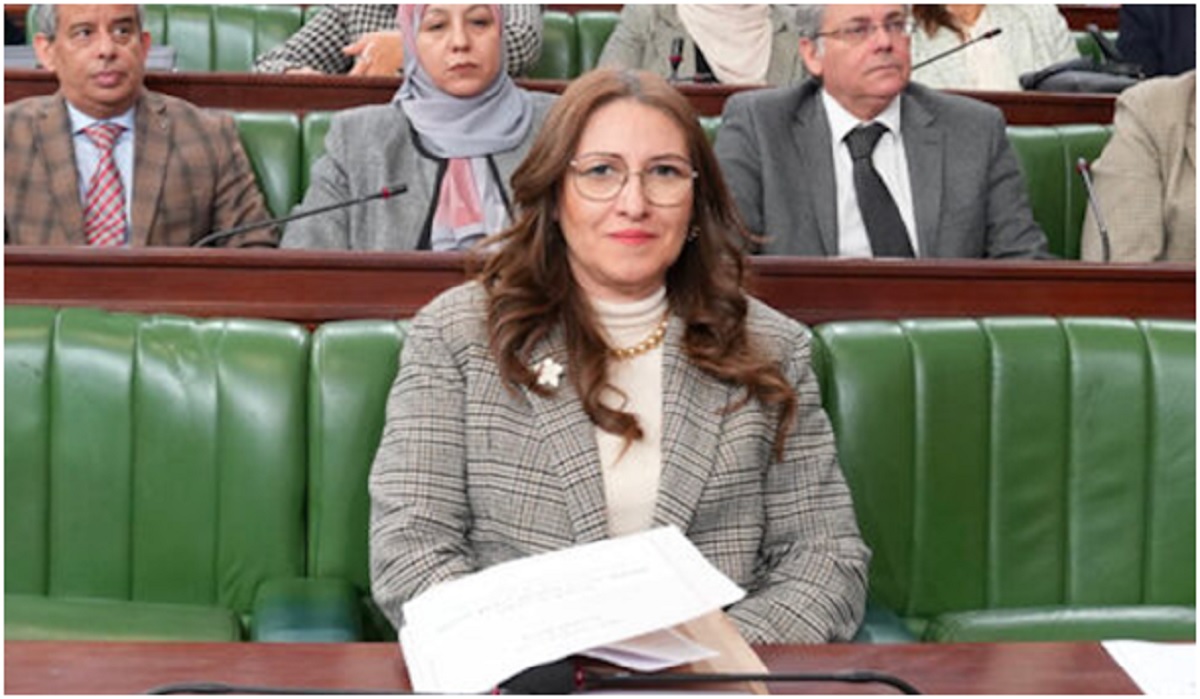
Diplomatically, faced with deputies resigned to populism and poorly studied decisions, Minister Michket Slama Khaldi adopts a calm, rigorous, slightly apologetic demeanor, like a mother dealing with rebellious children.
The said and the unsaid in a law passed by force
She offers a faint smile and admits, “It seems my chances of opposing you are slim today, because I feel you all agree with this proposed article… I want to speak here more as Finance Minister than as a citizen who might also want to import a car without any problems, regardless of age.”
Then, with the sharpness of mind typical of the judge she once was, she resumes her ministerial tone to “first remind that the law does not grant the Tunisian citizen, as a private individual, the right to import.”
The minister then launches into a long, laborious explanation of the importance, for Tunisia, a country without the resources of others, of preserving foreign exchange reserves, and the many difficulties, sometimes even illegalities, that could arise from implementing this law granting Tunisian families the right to import vehicles from abroad.
“When the state’s foreign exchange reserves drop for even a day or two, the whole country worries. It’s the BCT governor who loses sleep, knowing the Finance Minister cannot operate with less than 90 days of import coverage in foreign currency.
The proposal looks good, but at what cost?” she rightly concluded, facing deputies who were aware of these issues but nonetheless pressed ahead.
What the minister notably did not say, or perhaps forgot, is that the automotive sector in Tunisia, where the parallel market already accounted for 32% of vehicles sold, is worth roughly 2.5 billion Tunisian dinars to the state in customs duties, consumption taxes, and VAT, not including corporate tax (IS).
The law article adopted by the ARP, despite the Finance Ministry’s opposition, would, according to professionals, concern around 5,000 vehicles per year, roughly 10% of the Tunisian market.
Consequently, this would represent a 10% shortfall in state revenue from various taxes. A shortfall that would occur in a financial context where the government promotes self-reliance and where the budget has already been finalized and approved by the ARP, creating a problem of compensating for the lost revenue.
Hence, the highly probable scenario: this 2026 Finance Law article might not even be executed.
A question of administrative procedures
The more likely scenario, from a legal standpoint, is what Minister Michket Slama Khaldi hinted at without stating outright, so as not to dampen the deputies’ enthusiasm for defying the government: “This article, without an implementing decree, will remain unenforceable, regardless of the conditions and details it contains.”
Indeed, what the deputies could not ignore is that all law articles require, and have always required, the publication of implementing decrees detailing the conditions and procedures for turning a law into reality. Many laws, it should be recalled, have remained unenforced in the past due to missing decrees, which are issued by the Tax Administration under the Finance Ministry.
There was a time in Tunisia when President Zine El Abidine Ben Ali demanded that every law presented to Parliament be accompanied by its implementing decrees. But this requirement is no longer enforced, or it died with Ben Ali.
Thus, it is not entirely impossible that the Finance Ministry, concerned about its fiscal revenues and just as concerned as the BCT about foreign exchange reserves needed for more urgent Tunisian needs than cars, could “forget” to issue the implementing decree that would make the fiscal privilege granted by deputies to Tunisian families effective.