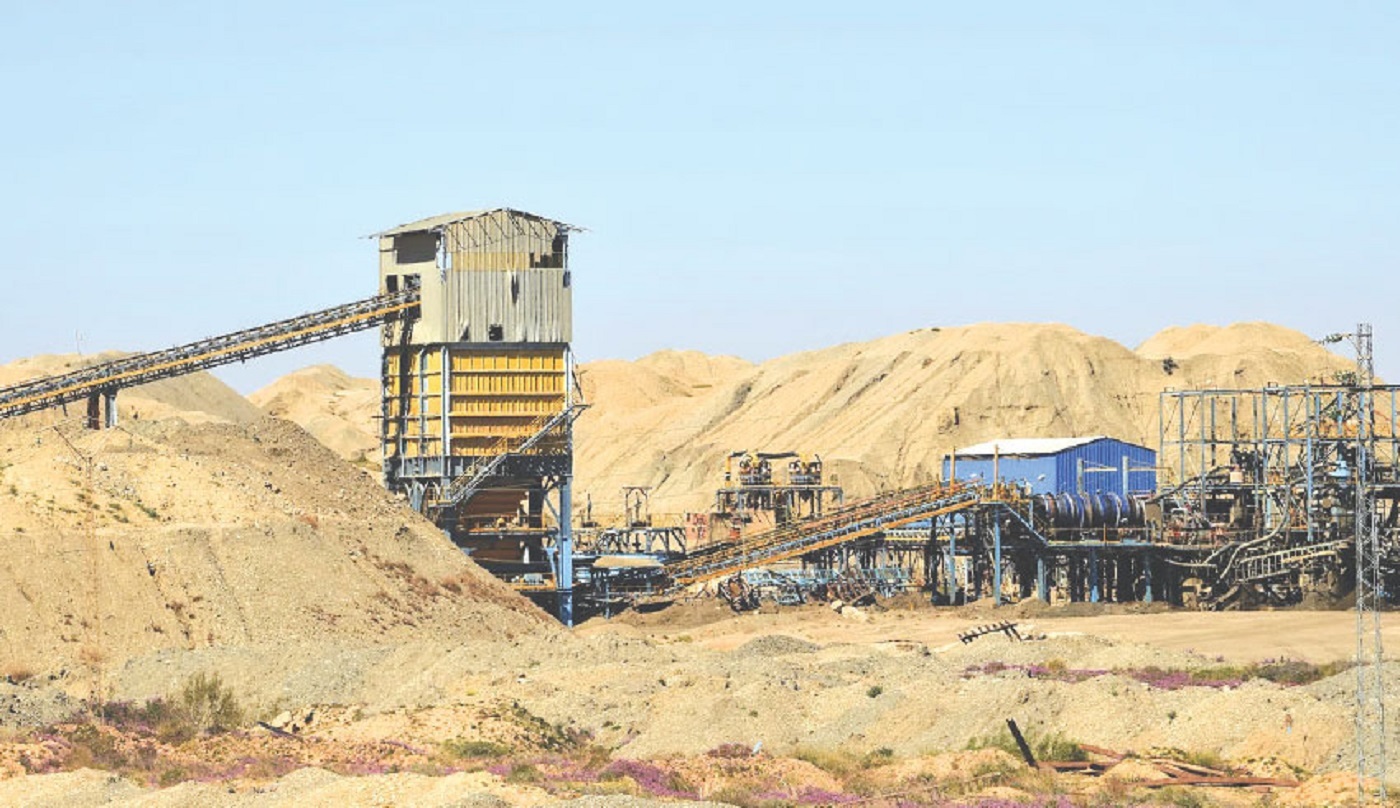
Tunisian exports of phosphates and their derivatives recorded a clear improvement of 15% in 2025, after a 26.3% decline in 2024 that weighed on the country’s financial and trade balances.
This improvement comes as part of the government’s efforts to reposition the mining sector and turn it into a strategic engine of growth, particularly in light of the need to reduce the trade deficit and strengthen foreign currency revenues, according to the National Institute of Statistics (INS).
In fact, in 2010, the mining sector accounted for 4% of GDP and 9% of the country’s exports. Phosphate production reached a record level that year, standing at 8 million tons, before stabilizing at around 3.5 million tons over the past decade.
In response to this situation, the government adopted an ambitious plan aiming to reach 14 million tons of production by 2030. This plan is based on improving production, transport, and infrastructure in the phosphate and derivatives sector.
Reforms that have revitalized production
During 2025, numerous reforms and practical measures were implemented, contributing significantly to improved production levels that are approaching the targets set out in the action plan approved for sector companies for the 2025–2030 period.
These targets include reaching 5.3 million tons of production and processing 4.1 million tons of phosphate, according to the TAP news agency. The agency also notes that this production improvement was confirmed by Prime Minister Sarra Zaafrani Zenzri, who added that forecasts point to annual production of around 5 million tons.
Despite these gains, the sector still faces several challenges, notably the shortage of industrial water, particularly in Redeyef and Oum Larayes, as well as problems related to the discharge of muddy water from washing plants.
Other issues include the slow pace of transporting commercial phosphate from production sites to processing plants. This is attributed to delays in maintenance work, damage to railway tracks caused by rainfall and the weak performance of the National Railway Company (averaging 3.5 trains per day).
In addition, major projects remain stalled, such as the Oum Al Khashab 1 phosphate production project and the Mdhilla 2 plant for producing high-quality triple superphosphate (TSP).
13.3 million tons by 2030
The phosphate sector development plan for the next five years focuses on gradually increasing production from 2026, with capacity rising to about 5.5 million tons, reaching 13.6 million tons by 2030.
It also includes the gradual resumption of dried phosphate exports, especially given rising global phosphate prices, which would allow the sector to regain its position on the world market.
Annual export capacity is expected to reach around 300,000 tons in 2026, increasing to 1 million tons by 2030, according to the 2026 Economic Budget.
According to the document, achieving these goals requires strengthening the capacity to transport raw phosphate to production centers, ensuring the supply of industrial water and resolving issues affecting major projects, particularly Oum Al Khashab 1, in addition to launching the construction of the new production unit at Oum Al Khashab 2.