Tunisians are heavy consumers of bread, with an average of 70 kg per person per year (compared with 58 kg per person per year in France and 62 kg in Algeria).
Households spend an average of 200 dinars per year on “bread.”
During the month of Ramadan, baguette consumption increases by an average of 135%, while consumption of large loaves declines by 38%.
It is in this context that Marouane Zayen, a member of the National Council of Regions and Districts, noted that Ramadan is characterized by a sharp rise in bread consumption, leading to significant waste.
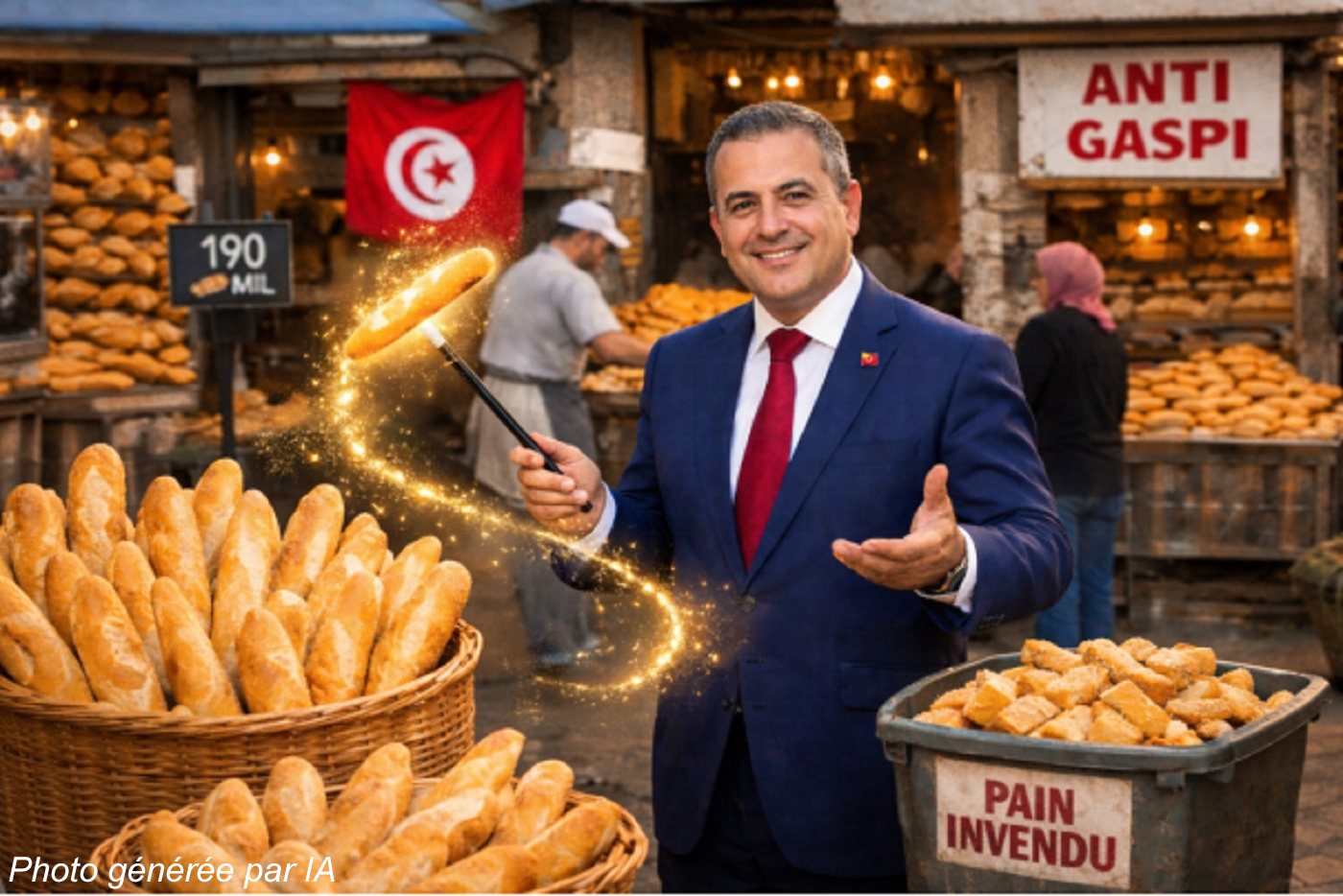
Speaking on Express FM, the MP explained that in Tunisia around 900,000 loaves of bread are thrown away every day, nearly 320 million loaves per year. This represents a direct loss of about 100 million dinars annually in subsidies. He described the situation as a serious economic scourge for future generations.
The MP added that the real cost of a baguette is around 430 millimes, while it is sold to consumers at 190 millimes, meaning the price difference is covered by the state through the subsidy system.
Moreover, according to him, the scarcity of certain bread formats on the market means that citizens actually end up buying bread at prices of 200 to 250 millimes, further exacerbating pricing problems.
Baguettes and sandwich bread: Proposal for a new law
On another front, Zayen announced a draft law proposing to abolish the current distinction between baguettes and sandwich bread, replacing them with a standardized loaf of around 300 grams, sold at 250 millimes.
According to the MP, this bread would be made from wholemeal flour with a high extraction rate (around 80%), offering higher fiber content, better nutritional quality, and a longer shelf life, thus reducing waste while improving its nutritional value.
He stressed that such a system would help reduce daily bread waste, ease the subsidy burden, cut imports of soft wheat, improve the nutritional quality of bread, and ensure a better balance in production costs for bakeries.
He also proposed the creation of a Food Sovereignty Fund, financed by revenues generated from a slight increase in bread prices and from reduced food waste.
Zayen argued that the best way to adopt this proposal would be to submit it to a direct public referendum, to be held at the same time as the next municipal elections. This, he said, would ensure a participatory and popular decision rather than one imposed from above.
He believes this option would help ease social tensions, give the project strong democratic legitimacy, avoid imposing additional financial burdens on the state and boost participation in municipal elections.
The MP concluded by emphasizing that the issue of bread and the subsidy system in general requires a broad national dialogue involving all stakeholders, relevant ministries, experts, civil society, and the media, in order to develop a balanced solution that combines economic, social, and health dimensions, while guaranteeing citizens’ right to better-quality bread and safeguarding public funds.
Food waste in Tunisia: 172 kg per person per year
Tunisia ranks first among Maghreb countries in terms of food waste, with an average of 172 kg per person per year, representing an estimated national total of two million tons.
This places the country second in the Arab world after Egypt, according to the latest 2024 Food Waste Index of the United Nations Environment Program (UNEP).
The foods most frequently thrown away in Tunisia are bread, cereal products, and vegetables, a situation that, according to the World Wide Fund for Nature (WWF), represents a major challenge for national food security.
Globally, food waste is responsible for 10% of greenhouse gas emissions, warns WWF North Africa. Every item of food thrown away represents far more than an economic loss.
It is a cascading waste of natural resources: water, energy, and agricultural land are consumed in vain throughout the production chain.
In light of this, the NGO considers reducing food waste to be “a fundamental step for climate protection.”
To achieve this, it recommends a series of simple measures such as better meal planning, more responsible purchasing, recovery and redistribution of surplus food and support for initiatives that recycle organic waste.
These recommendations are particularly important for Tunisia, which could turn this environmental challenge into an opportunity to strengthen its food resilience and its contribution to international climate commitments.