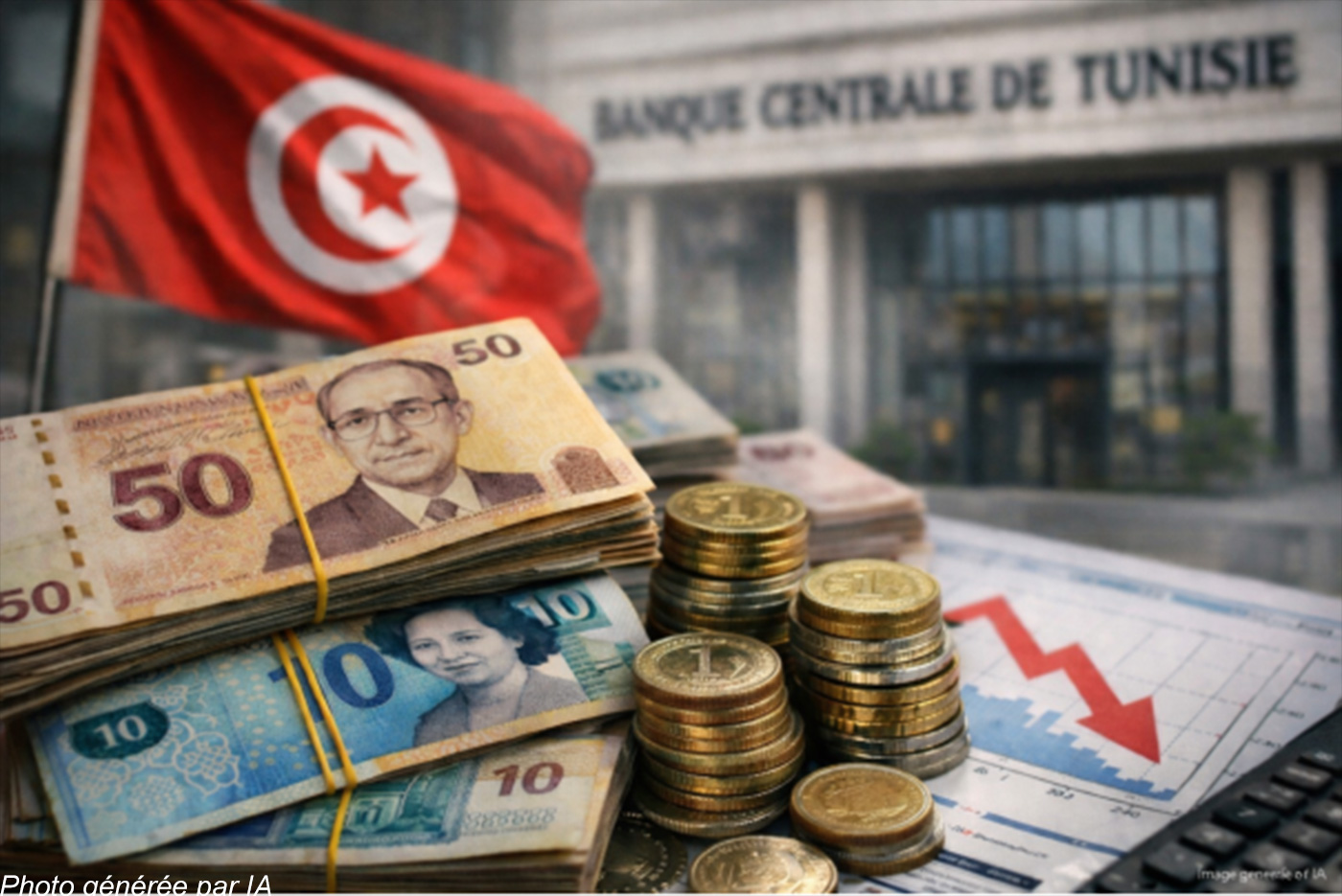
In Tunisia, the circulation of cash has reached a worrying level. According to figures published by the BCT, the amount of liquidity circulating in the Tunisian economy increased by approximately 20% over the past year, peaking at 27.5 billion dinars ($9.6 billion).
This record is significant. It reflects, assuming these sums are indeed held outside the banking system, a growing structural dependence of the economy on cash payments, to the detriment of banking penetration and financial digitalization.
Impact on banks and credit for Tunisians
This increase is not merely a statistical indicator. It has a direct impact on the banks’ ability to fulfill their intermediation role. The more cash is withdrawn from the banking circuit, the fewer deposits are available and the fewer resources financial institutions have to grant credit to households and businesses. In other words, the expansion of cash mechanically reduces the financing potential of the real economy.
One of the causes identified by analysts is the entry into force of new legislation strengthening the rules for using checks and toughening sanctions for insufficient funds or invalid checks. This reform, designed to clean up payment practices, has paradoxically produced a liquidity withdrawal effect: businesses and individuals have preferred to secure their transactions by increasing their cash reserves rather than exposing themselves to the legal risk associated with checks.
The State is mistaken!
The result is a more intense circulation of money outside the banking system and increasingly complex liquidity management for commercial banks. Added to this is a structural factor: the slow adoption of electronic payments, the growing existence of a parallel market and even an economy that the state cannot integrate into the legal circuit.
Furthermore, outside major urban centers, digital banking services remain little used, sometimes inaccessible, and often viewed with suspicion. The cash reflex remains dominant in daily transactions, hindering the transition towards a more transparent and traceable economy, and the state encourages all this by backpedaling on the issue of the 5,000 TD cash limit.
This phenomenon reveals a paradox. While modernizing the financial system is presented as a strategic objective, the reality of economic behavior keeps the economy rooted in physical liquidity.
Without accelerating the digitalization of payments, without improving financial inclusion and without clear incentives to use banking channels, the current trend could strengthen.
The record level of cash holdings is therefore not just an accounting figure: it is a barometer of confidence, or lack thereof, in formal financial mechanisms.
Chkoundali clarifies the matter
According to economist Ridha Chkoundali, “two poorly conceived laws are the main cause of runaway inflation and the explosion of unregulated cash transactions, reaching the astronomical amount of 27.5 billion dinars: the new law on checks and electronic invoicing, and the repeal of the law prohibiting cash transactions exceeding 5,000 dinars. The main loser is the Public Treasury.”
Still according to Chkoundali, who spoke in a post on a popular social network, “the decrease in liquidity in banks compromises their natural role of lending to the private sector.
In conclusion: poorly designed laws significantly hamper the Tunisian economy. Parliament must review some of its laws before it is too late.”