During the first half of 2026, two chapters of Tunisia’s foreign trade statistics send contrasting messages. The automotive sector confirms a long-term trend: a market becoming more expensive without expanding in volume. Precious metals, meanwhile, display such a striking inconsistency that it points to a statistical error rather than an economic reality. Together, they illustrate two very different ways of interpreting the same trade data.
Automobiles: Higher import bill, stable volumes
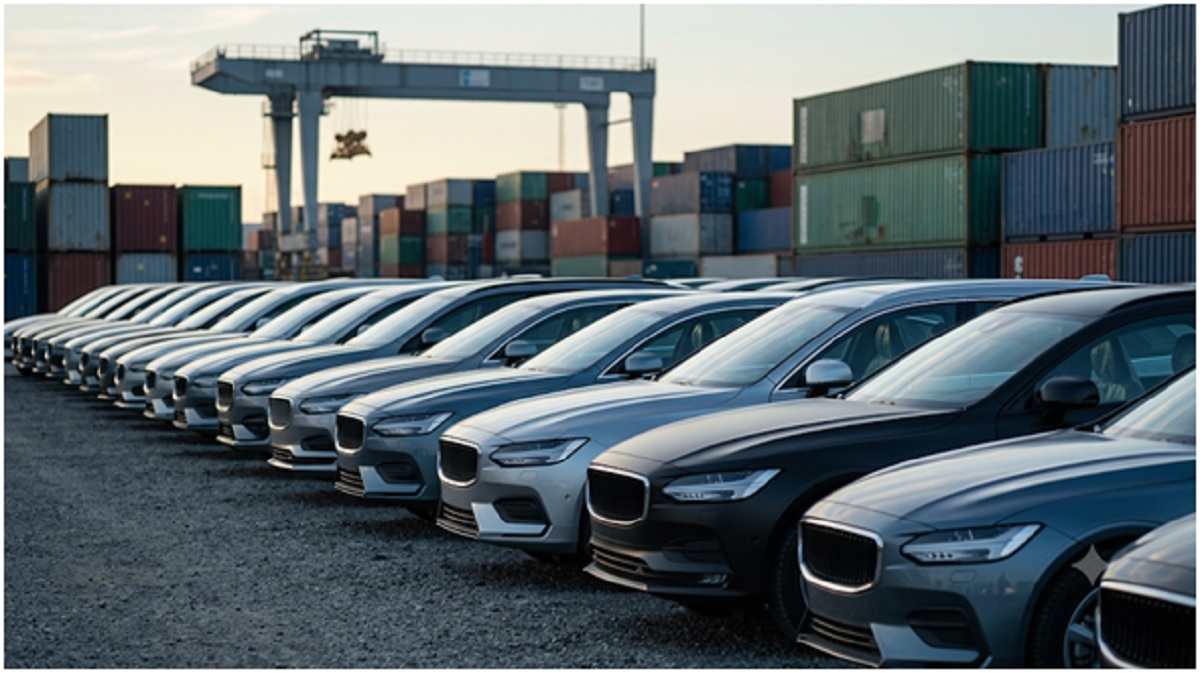
Imports under Chapter 87, covering vehicles, bicycles and tractors, rose 15.8% in value year-on-year. The key finding, however, lies in what drove that increase.
Import volumes remained virtually unchanged, slipping just 0.1% to slightly over 100,000 tons. In other words, Tunisia imported roughly the same quantity of vehicles but paid 15.8% more for them. The average import price climbed from 31.92 dinars/kg to 37.01 dinars/kg, an increase of 15.9%.
This reflects a clear price and product mix effect rather than higher import volumes. Fewer additional vehicles entered the country; instead, the average value per vehicle increased.
Two factors likely explain this trend. First, a move toward higher-end models equipped with more features and greater added value. Second, a shift in the composition of imports, consistent with the growing presence of Chinese automakers in Tunisia, whose electric and hybrid vehicles carry higher average values.
Stable import volumes combined with rising values point to a market that is not expanding in quantity but becoming more premium. This trend aligns with vehicle registration data from Tunisia’s Technical Agency for Land Transport (ATTT), which documents the increasing market share of Chinese manufacturers.
Precious metals: A statistical anomaly
A very different picture emerges from Chapter 71, covering precious metals, pearls, and coins.
According to the data, import volumes surged from 78 tons to 2,063 tons, an almost 27-fold increase. At the same time, the average import price collapsed from 1,559 dinars/kg to just 79 dinars/kg, a decline of nearly 95%.
These figures are incompatible with the reality of the precious metals market, where gold, silver, and platinum are valued at tens or hundreds of thousands of dinars per kilogram, not a few dozen.
An average price of 79 dinars per kilogram for a category that includes precious metals is economically implausible. Likewise, imports of more than 2,000 tons of precious metals in six months bear no resemblance to actual market flows.
The most likely explanation is not an economic shift but a statistical classification error. Heavy, low-value goods may have been mistakenly recorded under Chapter 71 during customs processing.
Although the chapter’s import value increased by a relatively modest 35.2% to 163.7 million dinars, that rise is completely overshadowed by the unrealistic tonnage, reinforcing the likelihood that the weight data has been contaminated by incorrectly classified imports.
Why the anomaly matters
Such errors do more than distort a single category. Foreign trade statistics by chapter are used to calculate key economic indicators, including average import prices and terms of trade.
A misclassified chapter of this magnitude can skew broader economic analysis if left uncorrected. The anomaly should therefore be reviewed by Tunisia’s National Institute of Statistics (INS), and the customs classification corrected if necessary.
Two different readings of the same data
These two chapters demonstrate two distinct ways of interpreting import statistics.
The automotive data tells a genuine economic story: Tunisia is importing roughly the same number of vehicles but paying more, reflecting an increasingly premium market and the growing influence of Chinese brands.
The precious metals data tells a story about the statistics themselves: before drawing any economic conclusions, the underlying figures must first be verified and corrected.
Distinguishing between a real economic signal and a statistical artifact remains one of the fundamental principles of rigorous foreign trade analysis.