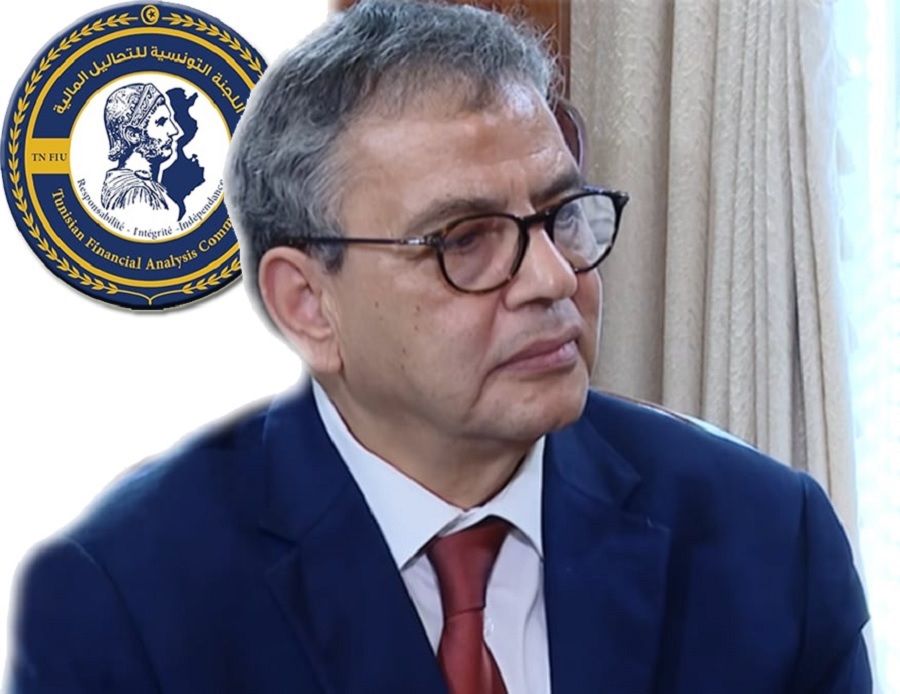
President Kais Saïed received on Thursday afternoon, September 26, 2024, Governor of the Central Bank of Tunisia, Fethi Zouhair Nouri, at the presidential palace in Carthage.
On the official agenda of this meeting, which took place two weeks after the arrest of the CTAF’s DG and its demobilizing effect on the Commission’s staff, were “the results of the work of the Tunisian Financial Analysis Commission on the external financing of associations, whose volume is estimated at 260 million dinars) over the last few years, in addition to other colossal sums received directly by a number of people who do not belong to any association, under various titles in the name of support for democracy and other names’.
Not associations, but online betting
According to the presidency’s press release, which does not fail to lob more serious accusations at those it does not name, such as treason and being agents in the pay of those trying to stir up the situation by proxy, these funds “do not hide the extent of the blatant interference in Tunisia’s internal affairs”.
However, according to former BCT and IMF official Sadok Rouai, who assures us in a Facebook post that he has read the CTAF report for 2023, ‘Kais Saïed met the governor of the BCT, for the second time in a few weeks, and it wasn’t about the 2023 annual report, which is no longer useful anyway.
No, it’s about the fear of external funding for associations. Rouai also asserts, in the same Facebook post, that “the financing of associations has never been the main concern of the CTAF. It’s mainly about online sports betting’.
The BCT, Saïed’s direct informant, instead of the CTAF?
In the same press release from the presidency about the governor talking to it about the CTAF, it is the governor of the BCT who acts as the CEO of the CTAF, and who even anticipates the wishes of the chief and “informs the President of the Republic that the Financial Analysis Committee is preparing a second list of suspicious financing for a number of legal entities and individuals, in addition to closing 6,374 files linked either to money laundering or to the financing of terrorism”, according to the press release.
After forcing the BCT to finance the budget directly and bringing the entire banking system into the ‘house of obedience’, Kais Saïed, who had complained on several occasions about the lack of referrals to the CTAF, which was always said to be bound by the DS (Declaration of Suspicion) from financial institutions, lawyers, accountants, etc., which it had to process in complete secrecy and forward to the courts for a final decision, seems to have finally found the person who would give it the shortcut it needed to create its own files.
A former BCT official criticizes the figures
‘Let’s look at the figures in the Presidency press release,’ begins Sadok Rouai. ‘It speaks of 260 million received, without indicating whether these amounts were the subject of suspicious transaction reports (DS).
The associations are authorized and receive external funding, so what! We are talking about 6,374 files. However, for the whole of 2023, the CTAF received only 804 suspicious transaction reports, 582 of which were processed and 191 of which were frozen (editor’s note: for a total amount of DT 2,228,997).
The total number of suspicious transaction reports for the years 2020 to 2023 is 2,197. So what are these 6,374 mentioned in the presidential press release? And they cover everything, not just associations. Most of them concern migrant smuggling.
Money laundering is 61% cash, and Swift transfers account for only 8%. My conclusion is that Kais Saïed is harassing the BCT to push it to prove what does not exist. The BCT, for its part, is inundating him with empty files. Associations have never posed a risk to CTAF’.
Getting information from the source
According to our information gathered at the Kasbah, the headquarters of the DG of Associations and Political Parties, which has been in the hands of a lady from the Ministry of Finance for the past few months, the figures presented by Fethi Nouri do not come from the CTAF, which has been at a standstill since the police raid on Friday, September 13 and what followed, but rather from the BCT, the DG of Foreign Exchange Operations (DGOC) to be precise!
In view of this, the immediate conclusion could be that the 6,347 files brandished by Kais Saïed concern all foreign transactions in a muddle. The BCT can raise suspicions, but it can hardly decide the outcome of a case involving corruption or money laundering. That is primarily the role of the judiciary. The presidency’s press release does not say whether the BCT also gave the list to members of the judiciary or only to the Chief Justice!
Softening the CTAF to avoid falling into the hands of the FATF
The question remains as to why the Head of State should not put all his questions about the finances of the associations to the two people concerned, namely the DG and his boss, the Prime Minister.
Why does he want to kick the hornet’s nest as indiscreetly as he has done in recent days, when Tunisia, the CTAF and the BCT are due to undergo a FATF evaluation in the first half of the 2025 financial year, in order to avoid being blacklisted by the FATF? Why doesn’t the Tunisian President simply refer the matter to the CTAF, which would then simply have to correspond with the Egmont Group to provide it with all the information it requires?