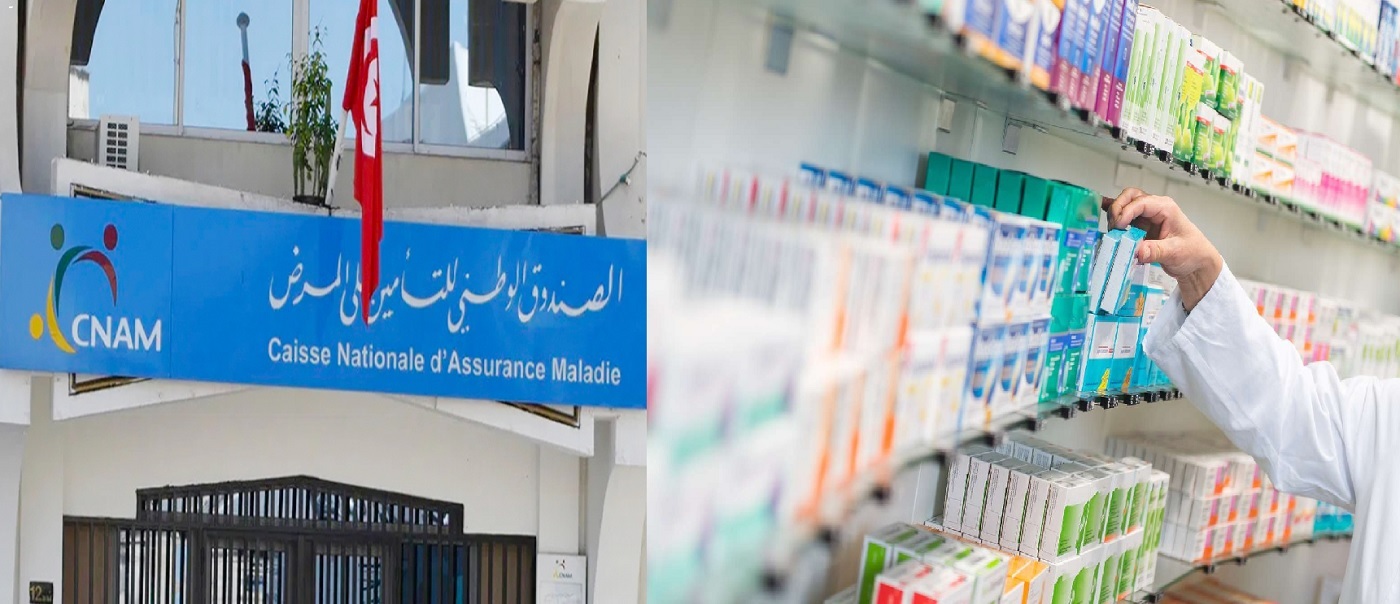
The National Bureau of the Tunisian Pharmacists’ Union (SPOT) has decided to suspend the third-party payment system for CNAM beneficiaries starting December 8.
In a statement, the union explained that it “has decided to suspend the provision of CNAM-covered medicines from December 8 until the CNAM settles its debts to pharmacists, clarifies the legal framework governing pharmacy operations, and takes urgent measures to save the medicine distribution chain, including approving exceptional funding for CNAM under the 2026 Finance Law.”
Despite ongoing negotiations between CNAM and pharmacists, “no clear vision or official commitment guaranteeing the continuity of the contractual relationship has been recorded, placing pharmacists in serious doubt about the future of this relationship and creating an unprecedented serious situation threatening the stability of the entire sector,” the union added.
The union stressed that the financial crisis in the pharmaceutical sector, ongoing for years, has worsened following failed negotiations with wholesale drug suppliers, who themselves face a critical economic situation threatening their operations, as well as with banks.
The entire medicine distribution chain, from local manufacturers to the Central Pharmacy, wholesalers, and pharmacists, is now on the verge of collapse.
“Pharmacists have become unable to continue dispensing medicines due to suffocating financial pressures, particularly pharmacies operating in interior regions and priority economic zones, where the ability to provide medicines is directly threatened, potentially depriving thousands of citizens of their right to care,” the statement said.
In this context, the union stated, it has become impossible for pharmacies to continue providing services to CNAM beneficiaries due to the lack of necessary financial and legal guarantees.
The National Bureau affirmed that professional structures remain open to any “serious and responsible initiative that could provide urgent and sustainable solutions preserving pharmacists’ dignity, patients’ rights, and the stability of the health system.”
A decade-long crisis
Following this decision, Naoufel Amira, former president of the Union of Private Pharmacies, told Express FM that the financial situation of pharmacies has reached a critical level.
He noted that the crisis between the two parties dates back to 2015, when the government decided to advance retirement payments before transferring funds from the Social Security Fund and the Retirement and Social Welfare Fund to CNAM.
Amira said the current situation has become unbearable and cannot continue, emphasizing that funding is no longer available and the crisis has reached an unprecedented level.
He added that suspending third-party payment for medicines will have a direct impact on citizens, especially those with chronic illnesses, in a context of declining purchasing power.
Amira also stressed that the union is seeking urgent solutions, calling for careful attention and long-term stability in the system, beyond the annual agreements between private pharmacies and CNAM, to allow the sector to establish clear and sustainable programs.
Finally, he called for a review of the collaboration model with CNAM, asserting that citizens’ health is as important as retirement expenditures and urging action to prevent a crisis that could compromise Tunisians’ health.