The northern dams recorded an additional input of 51 million m³ of rainwater during the first eight days of December, Director General of Dams and Major Hydraulic Works at the Ministry of Agriculture, Faiez Msallem told TAP.
This is a “reassuring indicator,” he emphasized, recalling that the region’s dams have accumulated 200 million m³ since the start of autumn, which has strengthened their fill rate and secured the national supply of drinking water.
“With rainfall continuing at the same pace, it will also be possible to guarantee reserves intended for irrigation,” he assured.
The water inputs recorded in the dams of the Béja governorate have been significant since early September, which has allowed an increase in their stocks compared to the same period last year.
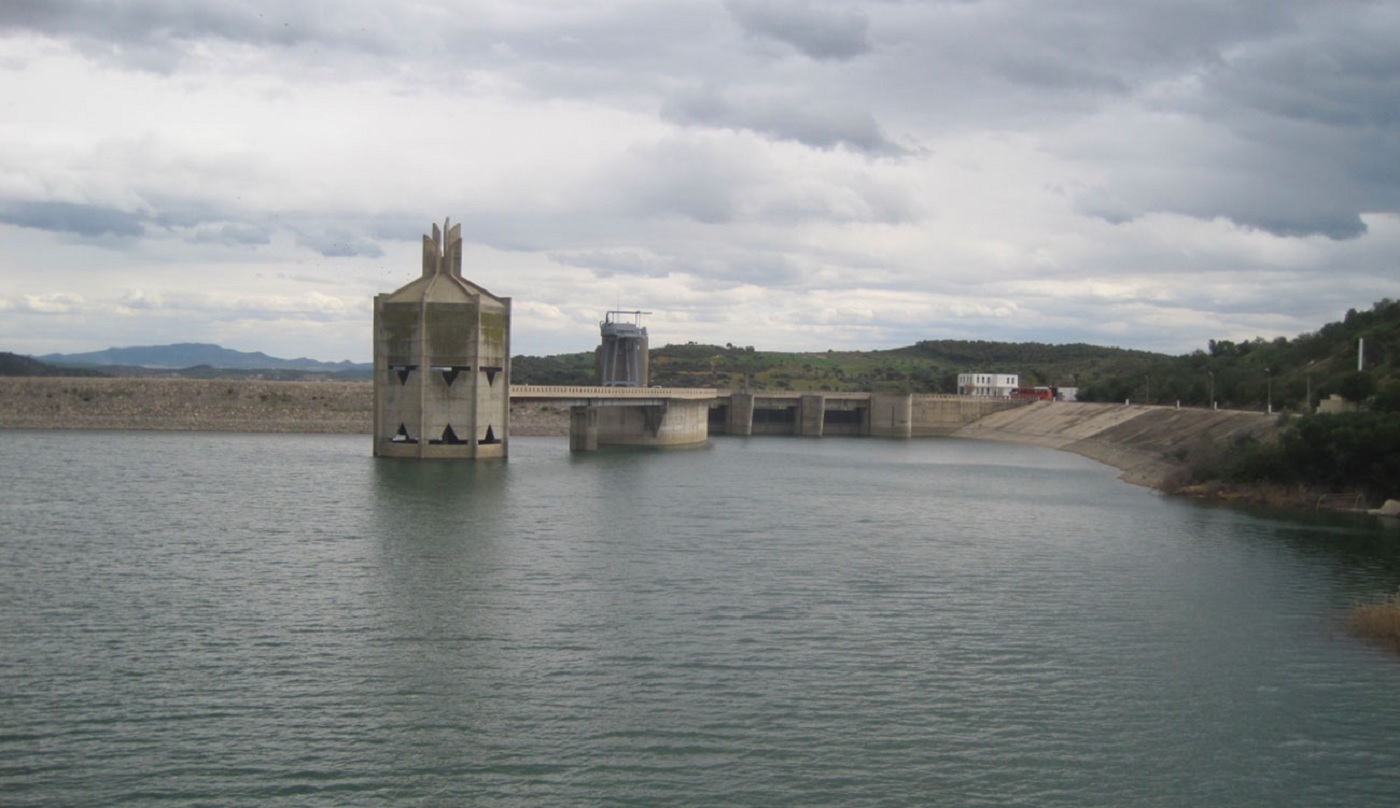
Thus, the level of Sidi El Barrak Dam rose from 74 to 148 million m³, Sidi Salem Dam from 92 to 122 million m³and the stock of Kasseb Dam from 19 to 24.6 million m³ currently.
The Béja governorate hosts the largest dam in Tunisia, Sidi Salem, with a capacity of 643 million m³, supplying drinking water and irrigation to several regions since its construction on the Medjerda River in 1982.
The Nefza delegation also includes one of the largest dams in the country, Sidi El Barrak, as well as Kasseb Dam in northern Béja.
A break after eight years of water scarcity!
Tunisia is in a situation of water scarcity, with a share of 420 cubic meters of water per inhabitant per year, a “very dangerous situation,” according to the president of the Federation of Small and Medium Enterprises, Chakib Ben Mustapha.
During an intervention on Express FM, he emphasized that there is a disparity among Tunisian regions in terms of water availability: in the North, it is between 400 and 1000 mm per year; in the Center, it varies between 200 and 400 mm per year; and in the South, it reaches less than 100 mm per year, according to statistics recently provided by the Ministry of Agriculture.
“Over the past ten years, Tunisia has experienced eight years of drought,” Ben Mustapha recalled, adding that annually there are 36 billion cubic meters of water, of which 13% is for drinking water, 17% for rain-fed agriculture, and 18% for forestry, with 55% evaporating or flowing into valleys.
Of a total of 36 billion cubic meters of water, about 5,000 cubic meters are used for basic consumption, he added, noting that 56% of this water comes from surface water, while the rest comes from the groundwater table.
Since independence, the Tunisian state has developed programs and projects, including seawater desalination, to address water shortages in Tunisia.
The president of the Union of Small and Medium Enterprises stated that surface water with a salinity below 1.5 grams per liter (g/L) is considered “drinking water,” and that most groundwater ranges between 1.5 and 3 g/L, noting that 75% of water is mainly allocated to the agricultural sector, while the industrial sector benefits from 8% of the water.