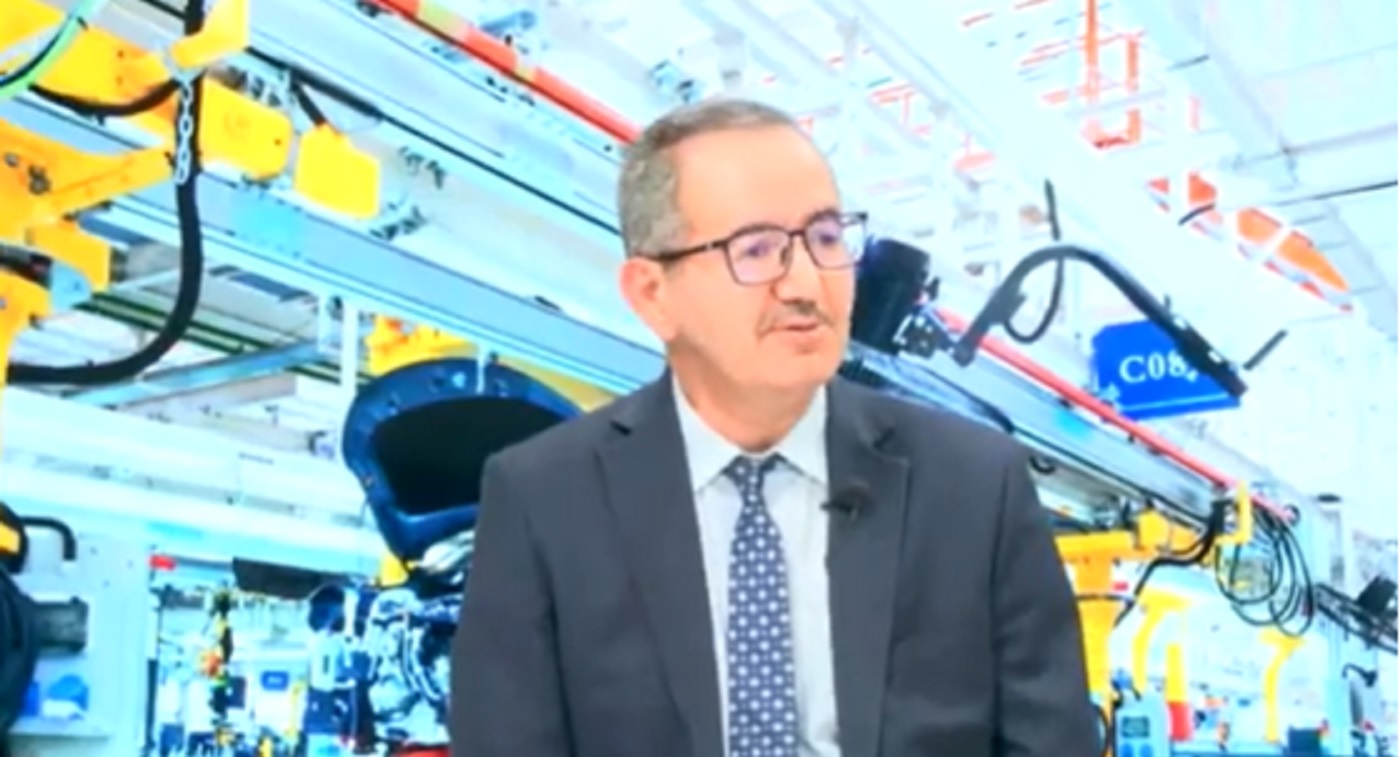
Director General of the FIPA, Jalal Tabib, summed up 2025 with a record figure: 3,572 million dinars (MD) in foreign direct investment (FDI). While the announcement looks like a macroeconomic success, a closer look at the underlying data reveals a more nuanced reality—one of an economy focused on “maintenance” rather than “expansion.”
Announced during an interview with TAP, which has taken on a TV-platform format, this record volume exceeds initial forecasts and, according to Tabib, confirms Tunisia’s resilience despite a volatile global environment. France remains the leading investor outside the energy sector with nearly 900 MD, followed by Germany and Italy, a European dominance that also raises the issue of dependence on Eurozone economic cycles.
Flow structure: expansion, not conquest
The most defining feature of this performance is the nature of the investments: 89% consists of expansions of existing projects. Foreign companies already established in Tunisia have chosen to expand capacity or modernize equipment rather than create new sites.
Tabib presents this massive reinvestment as the “best barometer” of confidence and that argument holds weight. A subsidiary reinvesting funds is responding to confirmed orders, ensuring near-immediate operational deployment.
However, this optimism should be tempered.
An economy reinvesting 89% into existing operations tends to attract too few new players capable of reshaping its industrial landscape. It repairs and expands, but no longer conquers.
Key FDI sectors
Manufacturing absorbs 62.6% of flows, driven by automotive components, a sector where Tunisia stands out compared to neighboring countries, which are more focused on aeronautics and mechanical/electrical industries. High value-added services (digital, software, offshoring) are growing by 75% and have become the main source of skilled jobs.
Energy contributes steadily, with renewables directing, for the first time, 54% of declared investments toward regional development zones, particularly in Sidi Bouzid.
Employment impact: a questionable ratio
FDI outside the energy sector generated around 14,000 new jobs in 2025. Compared to the 3,500 MD invested, the cost per job is becoming increasingly high. Industry is automating, while services, more agile, remain concentrated in urban areas, leaving inland regions on the margins of growth.
Actual implementation: a gray area
Tabib did not distinguish between declared intentions and projects actually brought into operation. What remains unclear and is essential for rigorous analysis, is the exact share of paid-in capital versus shareholder loans, and the timeline for launching the 11% of genuinely new projects.
Historically, Tunisia’s realization rate stands between 65% and 75% for new investments, and likely 80–85% for expansions, precisely because existing firms invest to meet current orders.
The currency paradox: inflows vs outflows
This raises a question of sovereignty. These 3,500 MD pass through local banks (BIAT, Attijari, UIB), generating foreign exchange liquidity essential for imports. But every operational investment today implies dividend outflows in three to five years. For every dinar invested in expansion, how much flows back to Paris, Berlin, or Milan as profit repatriation? Tunisia risks attracting FDI to finance future foreign currency outflows.
Moving beyond headline figures
Jalal Tabib has set a target of 4,000 MD for 2026. But what is the point of increasing volume if real added value evaporates through profit transfers? Without policies ensuring immediate operationalization and partial reinvestment of profits within Tunisia, these records risk remaining accounting figures. The real question is no longer how much enters, but how much stays in the Tunisian economy to build the industry of 2030.
Tabib responds to African Manager
When African Manager pointed out that an economy reinvesting 89% into existing operations attracts too few new entrants, Tabib acknowledged: “We repair, we expand, we no longer conquer.” He added that the 3.5 billion dinars are actual realized investments, while investment intentions exceed 8 billion dinars.
He explained that the dominance of expansion projects reflects a global slowdown in FDI and a worldwide concentration on expansion operations, which are less costly than new setups.
Moreover, such expansions confirm Tunisia’s profitability as an investment destination and reflect investor confidence.
Asked why such large investments do not significantly reduce the country’s 645,200 unemployed, Tabib emphasized the importance of quality over quantity. Tunisia has shifted from a low-cost labor economy (textiles of the 1980s–90s) to more technology-driven industries. The establishment of R&D centers by global leaders such as Visteon, Ampers, Draxlmaier, and DXC illustrates this trend.
He acknowledged that unemployment above 15% remains a major challenge, requiring continued efforts to facilitate FDI.
On the issue of profit repatriation, Tabib responded that investment is a “win-win” relationship: the host country gains jobs, wages, technology transfer, foreign currency inflows, regional development, and tax revenues.
In return, investors logically repatriate profits as dividends, but only after paying taxes in Tunisia, especially since the preferential regime for fully exporting companies has been abolished and they are now subject to corporate tax like all other firms.