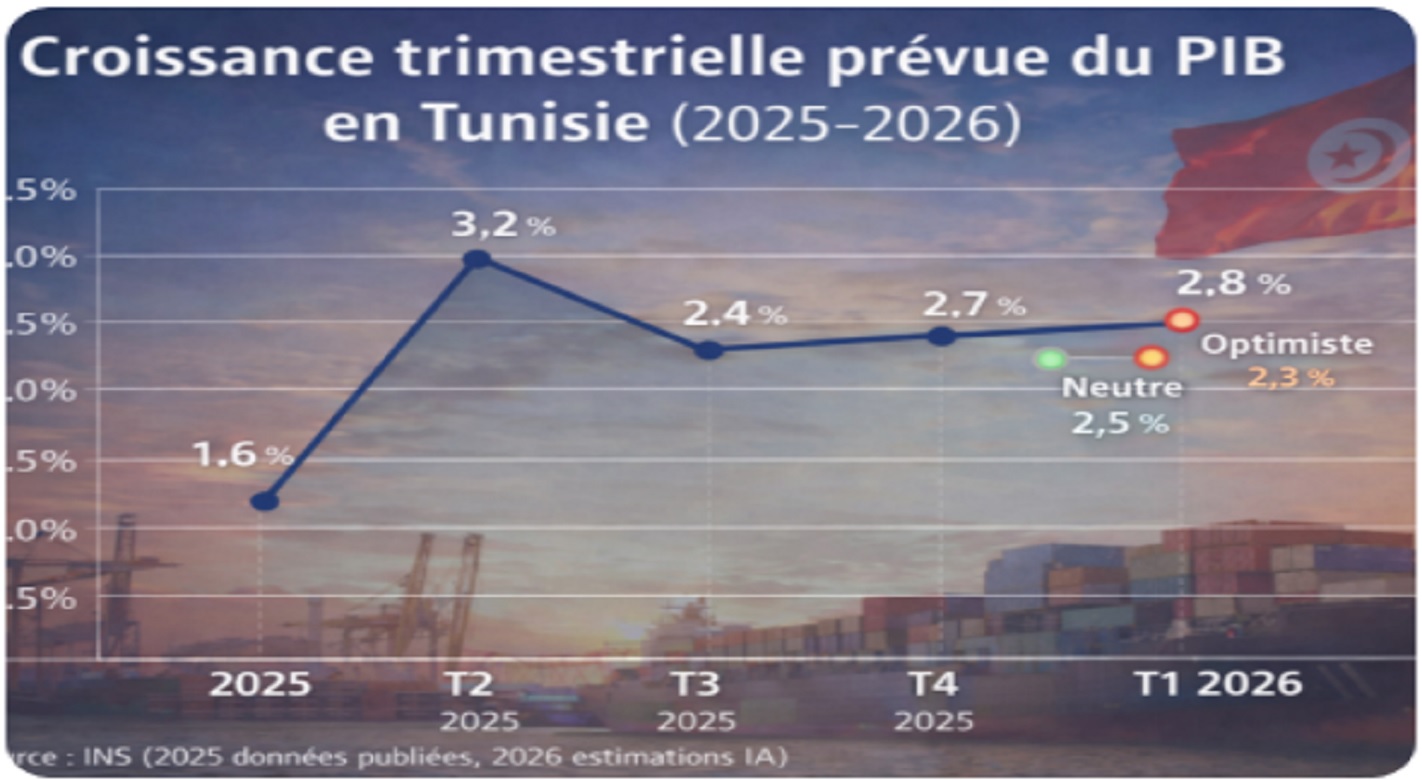
The report from the National Institute of Statistics (INS) on fourth-quarter 2025 growth shows a seasonally adjusted quarterly growth rate of 2.7% and an annual rate of 2.5% (INS, 2026).
While these figures are presented as encouraging, a closer look reveals an economy that remains fragile, imbalanced, and vulnerable to internal and external shocks.
Agriculture drives growth, but remains a fragile engine
The INS notes that “the value added by the agricultural sector increased by 12.3%, contributing 1.08 percentage points to overall growth.”
This impressive performance masks an overreliance on a sector highly sensitive to climate variability and international market fluctuations. In other words, apparent growth rests on a fragile engine rather than structural improvements in productivity or economic diversification.
Industry and energy: Worrying imbalances
The report states that “the manufacturing sector grew by 4.0%, driven by mechanical and electrical industries (+7.8%).” In contrast, the energy sector declined: “value added in energy and mining decreased by 0.3%, with a 13.3% drop in oil and gas extraction.”
These figures reveal a major structural imbalance: growth is driven by a few limited industries, while sectors critical for energy sovereignty and trade remain in decline.
This threatens the sustainability of growth and underscores the risk of dependence on narrow sectoral niches.
Domestic demand as the sole driver
The report notes that “domestic demand increased by 3.4%, contributing positively to GDP” (INS, 2026). While this rise temporarily supports growth, it mainly reflects a lack of international competitiveness.
Exports remain insufficient to offset the trade deficit, creating dependence on domestic consumption and internal transfers. This dynamic risks masking underlying weaknesses, including the inability of certain sectors to integrate sustainably into global value chains.
Services: Limited and uneven growth
The services sector, contributing 0.88 percentage points to growth, is driven by tourism and hospitality (+7.2%) as well as media and communications (+3.7%).
Although these figures indicate local dynamism, the concentration in a few specific activities limits their real impact on sustainable employment and economic stability.
Sectoral growth can easily collapse in the face of external crises, such as a decline in international tourism.
Methodology and report limitations
The INS specifies that quarterly GDP is “adjusted for seasonal and cyclical variations.” However, this standard method may artificially inflate figures, giving the impression of stronger recovery than is real.
The reported growth could therefore be partially illusory, particularly given stagnation or decline in strategic sectors and low levels of productive investment.
Annual growth: Stabilization, not recovery
Tunisia’s economy recorded 2.5% growth for all of 2025. While moderate, this mainly reflects stabilization after difficult years rather than true economic recovery. Structural deficits, persistent inflation and high unemployment remain major obstacles.
Toward sustainable growth?
The report’s analysis reveals several key challenges: Sectoral fragility: Agriculture and specific services drive growth, while strategic industry and energy stagnate or decline.
Dependence on domestic demand: Weak export competitiveness limits economic resilience.
Risk of illusory growth: Methodological adjustments can mask structural weaknesses and actual productivity.
Without diversification measures, strengthening of industry and stimulation of high-value-added exports, Tunisia risks remaining on a path of superficial growth, exposed to external crises and cyclical fluctuations.
Conclusion: Fragile and Imbalanced Growth
While the INS report provides precise statistical data and reassuring figures for Q4 2025, critical analysis shows that Tunisia’s economic growth remains fragile, sectorally unbalanced and partly dependent on temporary factors.
Policymakers must look beyond headline numbers and implement structural reforms to ensure real, inclusive and sustainable growth.