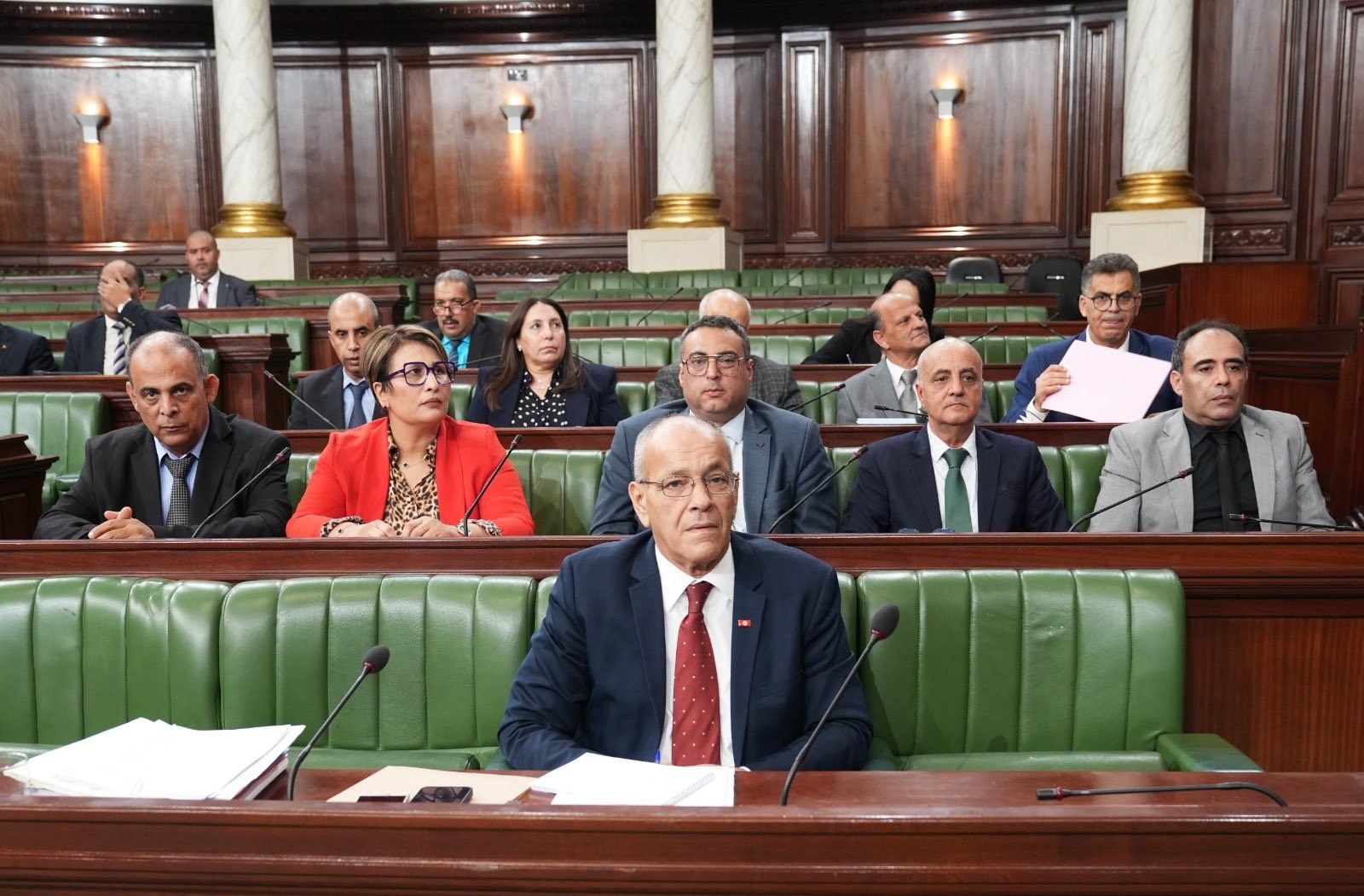
Minister of the Environment affirmed that “the now-finalized Environment Code is expected to trigger a true legislative revolution in the sector.” He made this statement during a plenary session dedicated to reviewing the ministry’s 2026 budget.
Wrapping up the debates at dawn before the National Assembly (both chambers), he explained that this code, awaiting submission to Parliament, has been completely rewritten after revising 400 articles.
According to him, this overhaul will strengthen the ministry’s effectiveness thanks to modernized legislation, updated specifications, and greater openness to the private sector.
Regarding the 2026 budget, the minister indicated that 90% of allocations were dedicated to sanitation. He noted that maintenance work on infrastructure is ongoing in the governorates of Jendouba, Siliana, and Kef, as well as in several delegations between Tabarka, Tinja, and Beni Mtir.
Habib Abid added that sanitation equipment remains “very expensive,” particularly transport trucks, waste treatment, and waste recovery systems, with unit prices exceeding one million dinars.
“Treatment plants purify about one million cubic meters of wastewater per day, with the goal of reusing 26% of treated water in the agricultural and industrial sectors,” he added.
He also acknowledged that certain projects are currently stalled and noted that funding is being sought through public–private partnerships.
In this context, he announced an agreement with seven banks to open financing lines totaling 20 million dinars, aimed notably at electricity production from waste and converting waste into fuel for cement plants.
Toward a National Medical Waste Center
Regarding medical and pharmaceutical waste, he said that nine companies currently operate in this sector, treating around 19,000 tons of waste, a demand that has grown since the Covid-19 pandemic. The ministry, in coordination with the Ministry of Health, is considering creating a National Medical Waste Center.
On the issue of illegal dumpsites, he mentioned the difficulties related to their oversight, which remains a shared responsibility between the Ministries of Equipment, Interior, and Industry.
He also noted that the budget of the National Waste Management Agency (ANGED) has been increased by 100,000 dinars to allow for rapid interventions, recalling that 16 controlled landfills receive around 10,000 tons of waste per day.
The minister also addressed issues of industrial pollution, particularly in the thirteen tomato processing plants in the governorate of Nabeul. To preserve the production chain, from farmer to factory, several meetings were held to reduce environmental impacts related to water discharge and the use of certain materials, accompanied by strengthened controls.
However, closure of non-compliant factories or the imposition of fines falls under the responsibility of the Ministry of Industry and the relevant judicial bodies, he noted.
Gabes: “Concrete solutions coming soon”
Regarding margine, the residue from olive oil production, Abid recalled that his department is working on its recovery for export, in collaboration with agricultural research institutes.
As for coastal development, he said that 240 million dinars have been allocated to the Coastal Protection and Management Agency (APAL), an amount he considered “limited” given the scale of interventions needed to combat marine erosion and continue rubble removal. He added that six million dinars will also be allocated to protecting cities.
Finally, addressing the environmental situation in Gabès, the minister emphasized that the issue is being directly monitored by the President of the Republic, adding that the commission the President ordered to create will soon present concrete solutions.
When questioned about the regularization of workers under “Mechanism 41,” he stated that the contracts of 38 workers have been renewed, while three cases remain before the courts.
“Mechanism 41” is a support program that allows small businesses to collect non-hazardous waste along main roads and around cities. Its goal is to create jobs and improve waste management through partnerships with small enterprises, alongside subsidies from other funds.