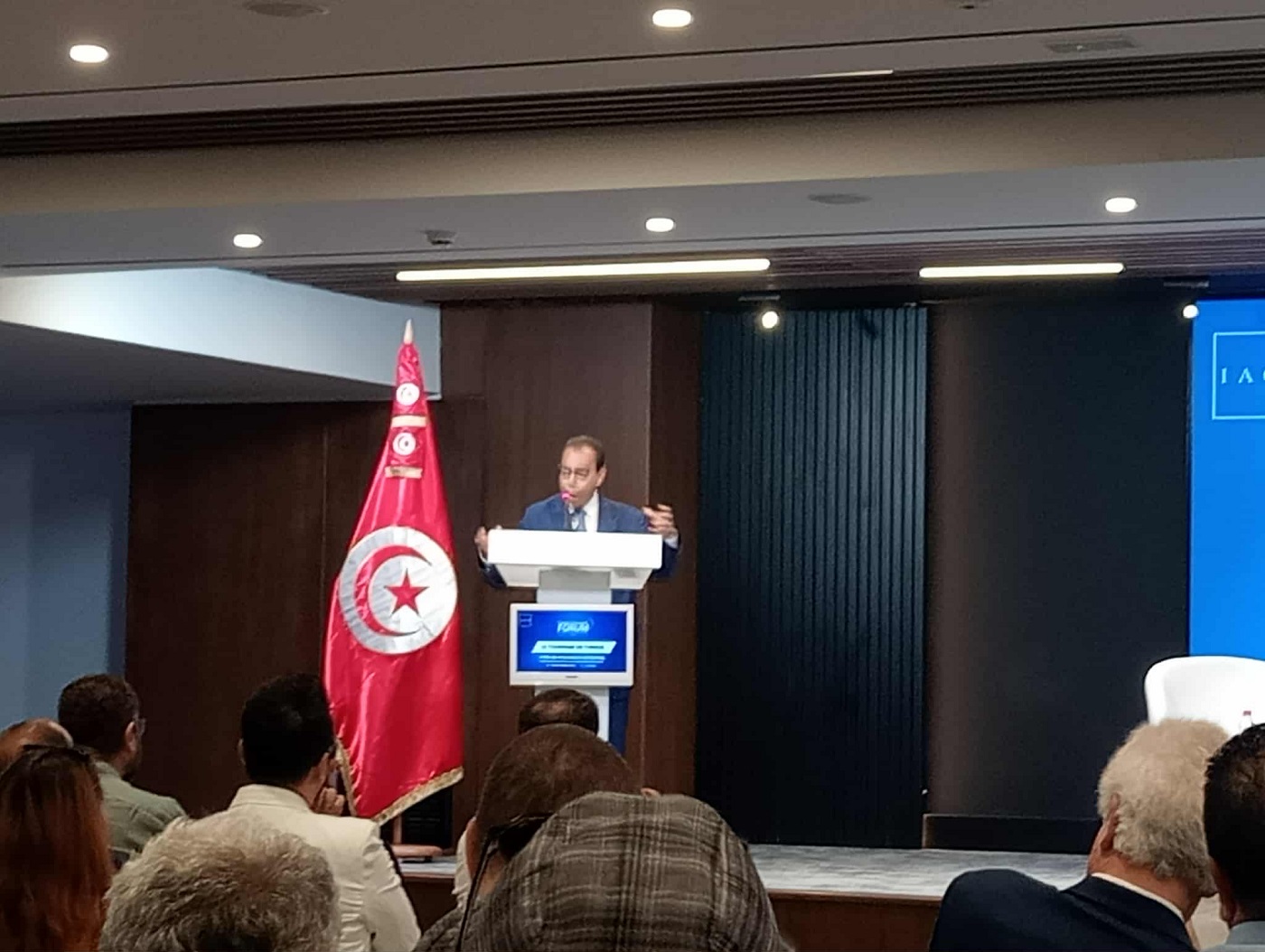
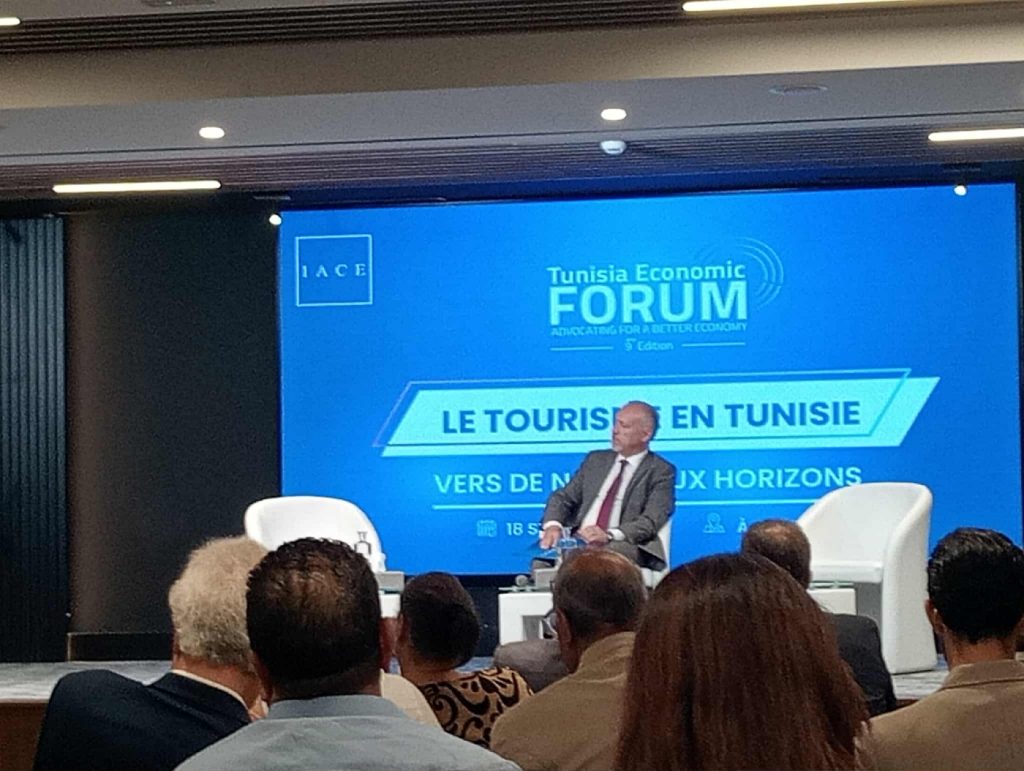
During the 9th edition of the Tunisia Economic Forum, the IACE (Arab Institute of Business Managers) unveiled on Thursday, September 18, 2025, a new study entitled “Quantifying the Potential of Market Segments.”
This study primarily focuses on the success of the tourism sector by capitalizing on high-potential segments (senior tourism, health and wellness tourism, guesthouses and rural tourism, luxury tourism, rental tourism, etc.), which would generate total revenue of approximately 13.17 billion dollars by 2030, representing 24.45% of the total revenue of the tourism sector by that deadline.
It also shows that diversifying the tourism sector through targeted investments and proactive public policies would result in a net creation of 32,895 jobs by 2030, thereby contributing to the de-seasonalization of the sector, specified Safouane Ben Aïssa, the author of the study.
Development of three prospective axes 2025-2030
This study considered three prospective scenarios (2025-2030). A conservative scenario involving maintaining modest growth, with limited gains due to structural constraints (infrastructure, instability); a central scenario focused on continuing growth driven by the consolidation of existing segments (beach, health); and an ambitious scenario foreseeing accelerated growth through successful diversification of the tourism offering.
The study thus argues for diversifying the national tourism product by adapting to new global tourism trends. It identifies 6 promising sectors for which Tunisia holds several comparative advantages.
These include senior tourism, which could attract a retired European clientele with high potential during the low season (winter/spring); health and wellness tourism, in which Tunisia already enjoys an international reputation, especially among the diaspora and Maghreb and European clients; and rural tourism and guesthouses, currently trending with the rise in the search for authenticity, cultural circuits, and ecotourism.
This segment promotes regional “rebalancing” and greater inclusion of inland areas. It also includes luxury tourism, essential for diversifying the tourism mix and attracting high-spending clients, and rental tourism, which is experiencing strong growth through platforms like Airbnb, Abritel, etc., particularly in large cities and coastal areas.
A Rigid regulatory framework unsuitable for new realities
“These sectors remain hindered in their development. The obstacles are known: a regulatory framework still too rigid and often unsuitable for new realities, insufficient institutional coordination, and a persistent gap between the traditional offering and the evolving expectations of international markets…
And promoting these new segments is not an option. It is a strategic choice for the future of our country.
But this choice can only succeed through our collective capacity to act, coordinate our efforts, and innovate together,” stated the president of IACE, Amine Ben Ayed.
The study thus proposes a 2026-2028 roadmap to successfully diversify the tourism sector and develop the identified promising niches.
This involves authorizing long-stay visas and developing low-season packages for seniors, establishing a national label, a portal for appointments, and accreditations for health tourism.
This roadmap also argues for creating a sustainable label and renovation/restructuring funds for rural tourism and guesthouses, creating a Luxury Tunisia label, and tax exemptions for heritage investments in luxury tourism.
It also calls for establishing a registry/license, zoned quotas, and simplified taxation for rental tourism.
Necessity to reform Tunisian tourism legal framework
During this forum, IACE also presented a second study entitled “Towards New Regulations,” which emphasized the imperative to reform the Tunisian tourism legal framework to foster the development of promising segments.
This study identified the strengths of the current framework, which consist of its historical anchoring and legislative continuity since 1919, a structured institutional organization (ministry, ONTT, regional commissions, etc.), rigorous technical oversight for traditional hospitality, and diverse investment mechanisms (investment code, investment laws, tax benefits).
However, this framework suffers from major structural weaknesses, including cross-cutting dysfunctions, an unsuitable traditional administrative approach, normative fragmentation, and a deficit in coherence and innovation in the face of digitalization.
Regarding the segments identified by the first study, senior tourism primarily faces the absence of a specific status (service residences) and a lack of signed conventions with relevant countries.