The A3T Stats for developments in the Tunisian passenger car market at the end of the first two months of the current 2026 fiscal year have just revealed their secrets.
Over the period of the first two months of 2026, even though it remains relatively short, the Tunisian passenger car market confirms a profound reshaping of the competitive landscape.
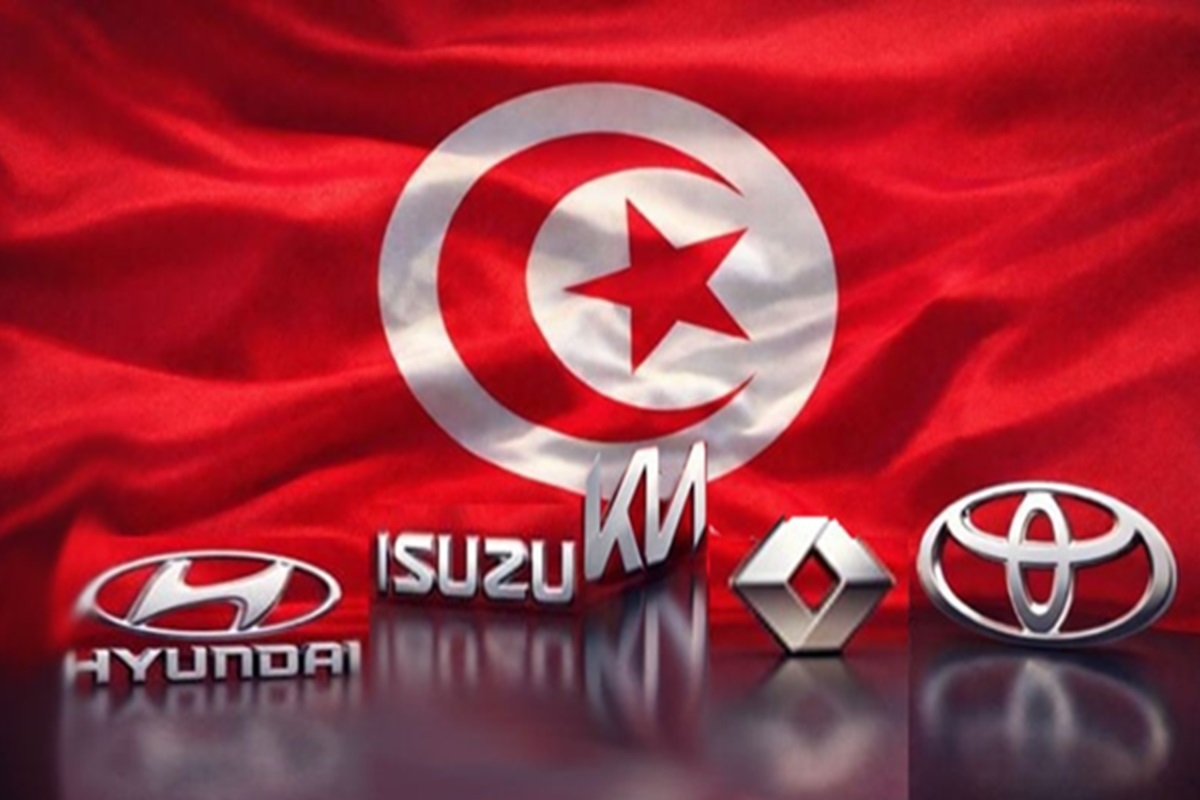
Hyundai thus establishes itself as the undisputed leader with a 12.57% market share, while Chinese brands, driven by +91% growth, now represent one in five cars sold, thereby reshaping—and potentially in a lasting way—the national competitive landscape in Tunisia.
Hyundai, dominant leader
With 1,117 units over the first 2 months and a 12.57% market share, Hyundai is widening the gap on its competitors. Its growth of +35.72% vs. 2025, masterfully led by Mehdi Mahjoub, is remarkable and reflects a highly aggressive commercial strategy on its part.
In February alone, the Korean brand recorded 983 units, more than double the 2nd place (Isuzu with 478) in the ranking of passenger car best-sellers.
Podium shake-up
Isuzu jumps to 2nd with a +208.7% surge (889 units YTD), likely due to a new model or pricing strategy. Kia rounds out the podium with 697 units and modest growth (+3.1%).
Big losers in Top 10
Renault (-25.2%), Toyota (-23.8%), and Citroën (-15.6%) fall sharply vs 2025. Fiat drops -55.9% despite ranking 9th. These declines benefit Hyundai and rising brands.
Rise of Chinese Brand Chery
Ranked 8th with 480 units YTD, Chery posts the second-highest growth in the Top 10 at +313.8%, a strong signal of Chinese brands making a breakthrough in this market.
Peugeot, the pleasant French surprise
With +57.9% growth, Peugeot is the only French brand in the Top 10 to increase sales, partially offsetting the declines of Renault and Citroën.
Key Insights from Chinese market surge
Chinese brands now hold a 22.5% market share in just two months. With 2,003 units sold out of a total market of 8,889, they now account for more than one in five cars sold.
In 2025, they totaled only 1,048 units over the same period, nearly doubling in one year (+91.1%).
Chery, the undisputed leader of the Chinese bloc, especially since being acquired by the Kilani Group, sold 480 units YTD, growing +313.8%, capturing 24% of Chinese brand sales alone and ranking 8th in the overall market.
This spectacular rise is likely driven by new model launches and an aggressive pricing strategy.
A remarkable diversification of offerings
Nine Chinese brands are now active (compared to far fewer two years ago), with very diverse market positions: affordable SUVs (DFSK, Omoda & Jaecoo), premium electric vehicles (BYD), and commercial vehicles (Dongfeng, JAC).
DFSK, in particular, shows the highest segment growth: +691.7%, although on a very small base (12 units in 2025).
Only JAC sees a slight decline (-5.6%), indicating that competition among Chinese brands themselves is intensifying, with new entrants (DFSK, Omoda & Jaecoo) capturing some of the volumes previously held by JAC.
The structural dynamic is clear: the Chinese market is no longer marginal, and at this pace, it could surpass a 25% market share as early as spring 2026.
A market reshuffle emerging as a Sino-Asian showdown
From the outset, it is clear that Asia already dominates the Tunisian car market in the first two months of the year, accounting for nearly 50% of sales, 4,411 units out of 8,889.
In other words, one in every two cars sold is of Asian origin. In 2025, this figure was 3,081 (+43.2%), confirming a strong structural trend.
However, the internal dynamics differ sharply between the two blocks. Non-Chinese Asian brands (Korea, Japan, India) grew +18.4%, mainly driven by Hyundai (+35.7%), Isuzu (+208.7%), and Mahindra (+33.3%).
In contrast, Toyota dropped -23.8% and Suzuki collapsed -78.3%. China, meanwhile, surged +91.1%, a pace five times faster than other Asian brands.
China quickly catching up with the rest of Asia
The gap between the two blocks is narrowing: 2,408 units for non-Chinese Asia vs 2,003 Chinese units. If the trend continues, China could surpass other Asian brands before the end of H1 2026.
The relative weight of each block is also revealing. Non-Chinese Asia relies on 7 brands, dominated by three giants (Hyundai, Isuzu, Kia) making up 88% of the bloc. The Chinese bloc has 9 brands, none exceeding 480 units, a more fragmented structure, but collectively more resilient and dynamic.
In summary: Non-Chinese Asia remains the dominant block in absolute volume, but China is driving market growth and its ascent appears far from over.