The sixteenth edition of the Central Bank of Tunisia’s (BCT) Payments in Figures bulletin, covering the first quarter of 2026, paints the picture of a payment system undergoing a major transformation.
Behind the impressive growth rates in digital payments, two key trends stand out: the sharp decline of cheques, almost entirely offset by the rise of bills of exchange, and the continued dominance of cash in bank card usage.
Cards are still used mainly to withdraw cash
Tunisia’s bank card base reached 5.875 million cards, up just 0.4% from the end of 2025, supported by a network of 3,324 ATMs and cash dispensers.
Electronic payment activity totaled 41 million transactions during the first quarter, compared with 36.7 million a year earlier (+11.7%), amounting to TND 7.34 billion, an increase of 12.5%.
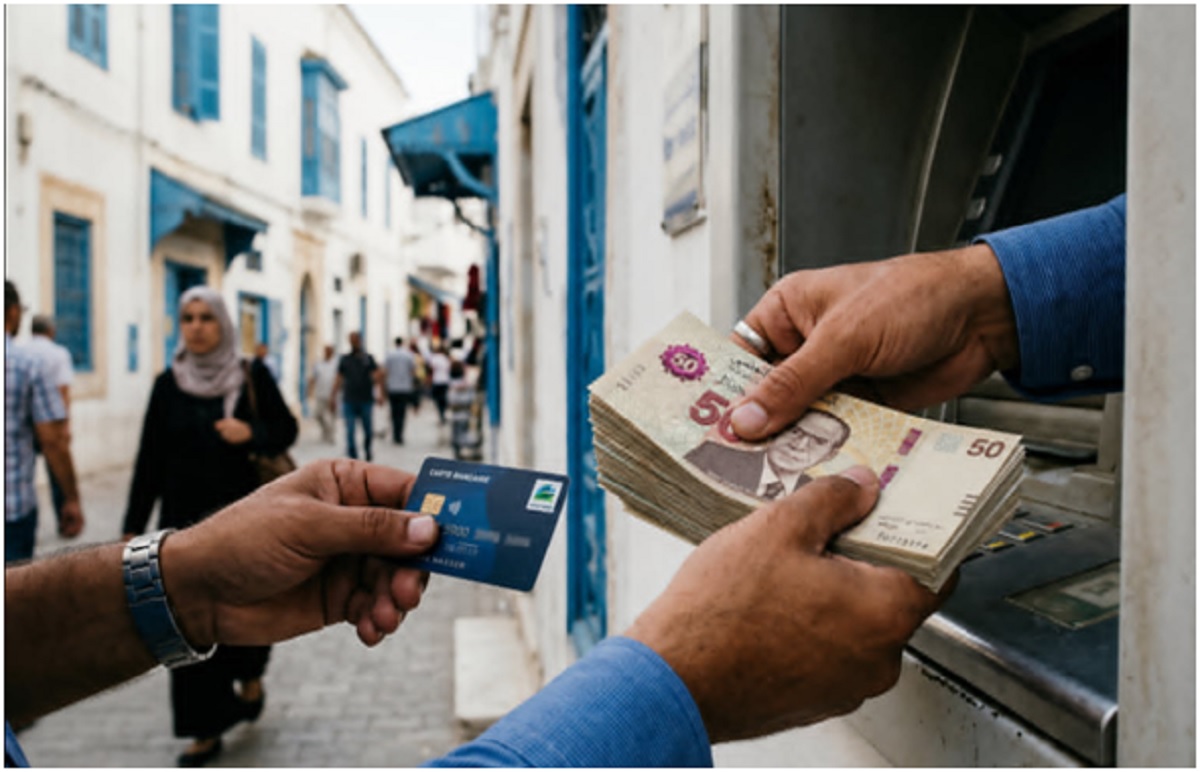
However, the breakdown of card usage remains telling. Payments accounted for only 41% of transactions and 24% of total value.
In other words, 76% of the money flowing through Tunisian bank cards ultimately ended up as cash withdrawals. While this share has improved slightly from 78% a year earlier, cards remain primarily a means of accessing cash.
Digital payments grow rapidly from a low base
E-commerce continues to accelerate, with 5.2 million online payment transactions (+28.4%) worth TND 382.7 million (+34.8%).
The number of active merchant websites increased by 28.2%, yet the figures also highlight Tunisia’s digital gap: only 1,288 websites recorded at least one online transaction over the past year.
Point-of-sale payments through the country’s 45,000 electronic payment terminals rose by 21.4% in volume to 11.7 million transactions and by 19.7% in value to TND 1.38 billion.
Mobile payments, now unified under the national TunPay brand, recorded particularly strong growth, reaching 2.7 million transactions (+67.1%) worth TND 487.6 million (+34.5%). The expansion was supported by 477,000 digital wallets (+22.2%) and 17 payment service providers.
Notably, actual payments accounted for 65.6% of mobile transactions and 57.5% of transaction value, suggesting that digital wallets are increasingly being used for payments rather than simply for loading or withdrawing funds.
The real shift: Checks replaced by bills of exchange
The most significant transformation is taking place within the clearing system.
The number of cleared cheques plunged by 24.9% to 1.7 million, while their value dropped 28% to TND 11.51 billion following the introduction of Tunisia’s new cheque regime.
The money, however, did not disappear, it shifted elsewhere.
Bills of exchange jumped by 35.9% in volume to 1.2 million transactions and by 23.5% in value to TND 13.91 billion.
Bills of exchange now account for a larger share of cleared transactions than cheques, completely reversing the situation seen in the first quarter of 2025, when cheques exceeded bills of exchange by roughly TND 4.7 billion.
Intercompany credit has therefore not vanished; it has merely changed its instrument.
Bank transfers posted more moderate growth, reaching 9.6 million transactions worth TND 19.58 billion (+8.7%), while direct debits increased by 26.4% in volume.
One figure is particularly concerning: more than one direct debit in two was rejected, representing a rejection rate of 51.2% by volume, although rejected transactions accounted for only 7% of total value.
Overall, the total amount processed through the clearing system remained virtually unchanged at TND 53.42 billion (+0.6%), indicating that the shift is occurring without any significant change in overall transaction volumes.
Large-value payments continue at full speed
The Elyssa-RTGS real-time gross settlement system processed 109,118 transactions (+8.4%) worth TND 1.55 trillion, an increase of 9%.
Meanwhile, the Central Bank is pursuing six major projects, including:
The overhaul of the national clearing system;
The restructuring of SMT and SIBTEL;
The implementation of the national White-EMV payment scheme;
School registration payments via USSD and digital wallets.
A two-speed transition
Overall, the bulletin captures a payment ecosystem evolving at two different speeds.
Digital payments are expanding rapidly, with growth rates ranging from 20% to 67%, but from relatively small bases compared with the TND 7.3 billion generated by card transactions during the quarter, three-quarters of which still consisted of cash withdrawals.
The quarter’s most significant development lies elsewhere: the quiet replacement of cheques by bills of exchange, a shift that, on its own, warrants closer scrutiny of the credit risks being transferred within the economy.