The 2026 Finance Law has passed. For some unknown reason, it had made Speaker of the Assembly of People’s Representatives (ARP), Brahim Bouderbela, cry.
A text packed with budgetary riders. For context, a budgetary rider is a legislative provision inserted into a finance law that has no direct relation to the revenues or expenditures outlined in the law. It is often an abusive use of the budgetary text to pass an unrelated measure, frequently censured by the Constitutional Court, if there were one.
These riders are “ridden” by deputies who, reduced to the rank of simple officials, imagine themselves as an executive power, challenging the authority of the head of state.
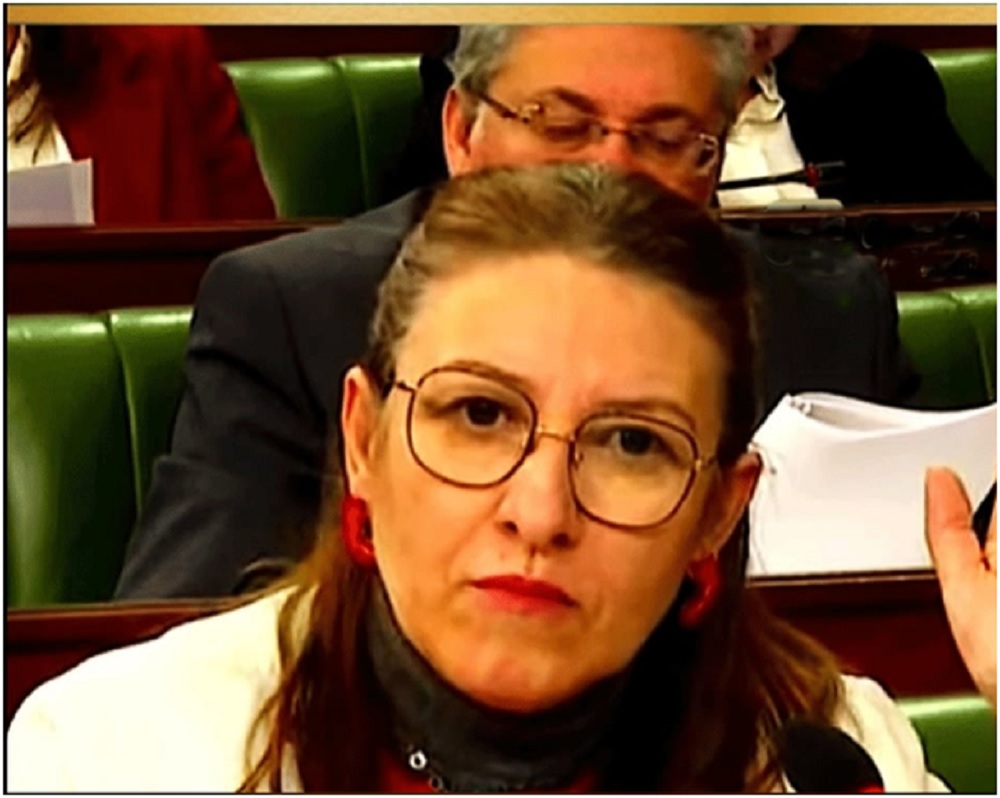
The Iron Lady at work
“The word has become worn out because I have repeated it so often in front of you. But you must understand that you cannot put everything into a finance law. This is contrary to Article 10 of the fundamental budget law,” explained the Minister of Finance.
Michket Slama cited, for example, the regularization of employee situations and their integration, which are not done via laws but via regulatory texts.
The minister hammered the point further: “With such articles, with such ideas, even if the intentions are good, you undermine the authority granted by the constitution to the President of the Republic,” thus putting deputies at odds with the head of state.
Then, as if reading the minds of some authors of proposed articles in the 2026 Finance Law, or dismantling their modus operandi, the minister, heading the first department to be impacted by such practices, added: “This means the head of the department can no longer exercise his powers.
We put law provisions into the finance law, and we’ll manage their execution ourselves. Then one or two sit-ins at the government presidency will force the state to regularize things as we wish. That is what you are asking,” she said with restrained anger.
In a final effort to imprint the law in the minds of those responsible for enforcing it, she reiterated: “Regulatory texts fall solely under the authority of the head of state. There is no integration or transfer from one administration to another or from one post to another, through a simple article in the finance law just for publicity.”
– A discovery, not a negative one, for the public
Appointed on February 5, 2025, as Minister of Finance, replacing Sihem Nemsia, Magistrate Michket Slama Khaldi was the real discovery of the 2025 parliamentary session.
Chair of the National Commission for Penal Reconciliation and member of the Competition Council, no one expected her to ace her first oral presentation before deputies, frustrated by their new status as officials and eager for “rebellion.”
Few observers of the government scene expected to see an Iron Lady defend a text tooth and nail, even if it was not much different from the 2025 law, despite her mishandling parts of the budgetary debates and the (in our view) error of leaving the ARP chamber temporarily.
Judging by social media comments, Tunisians appreciated this new minister’s image: elegant, upright, and staunch in defending her text, with the written support of her senior finance ministry team.
A Minister lacking communication, hence what happened at the ARP
It is also important to note that the new minister did not just reuse the previous minister’s text (who had been dismissed in the worst possible way), as Deputy Jibril pointed out, but she also mirrored Sihem Nemsia in terms of communication strategy.
Indeed, Michket Slama Khaldi could have avoided the ARP incident had she better informed the new deputies about the circumstances necessitating such a finance law, the budgetary constraints, and the financial limitations of the state that made the 2026 law necessarily similar to that of 2025.
The finance law concerns all Tunisians, determines their means, and sets expenditures according to the state’s resources. Better communication, which could have started at the beginning of the second semester of 2025, directly or through the press, could have improved deputies’ understanding of the true needs of Tunisians, potentially avoiding wasted time on unrealistic proposals.
In short, the new minister is called upon to improve her communication, both internally and externally.