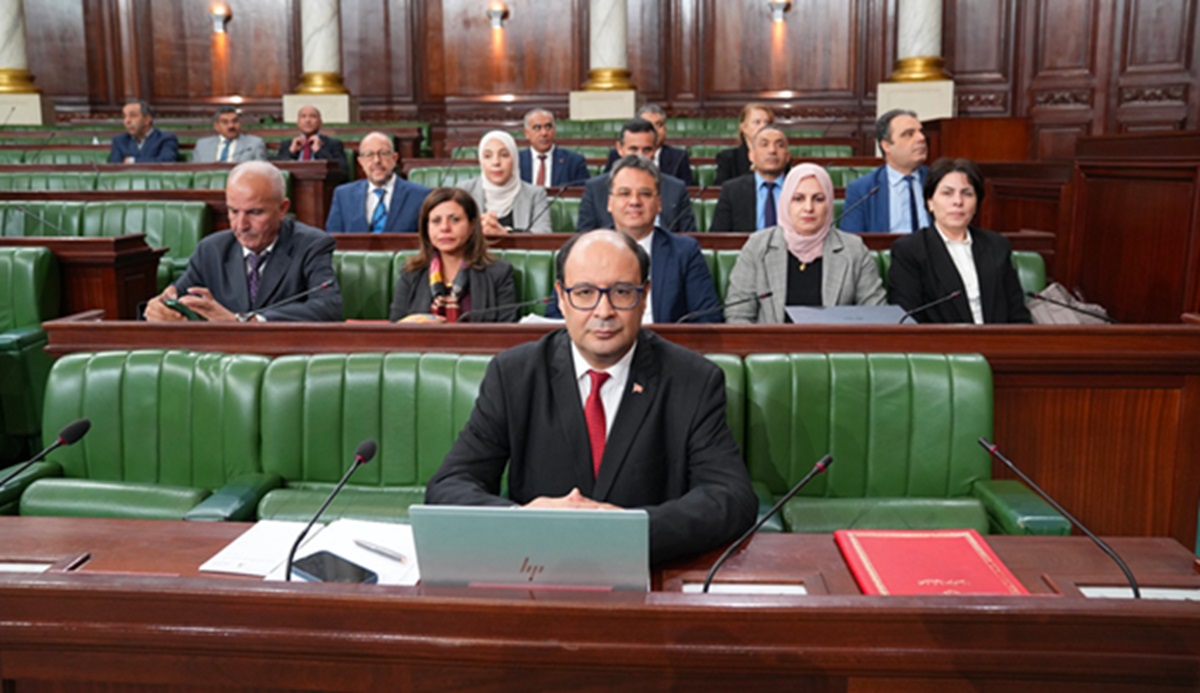
Minister of Communication Technologies, Sofiene Hemissi, stressed the need to ensure the success of Tunisia’s electronic invoicing project, despite several difficulties encountered during its initial rollout.
Hemissi thus dismissed claims predicting a reversal, or even a course correction, particularly regarding e-invoicing, including those who rightly recalled that cash registers were abandoned along with their initiator.
The cash register system is admittedly not yet ready, but it has reached an advanced stage.
Speaking before the Parliamentary Committee on Organization, Development, Digitalization, Governance and the Fight Against Corruption in Public Administration, held on Friday, February 27, Hemissi said electronic invoicing is a key tool to combat the informal economy and improve the detection of tax fraud.
He affirmed that the generalization of electronic invoicing is among the most important ongoing projects at the Ministry of Finance.
The minister also noted that the transaction registration system (cash registers) has reached an advanced stage and should become operational soon.
“The creation of an online tax identification number (‘online business license’) is also under way. Efforts are being made to ensure the success of this project, which is part of the fight against tax evasion,” he said.
Hemissi added that the Ministry of Social Affairs is currently finalizing the health insurance information system and establishing the national register of beneficiaries of state social assistance.
On another front, he said the Ministry of State Property and Land Affairs is continuing work on creating a digital map of state-owned properties.
Series of priority projects at Ministry of Health
The minister also referred to several priority projects at the Ministry of Health, including the expansion of the digital hospital project, the completion of the integrated health information system and the generalization of teleconsultation services.
Regarding the Ministry of Education, he said it is finalizing the integrated management information system, which is expected to become operational next February.
As for the Ministry of Trade, Hemissi reviewed the ongoing creation of a platform for registering foreign exporters.
According to him, this system is already used in most countries, and Tunisia is expected to test it next April. It will enable early tracking of imported goods and raw materials.
Biometric ID card and passport projects at an advanced stage
Concerning digital projects at the Ministry of the Interior, the minister mentioned remote services such as residence certificates, national identity cards, criminal record (bulletin No. 3) and passport renewals.
He also indicated that the biometric national identity card and passport projects are at an advanced stage, despite some delays.
He further referred to the online payment of municipal taxes and the digitization of building permit applications.
At the Ministry of Employment and Vocational Training, Hemissi said progress continues on the second phase of the National Register of Private Enterprises and the National Employment Platform for the long-term unemployed.
New sectoral portal for e-justice
Among the digital projects of the Ministry of Justice, he mentioned the sectoral e-justice portal, while the Ministry of Transport is working on launching new online services, including driver’s license renewal and vehicle ownership transfer.
The e-consulate system is also being strengthened.
Hemissi also reviewed projects under the Ministry of Communication Technologies, notably the unified mobile application for administrative services, the rollout of the national interoperability platform, the national artificial intelligence strategy and the national cybersecurity strategy.
He stressed the importance of continuing to implement digital projects despite the difficulties encountered.
He said that fighting corruption remains one of the biggest challenges, alongside adapting legislation to rapid technological advances and promoting the responsible use of artificial intelligence.
He concluded by noting that digitalization is essential, but it also raises challenges related to personal data protection and the promotion of digital literacy among the public.