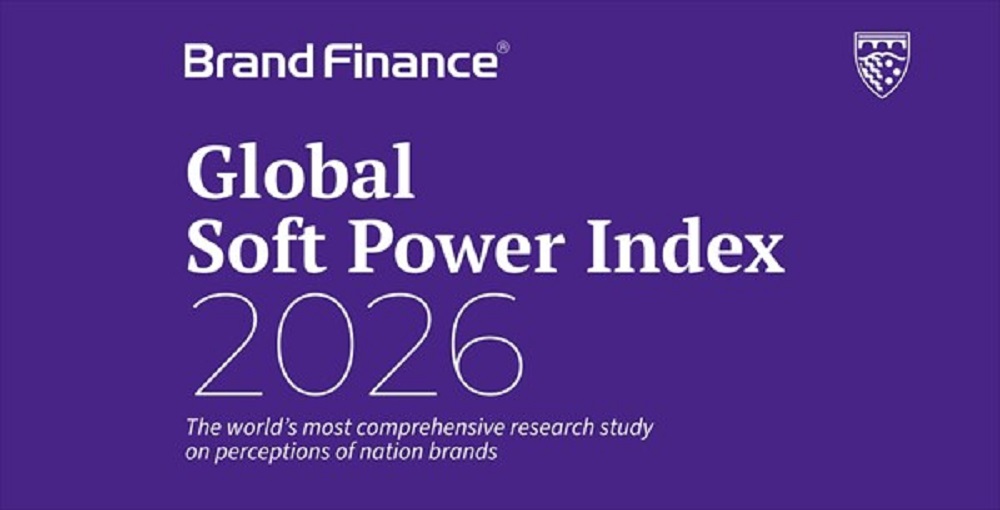
British consulting agency Brand Finance has just published its annual ranking of the most influential countries in the world, known as the Global Soft Power Index.
This report analyzes 193 countries and territories to assess their ability to influence the world, attract and persuade without resorting to force or coercion.
To establish this ranking, Brand Finance relies on responses from a vast panel of over 170,000 individuals from 101 markets worldwide.
Key indicators used include: a country’s overall reputation and perceived image abroad; the effectiveness of public institutions, cultural attractiveness, openness to foreign talent and investment, innovation capacity, and diplomatic influence and multilateral engagement.
In 2026, among 193 countries evaluated, Tunisia ranks 75th globally in terms of soft power, with a score of 36.7, a slight increase of 0.4% compared to last year. Compared to the 2025 edition, the country gains four places.
On the African continent, Tunisia occupies 6th place, surpassed by its three neighbors: Egypt, the top African country with a score of 44.8 and 40th place globally; Morocco, which maintains its 2025 position at 50th place globally with a score of 40.6; and Algeria, just ahead of Tunisia, at 74th place globally with a score of 36.8.
Other African countries stand out, such as South Africa, 43rd in the global ranking with a score of 43, positioning itself as the second most influential country in Africa after Egypt.
But overall, no African country reaches the average score of 50/100 in Brand Finance’s 2026 ranking. The majority of the continent’s countries are therefore found in the lower part of the ranking.
Globally, the United States retains first place in the 2026 Global Soft Power Index, with a score of 74.9, despite a notable decline in its reputation and overall perception indicators. Close behind, China takes second place with a score of 73.5.
Japan follows in third place with a score of 70.6, ahead of the United Kingdom at 69.2. Germany, the most influential country in the European Union, rounds out the top 5 with a score of 67.7.
In the Arab world, the United Arab Emirates is the only country to feature in the global top 10, ranking 10th with a score of 59.4. It is followed by Saudi Arabia, 17th, and Qatar, 20th.
At the other end of the ranking, the least influential countries are generally small island nations or those with low visibility on the international stage.
Among them are Comoros, Samoa, and São Tomé and Príncipe, countries which, lacking resources and global exposure, struggle to carry weight in diplomatic, economic, and cultural circuits.