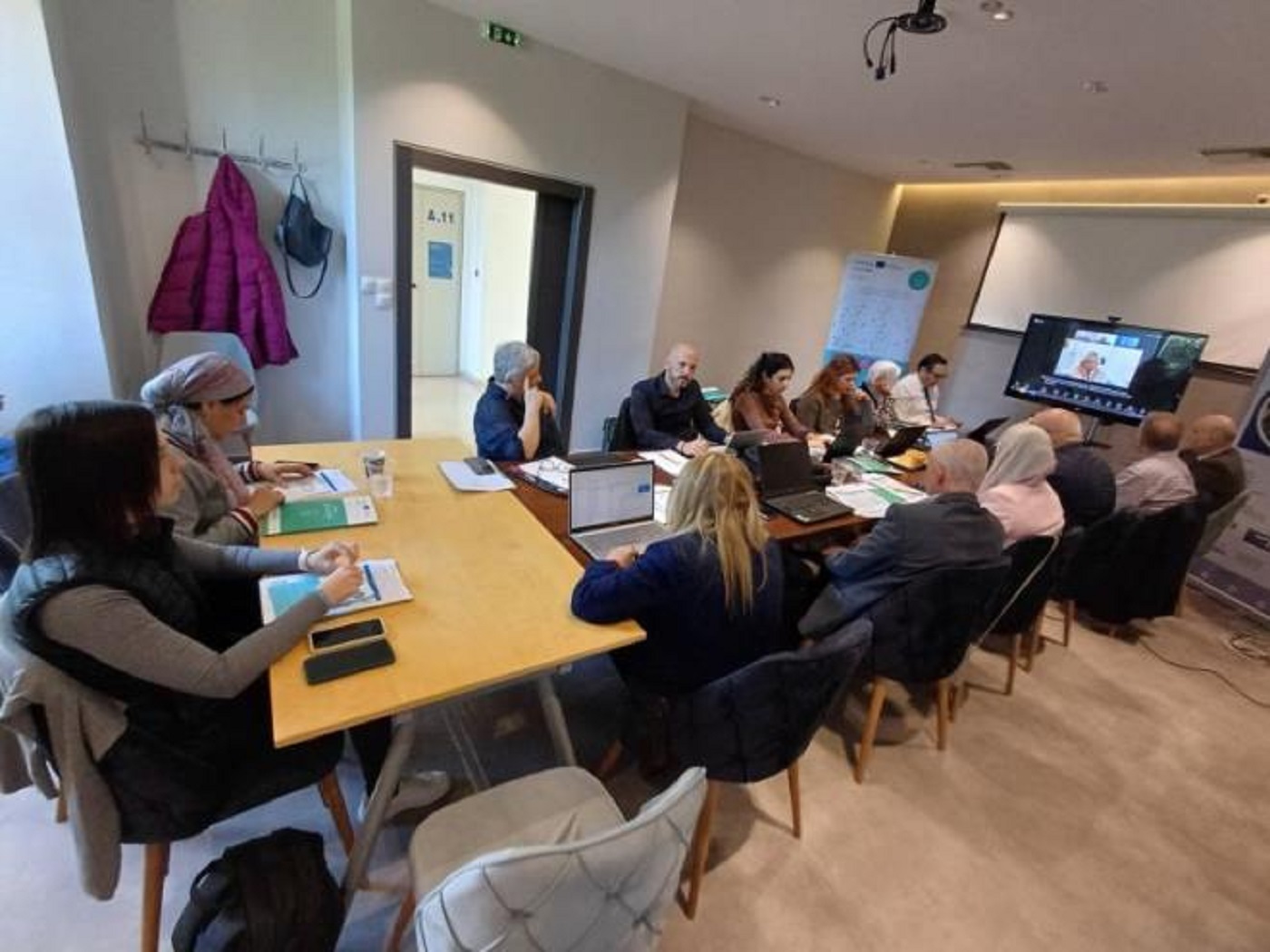
The Tunis Chamber of Commerce and Industry (CCIT) announced on Monday the launch of the project “Speed Up / Accelerate the EU-MED Hubs,” which aims to foster the sustainable and competitive growth of small and medium-sized enterprises (SMEs).
Funded by the European Union under the Interreg NEXT MED program, the SPEEDUP project will provide mentoring and coaching services to unemployed and disadvantaged individuals to help them create their own sustainable and competitive businesses, the CCIT — a partner in the project, said.
“This main objective will be achieved through the establishment of local hubs acting as catalysts and clusters, bringing together all stakeholders involved in entrepreneurship and startup development,” the CCIT added.
The SPEEDUP hubs will operate as a kind of distributed “park,” offering localized training and mentoring through jointly developed acceleration programs.
Through these programs, SPEEDUP will integrate sustainability principles into SMEs from the outset.
Within SPEEDUP, the accelerator concept will be expanded to include the entire environmental, social, and governance (ESG) spectrum, as well as the green and circular economy, with special attention to equality, inclusion, and competitiveness.
The Interreg NEXT “Mediterranean Basin” (NEXT MED) transnational cooperation program represents the third generation of one of the largest EU cooperation initiatives in the Mediterranean.
It aims to promote smart, sustainable, and inclusive development across the region by supporting balanced, large-scale, and multi-level cooperation and governance.
Its mission is to finance cooperative projects addressing common socio-economic, environmental, and governance challenges in the Mediterranean, including the adoption of advanced technologies, SME competitiveness and job creation, energy efficiency, sustainable water management, climate change adaptation, the transition to a circular and resource-efficient economy, as well as improvements in education, training, and healthcare.