The policy of raising wages and pensions introduced under the 2026 budget, with retroactive effect from January 2026, responds to an undeniable social need. In a context of pressure on purchasing power, state intervention appears legitimate.
However, beyond this immediate necessity and the public expectation of increases, already decided and decreed by the country’s highest authority, a closer, more critical reading reveals a series of economic and institutional fragilities that raise questions about the sustainability and coherence of this strategy.
The idea is politically sound, but timing is fiscally problematic!
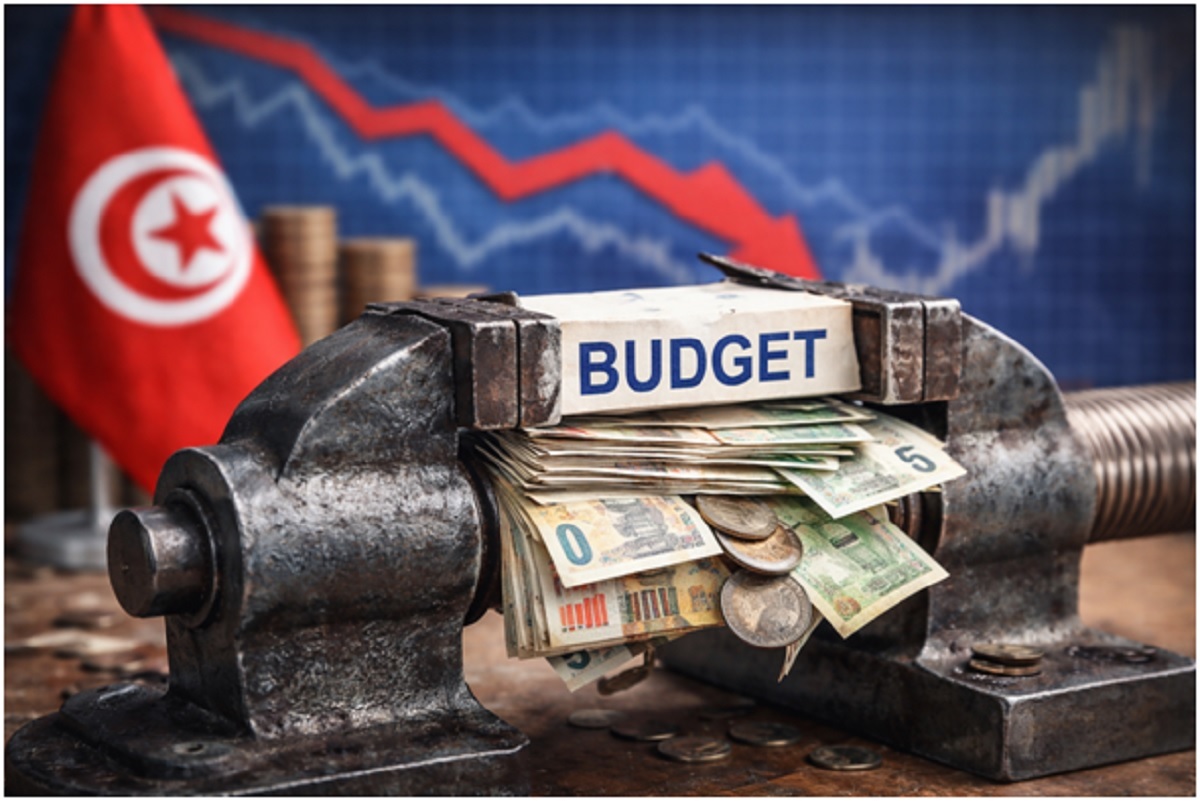
First, a central contradiction emerges: sustainably increasing wages while trying to stabilize the wage bill is a difficult balance to maintain. The state is thus committing to permanent spending without clear visibility on corresponding revenues, in a context where budgetary margins are already highly constrained. The risk is twofold: a worsening deficit or increased reliance on borrowing.
This tension extends to social security funds. Revaluing pensions without structural financing reform could accelerate the already worrying imbalance of retirement schemes. In the long run, this risks placing additional pressure on the state budget.
Moreover, part of the cost is indirectly shifted to the private sector. Companies, particularly the most vulnerable, are forced to absorb these wage increases, risking reduced margins, slower hiring, or even encouraging the growth of the informal economy. In this context, the measure may produce effects opposite to those intended.
From a macroeconomic perspective, the impact remains uncertain. Injecting purchasing power without productivity gains can generate inflationary pressures, partially offsetting the expected benefits for households. Furthermore, these increases appear largely disconnected from actual economic performance, which may weigh on overall competitiveness.
There is also a more structural limitation: this policy remains essentially redistributive. It does not address the root causes of economic imbalances, such as weak growth, inefficiencies in the public sector, or fragilities in the tax system. Without deep reforms, these measures risk having only a temporary effect.
The politicization of wages introduces uncertainty
Another aspect deserves particular attention: the evolution of the decision-making process. Traditionally, wage increases in Tunisia have been negotiated with the UGTT. However, the growing reliance on unilateral decisions reflects a shift toward political centralization of wage-setting. This transformation weakens the role of social partners and may undermine existing regulatory mechanisms.
By sidelining social dialogue, there is a risk of turning negotiated tensions into deferred conflicts. Additionally, the loss of credibility of the contractual framework introduces uncertainty for businesses and investors, who may perceive a less predictable environment.
The politicization of wages reinforces this perception, exposing economic decisions to short-term political considerations.
Between social urgency and budget constraints
Finally, this dynamic could trigger a cumulative effect: rising expenditures, widening deficits, increasing debt, and a gradual reduction in the state’s room for maneuver. In the medium term, the system could thus become more rigid and more vulnerable.
Ultimately, this policy appears to be a compromise between social urgency and economic constraints. While it may produce positive short-term effects, it remains economically fragile and institutionally risky. Without support from structural reforms and a renewed framework for social dialogue, it could ultimately generate more instability than lasting solutions.
The view of a former CEO and minister
Speaking recently on a Tunisian private radio station, a former CEO and minister stated that “the repercussions of the crisis should also affect wages and pensions.
Article 15 of the 2026 Finance Law provides for increases in both the public and private sectors for 2026, 2027, and 2028, including retirees’ pensions,” said Hafedh Laamouri, former CEO of the National Social Security Fund and former Minister of Employment and Vocational Training in the Jomaa government.
The former minister also believes that “these increases (…) could be lower than initially forecast, in both the public and private sectors,” even mentioning “the possibility of postponing certain competitive recruitment processes, concerning around 24,000 positions”, likely, though not explicitly stated, to offset the impact of the planned increases.
The former head of the CNSS also quantified the impact, stating that “a 7% increase could cost the National Social Security Fund an additional 500 million dinars per year for pensions, with more limited effects on other retirement and social protection funds.”