Salary or remuneration is a taboo subject at work, within families and even within couples. In some companies, salaries are subject to a non-disclosure agreement.
In Tunisia, the CMF (Financial Market Council) has required all publicly traded companies to publish the salaries of their employees in their financial statements for several years now. This applies to companies that make public offerings (in the broad sense) of securities.
Some listed companies use various subterfuges to circumvent this transparency requirement.
Some companies get angry with newspapers that publish the salaries of their executives and ban them from advertising with them.
Others try to put pressure on editorial managers through their relatives and friends. Some Tunisian family holding companies refuse to disclose remuneration and are paid from the accounts of the companies included in the holding company.
Others provide the total remuneration of all board members without providing any details, and auditors and the CMF allow them to do so.
Moroccan CEO of former Banque du Sud (Attijari) is paid more than 1.7 million Tunisian dinars
The highest remuneration granted by a company listed on the Tunis Stock Exchange, and specifically by Tunisian listed banks, was awarded by the Tunisian subsidiary of the Moroccan bank Attijari for the past financial year.
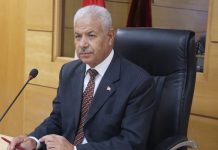
Despite not achieving the highest net profit in Tunisia (232,388 million Tunisian dinars compared to 357,754 million Tunisian dinars for BIAT, whose CEO ranks 63rd among the highest-paid bankers in Tunisia), this bank paid its Moroccan CEO, Saïd Sebti, 14,792 million Tunisian dinars (more than 5,536,429 million dirhams).
Those in deficit are better paid than those in surplus and top performer is only sixth
At one of the last two French bank subsidiaries in Tunisia (Banque Fédérative du Crédit Mutuel), the CEO is rewarded with a salary of 1.740 MTD for his value to the company, placing him second among the highest-paid Tunisian bankers at listed banks.
However, Attijari and BT are only in third and fourth place in the Tunisian private banking sector, behind another foreign bank which is also in deficit. This bank’s net result improved from a deficit of 1.197 MTD in 2023 to -0.686 MTD last year.
Notably, the bank with the highest NBI (TND 1.479 billion) and the best net profit in the market (TND 357.7 million), BIAT, which has restored the Belvédère swimming pool and the Ibn Khaldoun Cultural Centre, among other civic banking projects, is only sixth in terms of highest remuneration in the Tunisian banking sector.
ATB closes the ranking of the highest remuneration among private banks in Tunisia. ATB is climbing back up the ladder thanks to its excellent CEO, the best successor to the best predecessor.
It ended 2024 with a net banking income of 380.2 million Tunisian dinars, slightly up, leaving more than 10.2 million Tunisian dinars in the coffers of the oldest Arab private bank in Tunisia. ATB has achieved a fairly spectacular comeback under Riadh Hajjej.
2.025 MTD per year for former CEO of Zitouna Bank
The new Minister of Finance, who is already more than five months late in informing taxpayers how the 2025 budget was spent, and the highest official of the BCT, which has become the government’s rubber stamp, should be reminded that the annual remuneration of the four public bank CEOs (1,733,000 Tunisian dinars) is roughly equal to that of the sole CEO of the former Banque du Sud, which was sold to the Moroccan group Attijari.
Its subsidiary in Tunisia, a Moroccan bank incorporated under Tunisian law, is far from being the most profitable bank on the market.
Of the remuneration of Tunisian banks listed on the stock exchange, which exceeded 10 million Tunisian dinars in 2024, listed public banks accounted for just over 218 million Tunisian dinars per year in remuneration (including tax, social security, and other benefits).
However, the CEOs of the three categories of banks manage billions of dinars, make efforts to manage other people’s money well or with due diligence, contribute to financing the state and fill the coffers of the tax authorities.
However, being the CEO of a public bank now means being a free man on probation, subject to all kinds of denunciations, even anonymous ones on plain sheets of paper, and liable to go to prison for, at some point in their career, granting an unsecured campaign loan or lending to an entrepreneur whose business failed several years after the loan was granted.
The practice of providing guarantees has been denounced by the highest levels of the executive branch, which now only manages civil servants in all state-owned enterprises.
In the humble opinion of a novice in finance, it is therefore high time for the minister and the governor to bring order to this remuneration sector, where the link between salary and performance has been broken.
With equal competence, and with less administration and pressure, the annual remuneration of the CEO of Zitouna Bank exceeds two million Tunisian dinars (not including the attendance fees transferred to and received by the CEO in his capacity as the Bank’s permanent representative on the boards of directors on which the Bank sits).
It is also time to structure remuneration and link it to good management ratios. Banks that are not listed on the stock exchange are less transparent than listed banks and should not be rewarded. Above all, the remuneration of CEOs in the private and public sectors should be brought closer together!